
What Happens When a Backflow Preventer Fails Its Test: A Step-by-Step Guide
A failed backflow test is not a crisis — but it does require prompt, specific action. This guide walks through exactly what a failure means, what happens next, and how to navigate the repair, retest, and compliance reporting process without missing a deadline.
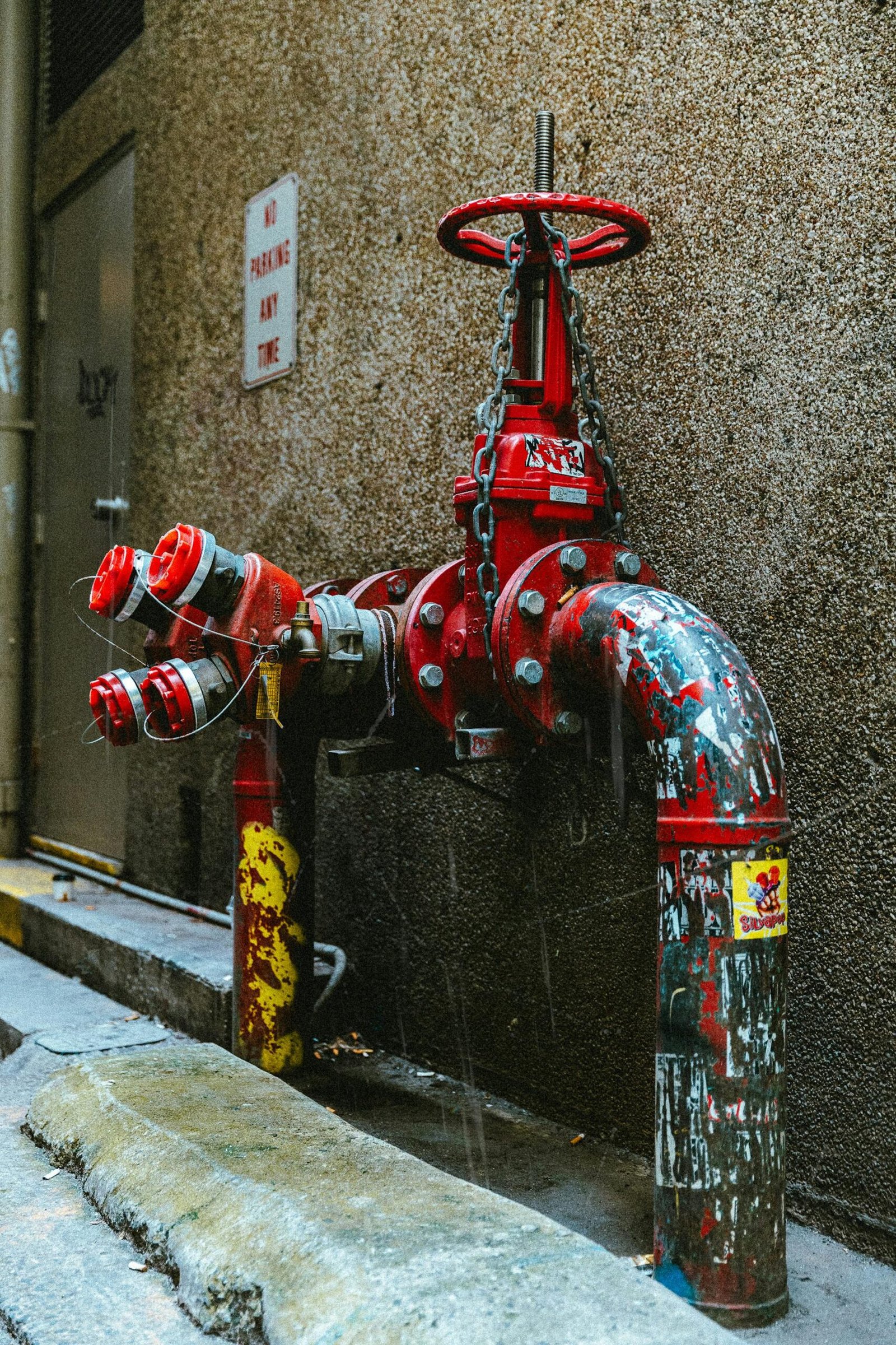
The certified tester has packed up their equipment, handed you a copy of the test report, and the result column reads: FAIL. If you have never seen this before, your first instinct is probably alarm. The second is likely confusion — what does this actually mean, what are you supposed to do, and how much time do you have?
The good news first: a failed backflow test does not mean contamination has occurred. It means the assembly’s internal components have degraded to the point where they cannot be relied upon to prevent backflow under adverse pressure conditions. The device is not providing the certified level of protection it is required to provide. That is a compliance problem and a potential public health risk that needs to be addressed, but it is not an emergency that requires immediate water shutoff or any other crisis response.
The actionable reality: every jurisdiction that requires annual backflow testing also has a specific process for what must happen when a device fails — a repair deadline, reporting requirements, a retest obligation, and an escalating consequence structure if those requirements are not met. Understanding that process before you need it makes navigating a failed test straightforward rather than stressful. This guide walks through the entire sequence, from the moment the tester announces a failure through the closing of the compliance record.
What a Failed Test Actually Means — and What It Does Not
A backflow prevention assembly fails its annual test when one or more of its internal components do not meet the minimum pressure differential specifications for that device type during the certified test procedure. For a double check valve assembly, both check valves must independently hold a minimum differential — a failure means one or both check valves are leaking backward under test conditions. For an RPZ assembly, both check valves and the relief valve must meet their respective thresholds — a failure means one of the three components is not performing to specification.
What the failure does not mean: it does not mean the device has already allowed contaminated water to enter the supply. A check valve that holds 0.8 PSI instead of the required 1.0 PSI has reduced protective capacity, but it has not necessarily failed catastrophically. Most backflow failures represent gradual degradation of rubber components, accumulation of debris on valve seats, or spring fatigue — all of which are predictable maintenance issues, not sudden failures.
It also does not mean water service will be interrupted immediately. No jurisdiction in the country shuts off water service at the time a failed test is reported. The shutoff threat is a consequence of ignoring the failure and missing the repair deadline — not of the failure itself.
The Most Important Thing to Understand
A failed backflow test is a time-sensitive maintenance issue, not an emergency. The clock starts running from the date of the failed test, and the deadline for repair and retest is the date that matters. Acting promptly in the first week after a failure — not on the last day before the deadline — gives you the best outcome at the lowest cost.
What the Tester Does at the Time of Failure
When a certified tester determines that a device has failed, the following steps happen during or immediately after the test visit.
Documents the Specific Failure
The tester records the exact pressure differential readings that produced the failure on the standardized test report form. For a check valve failure, this means recording the differential pressure the valve was holding at the point of failure and noting which check valve — first or second — did not meet the minimum. For an RPZ relief valve failure, the readings show at what differential the relief valve opened (or failed to open). This specific documentation matters because it determines what repair is needed and provides the utility with the information required for their compliance database.
Explains the Failure and Repair Options
A good certified tester will explain the failure in plain language before leaving the site: which component failed, what likely caused it, and what the repair options are. The most common failures are check valve fouling from debris (often fixable with cleaning and reassembly in the same visit), worn rubber seat discs (fixable with a rebuild kit), and hardened O-rings (fixable with a rebuild kit). If the tester carries the relevant rebuild kit for your specific device, they may offer to perform the repair immediately and retest in the same visit — the most efficient possible outcome.
If parts are not available, or if the failure suggests a more significant issue requiring assessment before proceeding, the tester will note the failure, explain the repair requirements, and advise you to schedule follow-up promptly.
Reports the Failure to the Water Authority
In most jurisdictions, the certified tester is responsible for submitting the failed test report to the water authority or program administrator, just as they would submit a passing report. Property owners should confirm that this submission has been made — the water authority’s compliance clock starts from when the failure is recorded in their system, and if the failure report is not filed promptly, the property owner may not receive timely information about their repair deadline.
Some jurisdictions require faster notification for failures than for passes. Boulder, Colorado, for example, requires that a failed test be reported via their online portal within 24 hours of the failure. Fairfax County, Virginia, requires repairs and retesting within 10 business days of a failure — one of the tightest deadlines in the country. Knowing your jurisdiction’s specific requirements in advance is far better than learning them after the fact.
The Repair Deadline: How Much Time Do You Have?
Every jurisdiction sets its own deadline for completing repairs after a failed test. The variation is significant — from as few as 10 business days (Fairfax County, Virginia) to as many as 30 to 60 days in jurisdictions with more permissive programs. Massachusetts sets a statewide 14-day deadline. Most programs land somewhere in the 30-day range.
The following table documents repair deadlines, reporting requirements, and consequences for a sample of jurisdictions across the country. These examples illustrate both the variation that exists and the seriousness with which utilities treat failed test follow-up.
| Jurisdiction | Repair Deadline | Reporting Required? | Consequence if Missed |
|---|---|---|---|
|
Boulder, CO |
30 days |
Yes — within 24 hrs of failure via online portal |
Notice of Violation; $59 hangtag fee; then $113 shutoff fee; then $250–$1,500 additional penalties |
|
Southington, CT |
30 days |
Yes — notify Water Dept. |
Health Department notified; water service termination |
|
Durham, NC |
Until repaired |
Yes — daily penalties begin at deadline |
Daily civil penalties accrue for each non-compliant device until compliance achieved |
|
Massachusetts (statewide) |
14 days |
Yes — submit to MA DEP |
One of the shortest statewide deadlines in the country |
|
New York City |
As soon as possible |
Yes — certified tester + LMP co-signature required on retest report |
Fines up to $2,000; DEP Notice of Violation; service termination |
|
Iowa City, IA |
30 days after Final Notice |
Yes — tracked in city database |
Escalating citations; potential court-filed fines for repeat offenders |
|
Fairfax County, VA |
10 business days |
Yes — submit Backflow Assembly Test Report |
Among the strictest local deadlines; state plumbing code enforcement |
Two observations from this data are worth emphasizing. First, the deadline is measured from the date of the failed test, not from when you receive the notice or when you finally get around to scheduling a repair. Second, the consequences become significantly more expensive and more disruptive at each step of escalation — the difference in cost between addressing a failure promptly and ignoring it until service termination notices arrive is substantial.
The Deadline Is Not the Target — It Is the Last Resort
Do not plan your repair timeline around the deadline. Plan it around getting the repair done as quickly as possible. Parts need to be ordered, technicians need to be available, and inspections need to be scheduled. If something goes wrong — parts are backordered, access is restricted, the repair reveals a larger problem — you need buffer time. A repair completed on day two of a thirty-day window is better in every way than one completed on day twenty-nine.
On-Site Repair: The Best Outcome
If your certified tester carries the rebuild kit for your specific device — which experienced testers working a specific market often do for the most common residential and commercial assemblies — they may be able to perform the repair and retest the device in the same service visit. This is the best possible outcome from a failed test: single visit, repaired and passing device, updated test report filed, compliance record closed, no separate scheduling required.
The on-site repair option is most commonly available for residential and light commercial PVB and DCVA assemblies using manufacturer-certified rebuild kits. It is less commonly available on the spot for RPZ assemblies with relief valve failures (which require more specific components) or for large commercial assemblies where the parts are not something a mobile technician typically carries.
When your tester announces a failure, the first question to ask is: “Do you have the parts to repair this today?” If the answer is yes, ask for a repair and retest quote. Same-visit repair typically adds $75 to $200 to the test fee for minor repairs, or $200 to $400 for a more substantial rebuild. This is almost always less than the total cost of a separate repair service call plus a separate retest service call plus the risk of approaching the deadline.
Scheduling a Separate Repair: What to Do If On-Site Repair Is Not Available
If the repair cannot be completed during the test visit, the clock is running. The following sequence is the right approach for navigating the repair process efficiently.
Get the failed test report in hand immediately. Confirm with your tester that they are submitting the failed test report to the water authority and that you will receive a copy. The report contains the device information, failure readings, and tester contact information — all of which you will need when arranging the repair.
Identify who will do the repair. In most jurisdictions, repairs must be performed by a licensed plumber or certified backflow technician. If your tester is also licensed to perform repairs, ask for a repair quote while they are still on-site — this saves coordination time. If you need to find a separate repair contractor, use your water utility’s approved tester list as a starting point, since many listed testers are also qualified for repairs.
Determine parts availability before committing to a timeline. The repair contractor should be able to identify the specific components needed for your device and confirm that manufacturer-certified parts are available. If parts need to be ordered, get a realistic timeline before counting the days. A 30-day repair deadline with a two-week parts lead time means the technician needs to be on-site within two weeks of the failure, not two weeks before the deadline.
Schedule the repair as early as possible in the deadline window. Not at the end of it. Book the repair appointment in the first week. This leaves time to address complications — a repair that reveals a second failing component, a cracked body that requires full replacement, or a parts order that arrives late.
Plan for a water shutoff. Any backflow preventer repair requires temporarily shutting off the water supply to the device. For a residential irrigation system, this affects only the irrigation supply. For a commercial domestic service assembly, it may affect the entire building’s water supply. Coordinate the shutoff timing with building occupants, tenants, or operations staff before the day of repair.
Confirm that a retest is included in the repair scope. No repair is complete until the device passes a certified retest and the results are filed with the water authority. Confirm before approving the repair quote that the cost includes the retest and report filing, and not just the labor and parts for the repair itself.
The Retest: Closing the Compliance Record
After any repair, the device must be retested by a certified tester. The retest follows the same procedure as the original annual test — calibrated differential pressure gauges, the correct valve sequence for the device type, all threshold differentials verified. A passing retest produces a new test report that is filed with the water authority, replacing the failed report in the compliance database.
In most programs, the retest report must reference the original failed test — either by including the failed report number or by the tester noting on the passing report that it follows a failure. This creates a clear compliance trail in the utility’s records.
Some jurisdictions have specific requirements about who must perform the retest. In some programs, the retest must be performed by the same certified tester who performed the original failed test, or must be filed by a tester from the same approved company. Confirm this with your water authority before scheduling the retest with a different technician.
Retest fees vary: some testers include a same-visit retest in their repair pricing; others charge a separate retest fee of $40 to $100. Some program administrators charge a separate report processing fee for retest reports. Ask about all of these fees when getting the repair quote so the total cost of returning to compliance is clear upfront.
What If the Device Cannot Be Repaired?
Some failed devices are not candidates for repair. A cracked valve body from freeze damage, a body showing advanced dezincification, a device that has failed multiple consecutive annual tests despite recent repairs, or an assembly so old that certified rebuild kits are no longer available — these scenarios require full replacement rather than repair.
Full replacement after a failure follows the same process as any new installation: a licensed plumber performs the work under permit, an initial compliance test is conducted by a certified tester immediately after installation, and the passing test report is filed with the water authority. In many jurisdictions, a replacement installation also requires a new permit even though the location of the device is unchanged — the permit process exists to ensure the replacement device is of the correct type for the current application.
One important consideration when replacing a failed device: if the hazard classification of your property’s cross-connection has changed since the original device was installed — for example, if a fertilizer injector was added to an irrigation system that was originally protected by a standard PVB — the replacement must comply with current code requirements, not the code that governed the original installation. A property that has been operating with a grandfathered device that no longer meets current requirements cannot simply replace it with the same type. The utility’s cross-connection control program office can advise on what device type is required for a replacement installation.
The Lead-Free Replacement Rule
Since January 1, 2014, federal law (the Reduction of Lead in Drinking Water Act) requires that any plumbing component installed in contact with potable water be lead-free. If your failed device contains leaded brass — which was standard in assemblies manufactured before 2014 — replacement parts must be lead-free certified, and in some jurisdictions, a device with lead brass components that fails testing must be replaced entirely with a lead-free assembly rather than rebuilt with mixed-generation parts. California and some other states have even stricter lead-free requirements. Ask your technician to confirm compliance with current lead-free standards when parts or devices are selected.
What Happens If You Miss the Repair Deadline
If the repair deadline passes without a passing retest report on file with the water authority, the utility’s enforcement escalation process begins. The specific sequence and timing varies by jurisdiction, but the general pattern is consistent across most programs.
Stage 1: Non-Compliance Notices and Initial Fines
The water authority or program administrator issues formal non-compliance notices to the property owner, typically with an initial fine. Fine amounts at this stage range from $59 (Boulder’s hangtag fee) to $500 or more in jurisdictions with more aggressive enforcement. In daily-fine jurisdictions like Durham, North Carolina, penalties begin accruing from the moment the deadline passes — $100 per device per day adds up quickly over a few weeks.
Stage 2: Escalating Penalties
Continued non-compliance after the initial notice triggers escalating penalties. Most jurisdictions roughly double or triple the fine amount for the second notice. In New York City, where DEP enforces backflow compliance aggressively, fines for non-compliance can reach $2,000 per violation. Some jurisdictions allow each day of continued non-compliance to constitute a separate violation, meaning penalties compound daily.
Stage 3: Service Termination Warning
A formal service termination notice is the last step before actual disconnection. This notice gives the property owner a final window — typically 5 to 15 days — to achieve compliance before water service is physically shut off. Service termination notices are not bluffs; utilities follow through. The additional costs associated with reconnection after a shutoff — reconnection fees of $100 to $500, emergency repair premiums, accumulated fine amounts, and potential utility deposit requirements — make the total cost of a missed deadline far higher than the original repair would have been.
Stage 4: Service Termination
Actual water service termination is the ultimate enforcement tool. For a residential property, it means no water to the home. For a commercial property, it means operational shutdown — a restaurant cannot operate, a medical facility cannot function, a manufacturing facility cannot run. The reputational, operational, and financial consequences for commercial properties that reach this stage are severe.
Restoring service after termination requires: completing the repair, passing the retest, filing the passing report, paying all accumulated fines, paying the reconnection fee, and in some cases scheduling a utility inspection to confirm compliance before service is restored. The timeline from termination to service restoration can be several days even when the underlying repair is completed quickly.
Navigating a Failed Test as a Commercial Tenant
Commercial tenants who receive failed test notices — either directly or forwarded from the property owner — face a specific complication: responsibility for backflow compliance typically rests with the property owner, but the lease may assign maintenance obligations that include backflow testing and repair to the tenant. This ambiguity can create delays while the landlord and tenant determine who is responsible for acting.
The water utility does not care about the lease language. It holds the account holder — almost always the property owner — responsible for compliance. If a tenant-caused delay in arranging repair results in penalties or service interruption, those consequences fall on the property owner’s account regardless of what the lease says about who was supposed to handle it.
If you are a commercial tenant who has received a failed test notice, the right immediate action is to notify the property owner or property manager in writing, clearly stating the date of the failure, the repair deadline, and the consequences of missing it. This creates documentation that protects you while ensuring the right party is informed. Do not assume the property owner is already aware — utilities sometimes route notices through program administrators whose correspondence does not always reach the right person promptly.
Documentation: What to Keep and Why
Every failed test and repair produces documentation that should be retained indefinitely — not just for the current compliance period but for the life of the property’s water system.
The failed test report, with the tester’s recorded pressure differential readings and the specific failure notation.
The repair invoice, including the specific parts replaced or work performed, the contractor’s license and certification numbers, and the date of repair.
The passing retest report, with the new pressure differential readings confirming the repair was effective.
Any correspondence with the water authority or program administrator about the failure, repair timeline, or compliance status.
Manufacturer-certified parts receipts, if your jurisdiction requires documentation that certified components were used.
This documentation serves several functions. It protects you in any dispute with the water authority about whether compliance was achieved by the deadline. It provides the device repair history that informs future repair-versus-replace decisions — a device that has failed and been repaired three times in four years is likely approaching end of service life regardless of what any individual repair looked like at the time. And it is a required disclosure in many commercial property sales: buyers and their due diligence advisors routinely request backflow compliance history, and sellers who cannot produce it face negotiation complications at closing.
The Fastest Path Back to Compliance
The fastest path from a failed test to a closed compliance record is: a tester who carries parts for your device type, a repair performed in the same visit as the test, a retest performed immediately after the repair, and a passing report filed the same day. Not every situation allows for this, but every situation benefits from acting quickly in the first few days after a failure rather than waiting for the deadline to create urgency.
See also
Part of the Backflow Testing Complete Guide series | Find a certified tester at getyourbackflowtested.com