
Backflow Preventer Repair and Rebuild: The Complete Guide
A failed backflow test does not automatically mean a new device. Most assemblies can be rebuilt to factory specifications using manufacturer-certified parts — saving hundreds or thousands of dollars. This guide covers every aspect of backflow preventer repair: how assemblies fail, how they are diagnosed, what a proper rebuild involves, when repair is the right call and when it isn't, who is qualified to do the work, and what the repair process looks like from start to compliance record closure.
What Repair Actually Means — And Why It Matters
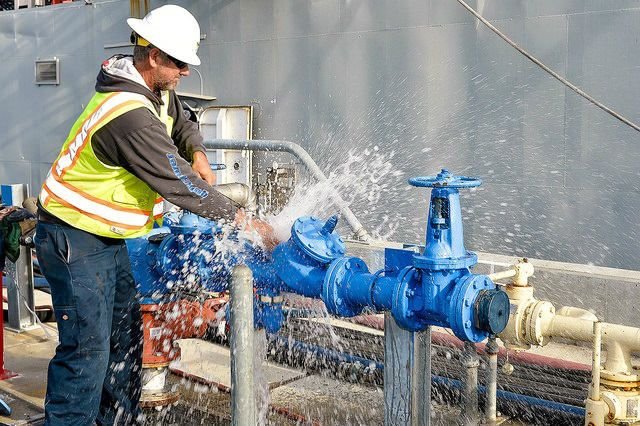
The purpose of repairing a backflow prevention assembly is not simply to make it pass the minimum standard on the next annual test. The goal, as defined by the industry’s technical authorities, is to return the assembly to its original factory working specifications — the pressure differentials and operating characteristics it was designed to achieve when new. This distinction is more than semantic.
An assembly rebuilt to minimum test standard will pass inspection. An assembly rebuilt to factory specification will provide years of reliable protection and is far less likely to fail at the next annual test. The difference lies in the quality and completeness of the repair. A technician who replaces only the single component that produced the failing reading, leaving adjacent worn components in place, has achieved a passing test. A technician who performs a complete rubber goods replacement — all check discs, O-rings, springs, and diaphragms in a single service call — has restored the assembly’s full protective function.
This distinction also matters for the property owner’s long-term economics. A partial repair that addresses the most visible failure while leaving worn adjacent components produces a passing test this year and a return visit next year. A complete rebuild costs somewhat more upfront but typically buys three to five additional years of reliable service before the next failure. Understanding this before authorizing repair work puts you in a position to ask the right questions and evaluate quotes intelligently.
There is a second important distinction that the industry consistently emphasizes: the ability to test a backflow preventer does not imply the ability to repair one. Testing is a measurement and documentation activity — the technician attaches calibrated gauges, follows a defined protocol, reads differential pressures, and records results. Repair requires understanding the mechanical function of each internal component well enough to diagnose a failure from test data, disassemble the assembly correctly, replace the right components with appropriate parts, and verify restoration to factory specification with a post-repair test. These are different skill sets. Not every certified tester is qualified to perform repairs, and not every plumber who installs backflow assemblies understands how to rebuild them.
The Anatomy of a Backflow Assembly: Components, Parts, and the Repair Hierarchy
To understand how backflow assemblies fail and what a rebuild involves, it helps to understand their internal structure in terms of two levels: components and parts.
A component is a functional sub-assembly within the device. In a reduced pressure zone (RPZ) assembly, the components are the first check valve, the second check valve, and the relief valve. In a double check valve assembly (DCVA), the components are the first check valve and the second check valve. In a pressure vacuum breaker (PVB), the components are the check valve and the air inlet valve.
Each component is in turn made up of individual parts: the seat disc (the elastomeric sealing element), the spring (which provides the closing force that holds the disc against the seat), the retainer or disc holder (the mechanical housing that positions the disc), and O-rings that seal the component within the body. It is these parts — almost always rubber or elastomeric goods — that degrade over time and are the subject of most repair work.
This hierarchy matters for a practical reason: the field test identifies which component has failed, but it cannot always reveal how many of the adjacent parts within that component are approaching failure. A first check valve that tests at 0.8 PSID (below the 1.0 PSID minimum) may have a seat disc that is visibly worn, a spring that has lost tension, and an O-ring that is hardening at the same time. Reaplacing only the seat disc to restore the differential to above 1.0 PSID is a partial repair. Replacing the complete rubber goods kit for the first check — disc, spring, O-ring, retainer if needed — is a proper rebuild.
The Parts Within a Rebuild Kit
Manufacturer-certified rebuild kits are available for all major backflow assembly brands and models, including Watts, Febco (Pentair), Wilkins (Zurn), Ames, Apollo/Conbraco, and others. A standard rubber goods kit for an RPZ assembly typically contains: check disc and retainer assembly for the first check, check disc and retainer assembly for the second check, all internal O-rings sized to the specific assembly model, the diaphragm for the relief valve, and the relief valve seat disc. Some kits include replacement springs; others offer springs separately.
For PVB assemblies, the rebuild kit typically contains the bonnet and poppet assembly — the primary air inlet components that are most frequently damaged by age, freeze events, or contamination — along with O-rings and any ancillary rubber goods specific to that model. The PVB bonnet-poppet is a component that experienced testers often carry pre-assembled, allowing same-visit replacement without awaiting parts orders.
The distinction between OEM (original equipment manufacturer) and aftermarket parts is meaningful here. OEM rebuild kits are produced by the same manufacturer as the assembly and are tested to the same specifications as the original parts. Aftermarket kits may fit the assembly but may use rubber compounds with different chloramine resistance, durometer (hardness) specifications, or dimensional tolerances than the original. For assemblies that will remain in service for another decade, OEM parts are the appropriate choice. For an assembly approaching the end of its service life where a rebuild is being performed primarily to achieve compliance before a planned replacement, aftermarket parts may be acceptable — but the choice should be made deliberately, not by default.
Why Backflow Assemblies Fail: Root Causes by Category
Understanding why an assembly failed is not merely academic — it informs whether repair will hold or whether a systemic condition will produce repeated failures regardless of how well the rebuild is performed. The following categories cover the full range of failure mechanisms encountered in field repair work.
Debris and Fouling
Debris fouling is the single most common cause of backflow assembly failure, particularly in assemblies that have recently been installed, recently been served by water main work in the area, or that lack an upstream strainer. Particulate matter — sand, pipe scale, mineral fragments, and biofilm — enters the assembly with the supply water and settles on check valve seats, preventing the disc from forming a complete seal. Under test conditions, the fouled seat produces a low or zero differential reading.
Debris-caused failures are often the most straightforward to repair. In many cases, a tester can disassemble the affected check valve in the field, flush the seat and disc with clean water, inspect for physical damage to the disc face or seat surface, reassemble, and immediately retest. If the components are otherwise in good condition and the debris was the only issue, the assembly will often pass the post-cleaning test without any parts being replaced. A strainer installed upstream of the assembly following this type of failure can significantly extend the time between repairs.
Rubber Degradation from Chloramines
Chloramine is the disinfectant compound increasingly used by water utilities as a replacement for free chlorine. It is effective for disinfection and does not produce certain chlorination byproducts — but it is significantly more aggressive toward elastomers than free chlorine, and it has shortened the service life of rubber goods in backflow assemblies in many markets where utilities have made the switch.
Chloramine-degraded rubber is typically identified visually during disassembly: the seat disc and O-rings appear swollen, soft, or tacky rather than firm and resilient. In advanced cases, they may be shedding material that can itself become a debris source downstream. An assembly in a high-chloramine water system that is failing regularly despite good repair practices is a candidate for replacement with a modern assembly whose rubber compounds are formulated for chloramine resistance — or for a different assembly material (bronze versus brass bodies respond differently to chloramine attack).
Spring Fatigue
The closing springs in check valves operate under continuous compression during normal system pressure, cycling open whenever water flows through the assembly and returning to the closed position when flow stops. In a residential irrigation system that runs multiple zones daily during the watering season, a check valve spring may cycle tens of thousands of times per year. Over five to ten years, the spring loses tension and can no longer produce the closing force required to maintain the minimum differential. The field test result looks similar to a rubber degradation failure — low differential — but the diagnosis on disassembly is a spring that has lost its original tension rather than a disc that has lost its sealing ability.
Spring replacement is always included in a proper rebuild kit. Replacing the rubber goods without replacing the springs in an assembly with known high-cycle use is a partial repair that will likely produce another failure within one to two testing cycles.
Dezincification of Brass Components
Dezincification is a specific corrosion mechanism affecting brass alloys in which the zinc component is selectively leached from the alloy by aggressive water chemistry, leaving behind a porous, weakened copper-rich matrix. The external signs are white or pinkish powdery deposits and pitting on brass surfaces. A dezincified valve body or component housing cannot be repaired — the structural integrity of the material is compromised in a way that rubber goods replacement cannot address.
Dezincification is more common in systems with soft, acidic water and in older assemblies manufactured before lead-free, dezincification-resistant brass alloys became standard. When a repair technician identifies dezincification during disassembly, the appropriate response is to recommend full assembly replacement regardless of the cost differential. An assembly with a dezincified body is a structural liability, not a repair candidate.
Shutoff Valve Failure
A failure mode that does not appear in the check valve or relief valve at all — but that prevents the assembly from being tested — is a worn or non-closing shutoff valve. Backflow assembly testing requires that the shutoff valves isolate the assembly from the supply and distribution system during the test procedure. If the first shutoff valve does not hold fully closed, supply pressure bleeds through during the test, producing anomalous readings and preventing valid test completion. From the utility’s perspective, a test that cannot be completed is a failure.
Shutoff valve replacement is a licensed plumber task, not a tester task in most jurisdictions. The replacement shutoff must be a tapped ball valve — one with a test cock port — that matches the assembly’s inlet or outlet configuration. Generic ball valves without test cock ports are not acceptable replacements for backflow assembly shutoffs.
Failure Mode Reference Table
The following table summarizes the eight most common backflow assembly failure scenarios, their root causes, what the field test shows, and the appropriate repair response.
| Failure Mode | Root Cause | What the Test Shows | Typical Repair |
|---|---|---|---|
|
Fouled check valve (debris) |
Pipe debris, sediment, or mineral particles lodged on valve seat |
Check valve holding low differential — e.g., 0.4 PSID instead of ≥1.0 PSID required minimum |
Disassemble check module, clean seat and disc with clean water, reassemble and retest |
|
Worn rubber seat disc |
Chloramine attack, age, high temperature, or high-cycle use degrading elastomers |
Check valve fails to hold any differential — reads at or near 0.0 PSID |
Replace seat disc and O-ring with manufacturer-certified rebuild kit; retest to factory spec |
|
Fatigued check spring |
Metal fatigue from years of open/close cycling under system pressure |
Check holds reduced differential; may be inconsistent across multiple test readings |
Replace spring as part of full rubber goods kit; check for corrosion on spring retainer |
|
Relief valve discharge (RPZ) |
First check degraded, raising intermediate zone pressure above threshold, forcing relief valve open |
Test confirms relief valve opening point below 2.0 PSID minimum; first check reading low |
Rebuild first check module; retest relief valve opening point and both check differentials |
|
Hardened O-rings |
Age, chlorine exposure, or UV degradation causing elastomers to stiffen and lose seal integrity |
Check valve leakage at rest; may also see relief valve weeping between tests |
Full rubber goods replacement — O-rings, seat discs, diaphragm if present — per rebuild kit |
|
Dezincification of body |
Selective leaching of zinc from brass alloy in aggressive water chemistry, leaving porous copper matrix |
Visual: white/pink powdery deposits, pitting; test may pass initially but repeated failures follow |
Replacement required — dezincified body cannot be rebuilt; select lead-free brass or bronze replacement |
|
Freeze-cracked body or bonnet |
Water expansion during freezing event cracking the valve body or PVB bonnet housing |
Visible crack; water leaks from body regardless of valve position; no repair possible on body |
Full assembly replacement; address freeze protection before reinstalling |
|
Worn or leaking shutoff valve |
Seat wear or debris preventing shutoff valve from fully closing during test procedure |
Test cannot be completed — tester observes flow-through with shutoff in closed position |
Replace shutoff valve with correct tapped ball valve (matching test cock configuration) |
The Repair Process: Step by Step
A proper backflow assembly repair follows a defined sequence. Shortcuts at any step compromise the quality of the repair and increase the likelihood of another failure at the next annual test. The following describes the repair process for a typical commercial or residential RPZ assembly — the most mechanically complex common assembly type. PVB and DCVA repairs follow the same logic but involve fewer components.
Commercial and Industrial Properties
Virtually all commercial and industrial properties with municipal water connections are required to have backflow prevention devices installed and tested annually. This includes office buildings, retail spaces, restaurants, hotels, manufacturing facilities, warehouses, and any property with a fire suppression system. Properties with higher contamination potential — medical facilities, laboratories, food processing plants, agricultural facilities using chemical injection — are almost universally required to install RPZ assemblies and to test them on an annual or more frequent basis.
Step 1: Field Test as Diagnostic Tool
The repair process begins with the annual field test, which functions not only as a compliance check but as a diagnostic instrument. The differential pressure readings across each check valve and across the relief valve opening point tell the trained repairer which component has degraded and by how much. A first check reading of 0.6 PSID indicates a component that is near but below minimum — likely a disc and spring issue. A first check reading of 0.0 PSID indicates complete seal failure — the disc is not making contact with the seat at all, suggesting either severe fouling or a disc that has physically failed.
A skilled repairer reads the field test data before opening the assembly. The data tells them which components to prioritize and what parts to prepare. A tester who opens an assembly without first interpreting the test data is guessing at the diagnosis rather than repairing it.
Step 2: Shut Down, Isolate, and Prepare
Repair requires that the assembly be taken out of service. The first shutoff valve is closed to isolate the supply side. The second shutoff valve is closed to isolate the distribution side. Test cocks are opened to relieve pressure from the assembly body and drain the intermediate zone. The body should be fully depressurized before any disassembly begins.
Before opening any covers, the repairer verifies that the rebuild kit for the specific assembly make, model, and size is on hand. Opening an assembly without having the correct parts available forces a premature reassembly or an extended water outage while parts are sourced. For planned repair visits where the failure has been identified in advance, parts should be sourced and confirmed before the appointment.
Step 3: Disassembly and Visual Inspection
The access covers for each check valve chamber are removed — on most RPZ assemblies, this means removing the bonnet of each check using appropriate hand tools or assembly-specific special tools where required. The check disc, retainer, spring, and seat are removed and laid out for inspection. The repairer examines each component: the disc face for wear, tears, or chemical swelling; the seat for scoring, pitting, or embedded debris; the spring for corrosion, deformation, or loss of length relative to the original specification; and the O-ring for cracking, hardening, or diameter change.
The visual inspection often reveals more than the field test data did. An assembly that tested at a marginally failing differential may show a disc that is close to catastrophic failure on inspection — indicating that the repair is being performed just in time. An assembly that shows dezincification on inspection during what was expected to be a routine rubber goods swap may require a pivot to replacement rather than repair.
Step 4: Cleaning the Body and Seats
Before installing new rubber goods, the assembly body and valve seats must be cleaned. Debris lodged in the seat groove will prevent new rubber from sealing properly, producing another immediate failure. The seat area is flushed with clean water, inspected for scoring or physical damage, and wiped clean. If the seat is scored or pitted from long-term debris contact, a seat replacement may be necessary — a more involved repair that requires appropriate tooling and, in some assemblies, special tools available only from the manufacturer.
Step 5: Installing New Components
New rubber goods are installed in the reverse order of disassembly. O-rings are seated carefully in their grooves — a twisted or pinched O-ring will fail immediately upon pressurization. Check discs are positioned correctly within their retainers — reversed installation of a disc is a common error that produces immediate failure. Springs are set with the correct orientation (check the manufacturer’s documentation for asymmetric spring designs). Covers are reinstalled and tightened to the manufacturer’s specified torque — under-tightening allows leakage; over-tightening can crack the bonnet or damage the O-ring seated within it.
For the relief valve on an RPZ assembly, the diaphragm and seat disc replacement follows a similar sequence. The relief valve is particularly sensitive to correct assembly — a misaligned diaphragm or an improperly seated disc will produce either continuous discharge (if the relief valve remains open) or a falsely high opening differential reading on the post-repair test.
Step 6: Controlled Re-pressurization and Air Bleeding
After reassembly, the supply is restored slowly. The first shutoff valve should be opened gradually — not slammed fully open — to allow the check valve components to seat properly under gradually increasing pressure. Rapid pressurization can dislodge newly installed rubber goods before they have fully settled into their seated positions.
Once the assembly is pressurized, air trapped in the body must be removed before the post-repair test. Most assemblies have air bleeds or bleed screws at the tops of check valve chambers specifically for this purpose. If air is not removed, it introduces compressibility into the system that produces inaccurate test readings — the test kit sees the compressed air’s spring-like response rather than the true hydraulic behavior of the check valve. The post-repair test of an assembly with trapped air will give numbers that may not reflect the assembly’s actual performance.
Step 7: Post-Repair Test to Factory Specification
The post-repair field test is not a minimum standard verification exercise. It is a confirmation that the assembly has been returned to factory working specifications. Industry guidance from technical authorities including BAVCO (Backflow Assembly Valve Company) specifically notes that a repaired assembly should be tested to original factory specs, not merely to the minimum threshold. A properly rebuilt RPZ first check should hold well above 1.0 PSID — typically 3.0 to 8.0 PSID depending on the assembly model and spring specification. A relief valve opening point should be in the 5 to 12 PSID range on most assemblies, well above the 2.0 PSID minimum. Numbers at or barely above minimum after a rebuild indicate that something was missed in the repair process.
The post-repair test results are recorded on a test report and filed with the water authority. The report should clearly indicate that this is a post-repair test, referencing the prior failed test, so the compliance record shows a complete documentation trail: failure, repair, and restoration.
One Mistake Experienced Technicians Warn Against
Never perform a repair without a post-repair test, and never file a passing post-repair test report without actually performing the test. Both practices occur in the field — either because a technician is pressed for time or because they are confident the repair was performed correctly. The post-repair test is not a formality. It is the only objective confirmation that the repair restored function. An unverified repair is an incomplete repair, regardless of how experienced the technician is.
Device-Specific Repair Considerations
Repairing RPZ Assemblies
RPZ assemblies are the most mechanically complex of the common testable assembly types and the most consequential when they fail — they are required precisely because the cross-connection they protect carries a high-hazard contamination risk. The RPZ has three components that must all be assessed and addressed during a repair: the first check valve, the second check valve, and the relief valve. A repair that addresses only the component that produced the failing field test reading while leaving the others unexamined is a partial repair, not a complete rebuild.
The relief valve on an RPZ presents a specific troubleshooting challenge. A relief valve that is discharging continuously does not necessarily mean the relief valve itself has failed — it may mean the first check valve has degraded to the point where the intermediate zone pressure has risen above the relief valve’s opening threshold, causing the relief valve to open in response to an abnormal pressure condition rather than failing mechanically. Field technicians who replace the relief valve diaphragm without first testing the first check differential are often treating the symptom rather than the cause. The correct sequence is to test first, identify which component is actually out of specification, and address the root cause.
Repairing DCVA Assemblies
Double check valve assemblies are mechanically simpler than RPZ assemblies — two check valves in series, no relief valve, no intermediate zone pressure management. DCVA repairs most commonly involve rubber goods replacement for one or both checks, occasionally with spring replacement, and very occasionally with seat replacement when debris contact has scored the seating surface.
A challenge specific to below-grade DCVA installations is access. A DCVA in an underground vault that has collected water must be dewatered before repair work can proceed safely and effectively. Attempting to disassemble check valve components in a flooded vault produces contaminated parts, imprecise reassembly, and compromised results. Vault drainage is a pre-repair prerequisite for below-grade installations.
DCVA assemblies that have failed do not provide visible evidence of failure between tests — unlike an RPZ whose failing first check causes the relief valve to discharge water visibly. A DCVA that failed its last test and was repaired provides zero external indication of whether the repair held until the next annual test. This is why the post-repair test and the annual test cycle are both non-negotiable for DCVA compliance.
Repairing PVB Assemblies
Pressure vacuum breaker assemblies are the most commonly installed and most commonly repaired residential backflow device. The primary failure component is the bonnet and poppet assembly — the air inlet mechanism at the top of the device. The bonnet poppet consists of the bonnet housing, the poppet itself (a rubber-tipped or rubber-faced disc that seals the air inlet port under normal pressure), an O-ring, and in some designs a retaining spring.
PVB bonnet-poppet replacement is a relatively fast repair that most experienced testers with the appropriate parts on hand can complete in fifteen to thirty minutes. The old bonnet assembly is removed by unscrewing the retaining nut, the internal components are removed and discarded, new components from the rebuild kit are installed in sequence, and the bonnet is reinstalled and tightened. Post-repair testing confirms that the air inlet is sealing properly under pressure and opening correctly when pressure is relieved.
Freeze damage to PVB assemblies is the one failure mode that cannot be repaired at the component level — a cracked bonnet housing or a cracked valve body requires full assembly replacement. The crack allows water to escape from the assembly body under pressure, a condition that no rubber goods kit can address.
The Repair vs. Replace Decision Framework
Every failed backflow test confronts the property owner and their technician with the same question: rebuild the existing assembly, or replace it entirely? The answer is not always obvious, and the right answer depends on multiple factors considered together rather than any single criterion alone. The following framework and reference table provide a structured approach.
The 50 percent rule is the most commonly cited guideline in the industry: when the cost of repair — parts plus labor — exceeds 50 percent of the cost of a new assembly installed, replacement is generally the economically correct decision. This rule is a useful starting point but not a complete analysis. A small residential PVB might cost $350 installed new; a rebuild kit and labor might run $175. By the 50 percent rule, repair and replacement are roughly equivalent. But if the device is twelve years old and in good body condition, repair makes sense. If it is twenty years old with a history of four failures in six years, replacement is clearly indicated regardless of the cost calculation.
| Factor | Repair Makes Sense When... | Replace Makes Sense When... |
|---|---|---|
|
Assembly size |
Device is 1-1/2″ or larger — cost of replacement is substantial and rebuild kits are readily available |
Device is 3/4″ or 1″ — replacement assembly may cost less than labor plus parts for a rebuild |
|
Age |
Device is less than 15 years old with no history of corrosion or body damage |
Device is 15+ years old, especially if it has multiple consecutive failures or unknown service history |
|
Body condition |
Body and shutoff valves are structurally sound with no dezincification, freeze cracking, or deep corrosion |
Body shows dezincification, visible cracking, warping, or epoxy liner peeling — these cannot be remediated with a rebuild |
|
Parts availability |
Manufacturer-certified rebuild kit is available for the specific model and size |
Device is discontinued and manufacturer parts are no longer available; aftermarket-only parts may not restore factory performance |
|
Repair cost vs. replacement |
Rebuild cost (parts + labor) is less than 50% of the cost of a new assembly installed |
Rebuild cost exceeds 50% of a new assembly installed — the economic case for rebuilding collapses |
|
Failure frequency |
This is the first or second failure in the device’s service history |
Device has failed and been repaired three or more times in a five-year period — something systemic is wrong |
|
Water quality factors |
Water chemistry is stable and not excessively aggressive (low chloramine levels, normal hardness) |
Device is installed in a high-chloramine or aggressive water system and has a history of accelerated rubber degradation |
|
Lead-free compliance |
Device is a post-2014 lead-free assembly and parts are available in certified lead-free specification |
Device pre-dates 2014 federal lead-free requirement and lead-free replacement parts are not available for the model |
Two factors from this table deserve particular emphasis. First, assembly size changes the economics fundamentally. A 3/4-inch RPZ assembly costs $400 to $700 installed new. The same device in 4-inch size costs $3,000 to $8,000 or more installed. For large commercial assemblies, even relatively expensive rebuild kits and significant labor hours produce a repair cost that is a small fraction of replacement cost. For small residential assemblies, the labor cost alone often approaches the cost of replacement with a new device. This is why many experienced plumbing contractors stock their vehicles with new residential assemblies and offer same-visit replacement rather than rebuild for small devices that fail their tests.
Second, the lead-free compliance consideration is not optional. Since January 1, 2014, the federal Reduction of Lead in Drinking Water Act has required that any plumbing component installed in contact with potable water be lead-free. If an existing assembly contains brass with lead content above the 0.25 percent weighted average threshold — which describes the majority of assemblies manufactured before approximately 2012 — rebuilding it with mixed-era parts does not bring it into compliance. Many jurisdictions now explicitly require that a failed assembly containing lead-bearing brass be replaced with a certified lead-free assembly rather than rebuilt. Confirming the lead-free status of an existing assembly before authorizing a rebuild is a step that property owners should not skip.
Who Is Qualified to Perform Repairs
Qualifications for backflow assembly repair are more complex and more variable than qualifications for testing. The industry has a dedicated certification — ASSE 5130 Backflow Prevention Assembly Repairer — but it is not universally required, and the relationship between repair authority and plumbing licensure varies significantly by state.
ASSE 5130 Repairer Certification
The ASSE 5130 certification is the national standard for backflow assembly repair competency. It requires a prerequisite of current ASSE 5110 Tester certification — a repairer must first be a qualified tester. The ASSE 5130 course consists of 20 hours of training that covers assembly terminology and function, troubleshooting methodology, repair tools and techniques, and hands-on practice with actual assemblies from multiple manufacturers. The course concludes with a 50-question written examination. Unlike the tester certification, there is no practical skills examination for ASSE 5130 — the hands-on component is embedded in the training rather than tested separately.
Minnesota is the most notable state to explicitly require the ASSE 5130 certification for anyone performing repair work — the state’s Backflow Prevention Rebuilder (BF) registration requires it in addition to a plumbing license. Other states have not formalized this requirement but most water utility programs expect that repair work be performed by individuals who are both plumbing-licensed and demonstrably competent in backflow assembly mechanics.
Plumbing License and Repair Authority
In most jurisdictions, repair work on a backflow preventer constitutes plumbing work and requires a plumbing license. A certified tester who does not hold a plumbing license is generally not authorized to disassemble a backflow assembly and replace internal components, even if they hold the ASSE 5130 certification. The repair involves working within a pressurized potable water system, which falls squarely within the licensed scope of plumbing work in virtually every state.
This creates a practical market structure. Contractors who offer backflow repair services typically hold both a plumbing license and backflow tester certification, which allows them to test, diagnose, repair, and retest in a single visit — the most efficient possible service model. Contractors who hold only one credential must either subcontract the other function or limit their service to either testing or repair but not both. When selecting a repair contractor, confirming that they hold both credentials eliminates the risk of a two-visit process where a tester identifies the problem but cannot perform the repair.
Special Tools and Manufacturer Training
Beyond formal certification, some assembly models require special tools that are not commercially available and must be fabricated or sourced from the manufacturer. These tools are designed for specific disassembly or seat replacement operations on particular assembly models. A technician who attempts to perform a repair requiring special tools with improvised alternatives risks damaging the body or the components. Before committing to a repair on an unfamiliar assembly model, the technician should confirm whether special tools are required and that those tools are available.
Some manufacturers — Watts, Wilkins/Zurn, and Febco among them — offer technical training programs specifically for repair technicians working on their product lines. Technicians who have completed manufacturer-specific training are significantly better equipped to perform complete, accurate rebuilds than those relying solely on general certification training.
Repair Cost Reference
The following table presents current market cost ranges for the most common backflow assembly repair scenarios. Parts costs reflect OEM rebuild kit pricing; labor costs reflect national market averages and will vary by region, contractor, and access difficulty.
| Repair Type | Parts Cost | Total with Labor | Notes |
|---|---|---|---|
|
Debris flush and clean (no parts) |
$0 |
$75–$150 |
Same-visit fix if tester carries no parts; sometimes resolves a fouled check valve reading |
|
Rubber goods kit — PVB (3/4″–1″) |
$15–$45 |
$100–$200 |
Bonnet, poppet, O-rings; most common residential repair; often done same-visit |
|
Rubber goods kit — DCVA (3/4″–1″) |
$25–$65 |
$125–$275 |
Check discs, O-rings, springs for both checks; very common after first or second annual failure |
|
Rubber goods kit — RPZ (3/4″–1″) |
$45–$120 |
$175–$375 |
Check modules plus relief valve rubber; full kit should restore factory differential |
|
Rubber goods kit — RPZ (1-1/2″–2″) |
$80–$250 |
$300–$600 |
Larger assemblies; more labor; check seat condition carefully before committing to rebuild |
|
Partial rebuild (one check only) |
$30–$90 |
$150–$350 |
When only one check fails; retest must confirm both checks and relief valve after repair |
|
Full rebuild including shutoff valves |
$100–$350 |
$350–$750 |
When shutoff valves prevent proper test — replace with tapped ball valves of correct size |
|
Full assembly replacement (residential) |
Device + install |
$350–$900 |
When body damage, dezincification, or parts unavailability makes rebuild impractical |
|
Full assembly replacement (commercial RPZ 2″+) |
Device + install |
$1,500–$6,000+ |
Large-diameter replacement; permit required; multiple-day project typical |
Several cost factors consistently push repair costs toward the higher end of these ranges. Limited access — an assembly in a below-grade vault, a confined mechanical room, or a rooftop installation — adds labor time regardless of the repair type. Hard water areas with significant mineral scale buildup add cleaning time before parts can be installed. Assemblies that have not been serviced in many years may have corroded fasteners that require additional time to remove safely. And assemblies whose shutoff valves are also failing at the same time as the check valves require the additional work of shutoff valve replacement — which should always be done under the same visit and permit if a plumber is already on site.
Proactive Maintenance: Extending Time Between Repairs
While annual testing is a compliance requirement, not a maintenance schedule, property owners can take specific actions that meaningfully extend the interval between failures and reduce lifetime repair costs. These measures do not eliminate the need for annual testing — they reduce the frequency with which that test produces a failing result.
Install a Strainer Upstream
An upstream strainer prevents debris from the distribution system from entering the assembly. This is the single highest-leverage maintenance investment for assemblies in systems with known turbidity issues — older distribution systems, areas undergoing water main rehabilitation, or properties that experience frequent main breaks nearby. A Y-strainer sized appropriately for the assembly’s pipe diameter costs $40 to $120 installed and can dramatically reduce debris-caused failures. The strainer itself requires periodic cleaning, but this is far less disruptive and less expensive than an annual test failure and repair.
Monitor Water Chemistry
If your water utility has switched to chloramine disinfection in recent years and your assemblies are failing more frequently than they previously did, the change in water chemistry is the likely driver. Contact your utility to confirm the disinfectant type. When it is time to replace an assembly, specify a modern assembly whose rubber compound specifications include chloramine resistance — most major manufacturers now offer chloramine-resistant rubber packages, sometimes at a modest premium. Matching the assembly’s materials to the water chemistry of your system is a long-term maintenance investment that pays dividends in reduced repair frequency.
Protect Against Pressure Spikes
High or variable water pressure accelerates wear on check valve rubber goods and springs. If the supply pressure to an assembly regularly exceeds 80 PSI, a pressure reducing valve (PRV) installed upstream can normalize operating conditions and extend component life. A PRV that keeps supply pressure in the 60 to 70 PSI range also benefits all downstream plumbing fixtures, not just the backflow assembly.
Address Freeze Risk Before It Causes Body Damage
Body damage from freezing is the only failure mode that definitively ends an assembly’s repairable life. A cracked body cannot be rebuilt. The cost of a heated enclosure or a seasonal winterization protocol — implemented before the first freeze of the season — is always less than the cost of an emergency assembly replacement in January. Any above-grade assembly in a climate that reaches freezing temperatures should have formal freeze protection in place before the first cold season.
The Post-Repair Annual Test: Don't Skip It
Some property owners who have had their assembly repaired believe the post-repair test substitutes for the next annual test. It does not. The post-repair test confirms the repair was successful. The annual test — due at the same interval from installation or the last annual test, not from the repair date — confirms the assembly continues to function. Confirm with your water utility whether a post-repair test resets the annual test due date in their system. In most programs it does not.
After the Repair: Documentation, Compliance, and What to Keep
Every backflow assembly repair produces documentation that serves multiple purposes — not just immediate compliance, but long-term protection for the property owner.
What Documentation Should Be Produced
The failing test report from the pre-repair annual test, with specific differential readings that triggered the repair. This report is the starting point of the compliance trail.
The repair invoice from the contractor, itemizing the specific parts replaced (including kit model numbers and lot numbers if available), the date of repair, and the technician’s license and certification numbers.
The passing post-repair test report filed with the water authority. This report should reference the original failed test and clearly indicate it is a post-repair retest.
Any OEM parts documentation or rebuild kit packaging confirming lead-free certification of replacement parts, where required by local ordinance.
These documents should be retained with the property’s maintenance records indefinitely — not just for the current compliance period. A property sale due diligence review routinely includes backflow compliance history. A property owner who can produce a complete repair and testing history for all assemblies on the property is in a substantially better negotiating position than one who cannot. Buyers and their environmental inspectors treat unexplained gaps in backflow compliance records as red flags that generate additional scrutiny.
When to Schedule the Next Annual Test
The post-repair test confirms the repair worked. It does not restart the annual compliance clock in most programs. The next annual test is due on the same cycle as it would have been had the repair never been needed — typically within 12 months of the original annual test date, not within 12 months of the repair date. Confirm this with your water utility or program administrator and mark the calendar accordingly. Missing the next annual test deadline after a recent repair is an avoidable compliance failure that creates unnecessary complications.
Find a Qualified Backflow Repairer
Not every certified backflow tester is qualified to perform repairs, and not every plumber has experience with backflow assembly rebuilds. The tester directory at getyourbackflowtested.com lists certified professionals by state. When selecting a repair contractor, confirm they hold both a current plumbing license and backflow tester certification, ask whether they have experience with your specific assembly brand and model, and confirm they carry rebuild kits for common residential and commercial assemblies before scheduling the appointment.
Related Resources in This Guide
This article is the cornerstone resource on backflow repair and rebuild. The following companion articles provide deeper coverage of related topics:
What Happens If a Backflow Preventer Fails Its Test — the compliance process, deadlines, enforcement, and documentation after a failed annual test
Backflow Preventer Installation Cost — when replacement is the right call, what full replacement involves, and what it costs across device types and sizes
RPZ Backflow Preventer — detailed coverage of the most commonly repaired commercial assembly type, including how it works and why it requires more complete repairs than simpler device types
How to Become a Certified Backflow Tester — for industry professionals interested in adding ASSE 5130 repair certification to their tester credential
Backflow Testing Requirements by State — because repair obligations, deadlines, and qualified repairer definitions vary by jurisdiction
See also
The Complete Guide to Backflow Repairs and Rebuilds | getyourbackflowtested.com | Find a certified tester or repairer near you