
How We Built the Most Rigorously Vetted Backflow Tester and Repairer Directory in the United States
GetYourBackflowTested.com has compiled state-by-state directories of certified backflow testing and repair professionals covering all 50 states. This article explains exactly what we evaluated, why most contractor directories fall short of what property owners actually need, and how our verification process translates directly into fewer compliance failures, fewer surprise costs, and faster resolution when something goes wrong.
Why Finding a Qualified Backflow Professional Is Harder Than It Should Be
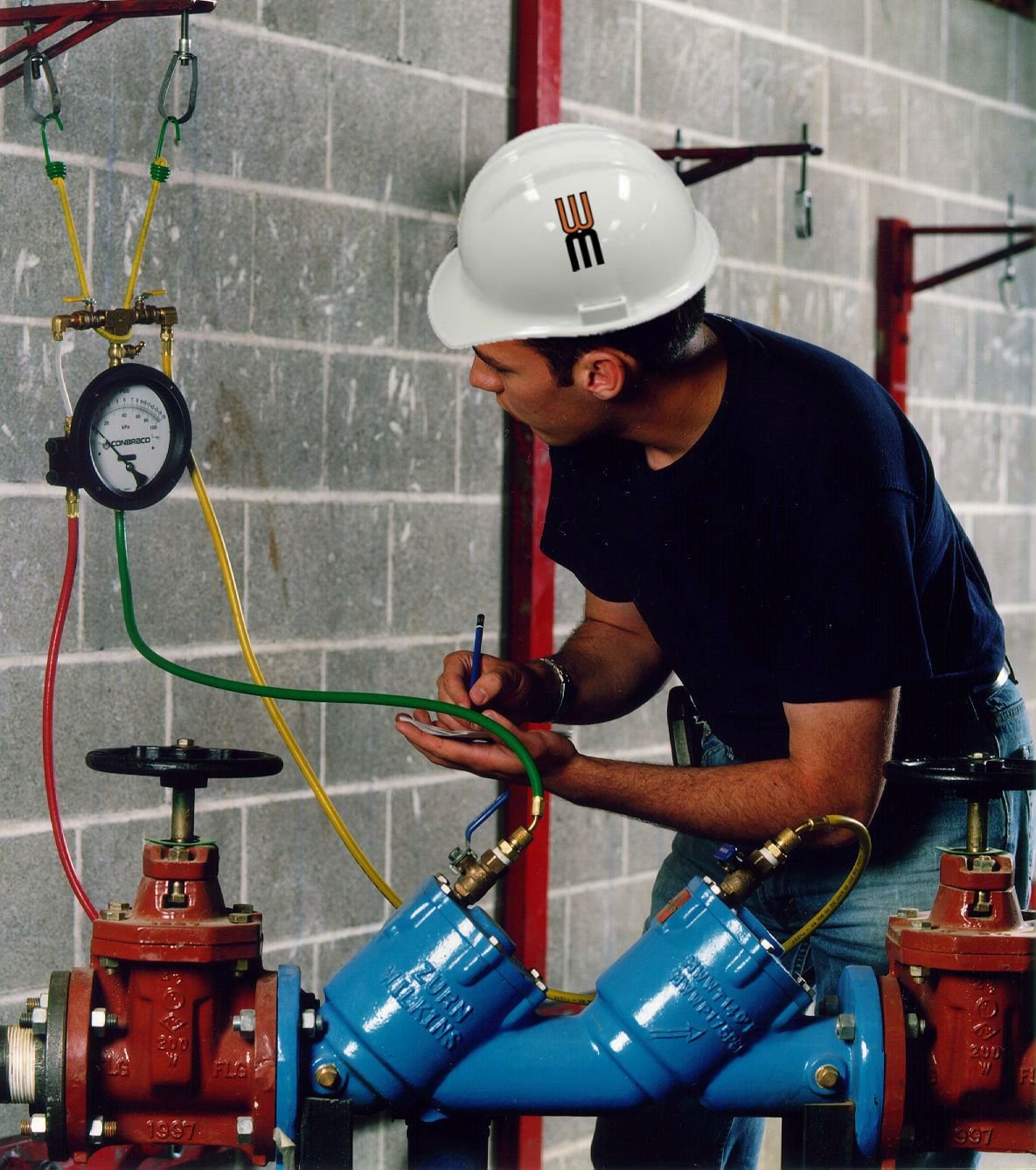
Ask a property owner or facility manager to find a qualified backflow preventer tester and they will typically do one of three things: call whoever did it last year, search Google for ‘backflow testing near me,’ or ask their general plumber. Each of these approaches has a serious structural problem that most people only discover after something goes wrong.
The ‘whoever did it last year’ approach fails when that contractor retires, changes territory, loses their certification, or is no longer authorized by the new program administrator your water utility switched to. Contractor turnover in the backflow testing industry is significant, and a contractor who was your qualified provider two years ago may not be authorized to file reports with your current compliance program.
The Google search approach produces a list of contractors who have invested in local SEO — which is not the same as a list of contractors who hold the correct credentials for your specific compliance program. Many general plumbing companies that appear prominently in local search have a single employee who holds a backflow tester certificate, with no separate repairer certification, no confirmed water authority program authorization, and no practice of carrying rebuild kits. When your assembly fails, they test it, deliver a failing report, and tell you to call someone else for the repair.
The ‘ask your general plumber’ approach has the same limitation at higher cost: most general plumbers do not specialize in cross-connection control and are not current on the specific certification, parts, and program-filing requirements that backflow repair demands. A plumber who is excellent at water heater installations and drain clearing may be genuinely out of their depth when a 2″ commercial RPZ fails its test and needs a same-day rebuild and compliance report filed with a third-party program administrator.
The result of all three approaches is the same: property owners find out whether their contractor was truly qualified only when something goes wrong. A non-filed test report. A repair that passes visually but fails the next annual test because aftermarket parts were used. A missed compliance deadline because the contractor couldn’t schedule within the compliance window. A post-repair test that was never performed because the contractor held only a tester certificate and not a repairer certification.
We built GetYourBackflowTested.com to address this directly. Not with a list of contractors who paid for a listing, and not with a database of every licensed plumber in every state. With a curated, actively maintained directory of contractors who have been verified against a specific set of standards that directly correspond to the things that actually go wrong in backflow compliance management.
Understanding the Credential Landscape: Why 'Certified' Isn't Enough
The single most confusing aspect of finding a qualified backflow professional is that the credential landscape is genuinely complex, varies by state, and the titles used — ‘certified tester,’ ‘licensed contractor,’ ‘backflow specialist’ — are applied inconsistently by contractors with very different actual qualification levels. Before explaining what our directory verifies, it’s worth explaining what the credentials actually mean and why different combinations of credentials produce dramatically different outcomes for property owners.
Backflow Tester Certification
A backflow tester certification authorizes the holder to perform field tests on approved backflow prevention assemblies using calibrated differential pressure gauges, complete the required test procedures, and submit test reports to the relevant water authority or program administrator. The most widely recognized certification standard is ASSE (American Society of Sanitary Engineering) Series 5000, with the specific credential being ASSE 5110 for backflow prevention assembly tester.
Tester certification does not authorize the holder to disassemble, rebuild, or repair a backflow assembly in most jurisdictions. It authorizes testing and documentation. A contractor who holds only tester certification and no plumbing license can tell you what failed — but cannot legally fix it in most states.
Backflow Repairer Certification
A separate repairer certification — the most recognized standard being ASSE 5130 — authorizes the holder to disassemble, service, and rebuild approved backflow prevention assemblies. In some states, this certification is required in addition to (not instead of) a plumbing license. Minnesota, for example, requires that repairs be performed by a licensed plumber who also holds a current repairer certification. Other states require only the plumbing license for repair work, treating assembly repair as standard plumbing under the state plumbing code.
The practical consequence: in states where both credentials are required, a contractor who holds a repairer certification but no plumbing license, or a plumbing license but no repairer certification, cannot legally perform a compliant repair. In states where only the plumbing license is required, a contractor who holds tester certification but no plumbing license cannot repair. The combination of credentials required for a single-visit repair-and-retest cycle depends on the specific state.
Water Authority Program Authorization
Separate from state-level credentials, most water authority cross-connection control programs maintain their own approved tester lists — contractors who have registered with the specific program and are authorized to file test reports directly into the program’s database. A contractor who holds valid ASSE credentials and a plumbing license but is not registered with your specific program cannot submit a compliant test report for your assembly. In programs administered by third parties — BSI Online, Safe Water Commission, Vepo, and HydroCorp are the most widely deployed — the contractor must hold not just the credentials but active registration with that specific administrator’s platform.
This layer of program-specific authorization is the one most often missing from general contractor directories. Credentials are verifiable through state licensing boards. Program registrations require research against each individual program’s approved tester database, which in some markets means checking multiple databases for a single metropolitan area.
The Three-Credential Requirement
For a single contractor to legally perform a complete compliance cycle — test, repair, retest, and file — in most U.S. markets, they need: (1) active backflow tester certification, (2) active plumbing license (and repairer certification where separately required), and (3) current registration with the specific program administrator that serves your water utility. Our directory verifies all three for every listed contractor.
How We Built the Directory: The Verification Process
Compiling a directory that is genuinely useful rather than merely comprehensive required developing a verification process that checks the things that actually matter for compliance outcomes — not just whether a contractor has a certificate somewhere in a filing cabinet. The following describes the specific steps we take for each contractor listed in our directory.
Step 1: Primary Source Credential Verification
We verify every credential through the issuing organization’s database, not through the contractor’s self-attestation. ASSE certifications are confirmed through ASSE International’s certified personnel database. State plumbing licenses are confirmed through the relevant state contractor licensing board, with the license number, license type, and expiration date recorded. Where state law requires a separate repairer certification, we verify that independently.
We do not accept credential documentation provided directly by the contractor as the sole verification source. Certifications expire. Licenses are revoked. A contractor who was qualified two years ago may not be qualified today. Our initial verification process checks credentials at the time of listing, and our renewal process re-verifies credentials on an annual schedule.
Step 2: Program Authorization Confirmation
For each contractor, we research the cross-connection control programs that serve the markets in their stated service area. This requires checking the approved tester databases maintained by each relevant program administrator. For contractors who serve markets with multiple overlapping programs — for example, a contractor serving both a municipal utility’s in-house program and properties served by a BSI Online-administered program in the same metro area — we confirm authorization under each relevant program.
Program authorization documentation is maintained with a timestamp. Program administrator databases change — contractors are added, removed, and suspended — and our maintenance process re-checks program authorization on the same annual schedule as credential verification.
Step 3: Dual-Credential and Same-Visit Capability Assessment
We contact each contractor directly to confirm whether they personally hold both tester certification and the relevant plumbing/repairer credentials, or whether these credentials are split across different employees or subcontractors. A company that employs a certified tester and separately employs a licensed plumber who does not hold tester certification cannot offer the same-visit repair-and-retest capability that a single dual-credentialed contractor provides. Both models are represented in our directory, with the single-visit capability flag clearly indicated.
We also confirm whether the contractor routinely carries rebuild kits for common assembly models. A contractor who must order parts after diagnosing a failure and return for a second visit is not able to deliver the same-day compliance resolution that most property managers need during deadline periods.
Step 4: Parts Standards Confirmation
We ask each contractor to describe their standard for parts specification: OEM manufacturer-certified kits or aftermarket sourcing, and whether they can confirm NSF/ANSI 372 lead-free certification on the parts they install. Contractors who cannot confirm OEM certification or lead-free status are either using non-compliant materials or have not investigated the compliance status of their supply chain. Our directory does not list contractors who cannot confirm these standards.
Step 5: Track Record Review
Before listing any contractor, we review available complaint records through state contractor licensing boards, the Better Business Bureau, and our own user feedback system. Contractors with unresolved disciplinary actions, license suspensions, or patterns of unresolved customer complaints are not listed. Contractors who are listed and who subsequently generate credible complaints that they do not resolve are removed during the annual renewal review.
We recognize that no directory process eliminates all risk — human judgment and field performance are not fully captured by credential and complaint checks. Our user feedback system allows property owners and facility managers who have used a listed contractor to report their experience, and we incorporate this feedback into the annual renewal review.
Our Seven Verification Criteria
The table below summarizes the seven specific criteria we evaluate for every contractor in our directory, what we examine for each, and why each criterion translates directly into a better outcome for property owners.
| Criterion | What We Evaluate | Why It Matters to You |
|---|---|---|
|
Current Credential Verification |
Active backflow tester certification from ASSE, AWWA, or the relevant state licensing body, confirmed against the issuing organization’s database at the time of listing. Where state law requires a separate repairer certification (such as Minnesota’s ASSE 5130), we confirm both tester and repairer credentials separately. |
Testing and repair are two distinct credential categories in most states. A contractor who holds a tester certification but not a repairer certification cannot legally perform the rebuild after a failed test — creating a compliance gap that property owners discover only after the fact. |
|
Plumbing License Status |
Active state plumbing license, confirmed through the state licensing board. We document both the license type (journeyman, master, contractor) and the license expiration date at time of listing. |
Backflow assembly repair is plumbing work under the codes of most U.S. states. An unlicensed contractor performing repair work creates liability exposure for the property owner and may produce non-certifiable repairs that cannot be accepted by the water authority. |
|
Water Authority Program Participation |
Confirmed authorization from one or more local cross-connection control programs to submit test reports directly to the program database. We cross-reference contractor credentials against the approved tester lists maintained by major program administrators including BSI Online, Safe Water Commission, Vepo, HydroCorp, and directly by municipal utilities. |
Even a fully credentialed contractor who is not authorized to file with your specific program creates a filing gap. Listings in our directory confirm that the contractor can complete the full compliance cycle — repair, retest, and report submission — for the programs they are listed under. |
|
Same-Visit Repair and Retest Capability |
Confirmation that the contractor holds dual credentials (plumbing license plus tester certification) and routinely performs repair and certified retest in the same service visit. We also confirm whether the contractor carries common rebuild kits on their vehicles. |
A contractor who must schedule two visits — one for repair and a second for the certified retest — adds cost, scheduling complexity, and compliance timeline risk compared to a dual-credential contractor who can close the compliance record in a single appointment. |
|
Lead-Free and OEM Parts Standard |
Confirmation that the contractor uses manufacturer-certified OEM rebuild kits and can confirm the NSF/ANSI 372 lead-free certification of the parts they install. We ask contractors to document their parts sourcing protocols during the listing process. |
Since the 2014 federal lead-free requirement, any rebuild using non-certified parts on a potable water assembly may be legally non-compliant. A contractor who cannot confirm their parts’ lead-free status is either using non-compliant materials or does not know what they are installing. |
|
Response Time and Deadline Management |
Contractor’s stated and verified ability to schedule repair service within typical compliance windows (10–30 calendar days). We document any same-day and emergency service capabilities as well as geographic service area coverage. |
Compliance deadlines are fixed. A highly qualified contractor who cannot schedule within your compliance window is not the right choice for your specific situation. Our listings document service area and scheduling availability so you can match the right contractor to your timeline. |
|
Track Record and Complaint History |
Review of any available complaints through state contractor licensing boards, Better Business Bureau records, and our own user feedback system. Contractors with unresolved complaints or disciplinary actions from state licensing boards are not listed. |
Credentials confirm that a contractor is authorized to do the work. Track record confirms that they actually do it correctly. We apply both filters so that our listings represent contractors who are both qualified and reliable. |
Why the Directory Is State-by-State: The Regulatory Reality
Some directory products cover backflow contractors nationally with a single search tool and a single credential standard. We chose a state-by-state structure for a specific reason: the regulatory requirements for backflow testing and repair are not nationally uniform, and a credential that fully authorizes a contractor in one state may be insufficient in a neighboring state.
The range of state-level variation is wide. Some states require only a generic plumbing license for backflow repair work, with no separate certification. Others require the plumbing license plus ASSE 5130 repairer certification. Minnesota requires the plumbing license plus a state-specific repairer certification that is issued separately from ASSE credentials. California has its own tier of local health district requirements that layer on top of state licensing. Florida’s biennial testing requirements differ from the annual requirements in most other states. Texas has county-by-county variation in program administration that affects which contractors can file in which municipalities.
A directory that does not account for this variation will list contractors who are qualified in one state but not in the state where your property is located, or who are authorized for one program administrator but not the one serving your specific utility. Our state pages are built around the specific credential, licensing, and program requirements for each state — so that the contractors listed on the Texas page are specifically verified for Texas requirements, and the contractors listed on the Minnesota page are specifically verified for Minnesota’s more stringent dual-certification requirement.
The state pages also reflect the geographic distribution of cross-connection control program administrators across each state. BSI Online, the most widely deployed program administrator nationally, serves major utilities in California, Texas, Florida, and elsewhere. Safe Water Commission is the dominant platform in Minnesota and parts of the Midwest. Vepo serves utilities in several mid-Atlantic states. HydroCorp concentrates in the Midwest. Many utilities administer their own in-house programs with no third-party involvement. Our state pages document which programs apply in each major market and confirm that listed contractors are registered with the relevant programs for their service area.
Specialty Markets: Fire Lines, Large Commercial, and Fire Protection Systems
Backflow assemblies on fire suppression systems require coordination beyond standard plumbing licensing — any impairment of a fire system during testing or repair typically requires notification to the local fire department and the building’s fire alarm monitoring company, and many markets require a fire sprinkler contractor’s license for work on fire line assemblies. Our directory notes which contractors are specifically qualified for fire line backflow work in addition to standard domestic and irrigation assemblies. If your property has both domestic/irrigation and fire line assemblies, confirm with the contractor before booking that they are qualified and equipped for both types before your annual test cycle.
What the Directory Means in Practice for Property Owners and Managers
The purpose of all this verification work is to translate directly into simpler, faster, and less expensive compliance management for the people who use the directory. Here is what the credential and process verification we do maps to in practice.
You Can Ask for Both Services in One Call
Every contractor we list can confirm whether they can perform the test and, if the assembly fails, repair it and retest in the same visit. Property owners who book a test with a contractor from our directory can ask one question — ‘can you repair it the same day if it fails?’ — and get a definitive yes or no based on the contractor’s actual credentials and typical operating model. The answer to that question determines whether you are booking a single appointment or setting yourself up for a two-appointment compliance process under deadline pressure.
The Report Will Actually Get Filed
Every contractor we list is confirmed as authorized to file with the program administrator that serves their market. After a repair is completed and the post-repair retest passes, the contractor will file the report directly. You will not receive a report and have to figure out where to send it yourself. You will not discover two weeks later that the contractor submitted to the wrong program database. The compliance record will be updated.
The Parts Are Compliant
Every contractor we list has confirmed they use OEM manufacturer-certified rebuild kits and can confirm the lead-free certification of the parts they install. An assembly rebuilt by a listed contractor is rebuilt with materials that meet federal potable water standards — not with generic aftermarket parts whose compliance status is unknown.
The Work Is Authorized Under the Applicable State Law
Every contractor we list holds the combination of credentials that authorizes them to perform the work legally in the state where they are listed. In states where only a plumbing license is required, we have confirmed the license. In states where a separate repairer certification is required, we have confirmed that too. The work performed by a listed contractor is legitimate, insurable, and certifiable to the relevant compliance standard.
If a Contractor You Used Is Not in Our Directory
Being listed in our directory is not the only way to be a qualified backflow professional. Many excellent contractors in smaller markets are not yet included simply because we have not yet reached them in our outreach process. If you have a contractor you trust who is not listed, you can apply the same verification framework: check their credential with the issuing organization, confirm their plumbing license with the state licensing board, and ask them directly whether they are authorized to file with your specific program administrator. Our directory is a starting point, not an exhaustive list.
The Broader Goal: National Backflow Knowledge, Local Backflow Service
GetYourBackflowTested.com is built on a specific premise: the property owners, facility managers, and building operators who are responsible for backflow compliance are not the people who should need to understand the full complexity of cross-connection control law, credential requirements, program administration, and compliance filing in order to get their assemblies tested and repaired correctly. That complexity should be solved once, correctly, by a resource that has done the research — not solved repeatedly and imperfectly by every individual property owner who receives a compliance notice.
The knowledge content on this site — the complete backflow testing guide, the repair and rebuild series, the guides to specific failure modes, the brand-specific repair guides, the cost guides — is all built around the same goal: to give property owners and facility managers enough information to ask the right questions, recognize incomplete service, and make informed decisions. Not to replace qualified professionals, but to make qualified professionals easier to identify and easier to work with effectively.
The directory is the practical delivery mechanism for that goal. Knowing that a first check failure on an RPZ assembly is almost always debris fouling or rubber goods wear is useful information. Knowing which contractor in your market can fix it today, file the report tonight, and close your compliance record before the deadline — that is the information that actually resolves the compliance problem. The directory and the knowledge content are designed to work together: use the knowledge to understand what you are dealing with, use the directory to find the right person to resolve it.
We update the directory on an ongoing basis as contractors are verified, credentials are renewed, and program authorizations change. We add new markets as our verification outreach expands. We remove contractors who fail to maintain their credentials or who generate unresolved complaints. The goal is not a large directory — it is a reliable one.
Find Verified Backflow Professionals in Your State
Each state page in our directory lists contractors who have been verified against the specific credential, licensing, and program authorization requirements for that state. Contractor profiles include the assembly types they service, their geographic service area within the state, same-visit repair-and-retest capability, and the program administrators they are authorized to file with.
Select your state below to access the verified contractor directory for your market:
| Backflow Testers in | Backflow Testers in | Backflow Testers in | Backflow Testers in | Backflow Testers in |
|---|---|---|---|---|
If your state is not yet fully populated or you are looking for a specialty contractor (fire line backflow, large commercial RPZ, or high-hazard industrial), contact us through the site. We will assist you in identifying a qualified contractor in your area and, if no listed contractor is available, provide guidance on how to verify a local contractor against the same standards we apply to our directory listings.
List Your Backflow Testing and Repair Business
Certified backflow professionals who serve residential, commercial, and industrial properties are invited to apply for listing in the GetYourBackflowTested.com directory. The application process verifies credentials, confirms program authorizations, and documents service area, assembly specialties, and parts standards. There is no payment required for the verification process — listing opportunities for qualified contractors in underserved markets are available. Contact us through the website to begin the verification application.