
How Backflow Testing Requirements Are Set — and Why They Vary So Much by State
If you have ever tried to look up whether your property is required to have a backflow preventer tested — and how often, and by whom — you have encountered a patchwork of regulations that seems impossibly inconsistent. This article explains why that complexity exists and what it means in practice.
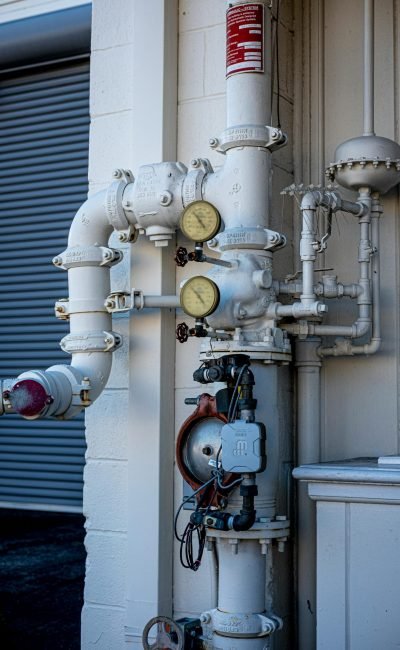
A homeowner in Jacksonville, Florida learns that their irrigation system backflow preventer needs to be tested every two years. Their cousin in Austin, Texas just received a notice requiring annual testing. A property manager in Los Angeles discovers that starting in 2026 her testers need certification through a newly recognized program. A commercial tenant in New York City finds out that test reports need to be co-signed by a licensed master plumber before they can be submitted to the DEP.
None of these people are wrong about their requirements, and none of their requirements are wrong. They simply reflect the reality that backflow testing in the United States is not governed by a single national standard. Requirements are set at the state level, layered over by local water utility rules, and shaped by decades of independent regulatory development in each jurisdiction. The result is a genuinely complex patchwork that makes the question “what are the requirements where I am?” impossible to answer without knowing where you are.
This article explains why that complexity exists — the structural reasons that make state-by-state variation not just inevitable but by design — and then walks through what actually varies between states: testing frequency, tester credential requirements, approved assembly types, program administration, and enforcement. It also profiles ten states in detail, illustrating the range of approaches from the most permissive to the most stringent. The goal is to give property owners, managers, and trade professionals the framework to understand requirements in any jurisdiction, not just a lookup table for a handful of states.
The Fundamental Reason Requirements Vary: Federal Primacy Delegation
The starting point for understanding why backflow requirements differ by state is a structural feature of U.S. water regulation: the federal government has deliberately delegated the primary authority over public water system oversight to the states.
The Safe Drinking Water Act (SDWA), enacted in 1974 and substantially amended in 1986, 1996, and 2018, is the foundational federal water safety law. It authorizes the EPA to establish national drinking water standards and charges the agency with protecting the nation’s public water supplies. But the SDWA is not a centralized command-and-control statute. Under Section 1413, the EPA may delegate primary enforcement responsibility — called primacy — to states that meet certain criteria. As of 2025, 49 states and most territories hold primacy for the Public Water System Supervision program. This means each of those states, not the EPA, is the primary regulator of public water systems within its borders.
The result for backflow prevention is significant. There are no federal backflow prevention or cross-connection control regulations that directly require property owners to install or test backflow prevention assemblies. The EPA publishes guidance, technical manuals, and educational resources — including the Cross-Connection Control Manual — but these documents are advisory, not mandatory. The legal mandate for backflow testing comes from state drinking water regulations and local utility rules, not from federal law.
This means that a state that has developed a comprehensive cross-connection control program will have detailed testing requirements, and a state that has not will have minimal ones. Both outcomes are permitted under the federal framework, because the federal framework does not mandate cross-connection control programs at all. It mandates that states maintain water quality standards — and since backflow can compromise water quality, most states have adopted programs to address it. But the form, scope, and stringency of those programs are state-by-state choices.
The Three-Layer Regulatory System
In practice, backflow testing requirements for a specific property in a specific location are shaped by three overlapping layers of authority, each of which can modify what the layer above it requires.
Layer 1: Federal — The Baseline That Doesn't Directly Mandate Testing
The EPA sets national drinking water standards and cross-connection control guidance. It provides technical resources that states and utilities use to design their programs. But it does not directly require property owners to test backflow preventers. Federal authority is the foundation that creates the regulatory environment; it does not prescribe the day-to-day compliance obligations that property owners experience.
Layer 2: State — The Regulatory Framework
Each state establishes its own cross-connection control requirements through a combination of state plumbing codes, drinking water regulations, and health department rules. State regulations typically specify: what types of connections require backflow protection, minimum standards for approved assembly types, whether testers must hold state-issued credentials or can rely on national certifications, how often required assemblies must be tested, what information must be included in test reports, and what public water systems must do to administer and enforce compliance.
State plumbing codes — typically based on either the International Plumbing Code (IPC) or the Uniform Plumbing Code (UPC), both of which include backflow prevention provisions — provide the installation baseline. Drinking water regulations from the state health department or environmental agency layer testing and reporting requirements on top of the installation baseline. The state may also set tester certification standards, either administering its own examination program or accepting national certifications.
Layer 3: Local Utility — The Enforcement Reality
Water utilities — whether municipal water departments, water districts, or investor-owned utilities — translate state requirements into the specific compliance obligations that property owners experience. A utility’s cross-connection control program defines which specific properties must test, when testing is due, which certified testers they will accept reports from, how reports must be submitted, and what happens when compliance is not achieved.
This layer is where the most granular variation lives. Two utilities in the same state may have identical testing frequency requirements but entirely different approved tester lists, different report submission systems, different deadline structures, and different penalty escalation timelines. A certified tester who is on the approved list for one utility in a state may not be on the approved list for the neighboring utility, even if both utilities serve properties in the same metropolitan area.
The Practical Implication
To understand the backflow testing requirements for a specific property, you need to know the local water utility, not just the state. State law sets the floor; the utility sets the ceiling. Contact your utility’s cross-connection control program directly to confirm the current requirements for your service area.
What Actually Varies Between States
Within this three-layer system, the following dimensions show the most variation between jurisdictions:
Testing Frequency
Annual testing is the standard in the overwhelming majority of U.S. jurisdictions. The International Plumbing Code, which forms the baseline for most state plumbing codes, requires that testable backflow prevention assemblies be tested annually and after installation, repair, or relocation. However, some states and utilities have created exceptions.
Florida is the most notable example: the state requires residential irrigation backflow preventers to be tested every two years rather than annually. North Carolina created a three-year testing cycle in September 2024 for residential irrigation systems that do not apply chemical feeds, under Senate Bill 166. Raleigh, for example, now places qualifying residential customers on a three-year cycle after a passing test is submitted. These exceptions are state-specific and property-type-specific — they do not affect commercial properties, high-hazard connections, or properties that use chemical injection.
Tester Credential Requirements
Most states require that backflow assembly testers hold some form of certified credential. But which credential, and how it is obtained, varies considerably.
Some states accept national certifications directly. A tester who holds a current ASSE 5110 certification can work in many states without any additional state-level registration. Other states require a separate state-issued license in addition to national certification. Texas is the clearest example: the TCEQ issues a Backflow Prevention Assembly Tester (BPAT) license that is separate from ASSE certification and requires both a state-administered computer-based written examination and a practical skills examination. Holding ASSE 5110 does not qualify you to test in Texas without also obtaining the TCEQ license.
California, in a regulatory update taking effect progressively through 2027, now requires that all backflow assembly testers hold certification through a program recognized by the State Water Resources Control Board, and requires those certification programs to be ANSI-accredited by July 2027. This phased requirement was designed to standardize competency levels across the large and diverse California tester population.
New York City operates its own cross-connection control program through the Department of Environmental Protection (NYC DEP). The DEP requires that annual test reports be filled out by a certified tester and co-signed by a Licensed Master Plumber — a requirement that adds a layer beyond what most states require and means that a certified tester who is not also an LMP, or who is not working under one, cannot complete the full compliance cycle for NYC properties.
Approved Assembly Types and the USC vs. ASSE Split
Which backflow prevention assemblies are approved for use in a jurisdiction depends on both state plumbing code provisions and the utility’s cross-connection control program. Most utilities reference either the USC FCCC&HR List of Approved Backflow Prevention Assemblies or the ASSE product certification lists as their standard for acceptable devices. In Washington State, assemblies must specifically appear on the USC Approved Assemblies List to be acceptable for water system protection — a requirement that is explicit in Washington’s program and not common in all states.
This distinction matters for testers and installers: a backflow assembly that is approved in California may not appear on the required list for a Washington utility, and using it anyway creates a compliance problem at the property level.
Program Administration: State vs. Local vs. Third-Party
Some states run centralized cross-connection control programs where compliance data flows to a state agency. Others delegate entirely to individual utilities. Many utilities — particularly medium and large water systems — contract with third-party program administrators such as Backflow Solutions Inc. (BSI), Safe Water Commission, or Vepo to manage their database, notification, and tracking functions. When a utility uses a third-party administrator, test reports are submitted to the administrator rather than directly to the utility, and compliance notices come from the administrator rather than from the utility’s letterhead. Property owners who receive notices from these third-party administrators should understand that they are official compliance notices from an entity acting as agent of the water utility.
State Profiles: Ten States in Detail
The following table profiles ten states that represent the range of approaches to backflow testing requirements across the country — from the most comprehensive regulatory frameworks to those that leave more discretion to local utilities.
| State | State-Level Authority | Testing Frequency | Tester Credential Required | Key Distinguishing Feature |
|---|---|---|---|---|
|
California |
State Water Resources Control Board (SWRCB) |
Annual |
SWRCB-recognized program (ASSE or USC); ANSI-accredited by 7/2027 |
Most detailed Cross-Connection Control Policy Handbook; ongoing regulatory updates |
|
Texas |
TCEQ (Texas Commission on Environmental Quality) |
Annual |
TCEQ-issued BPAT license; separate written exam at CBT centers |
State-issued license required — ASSE alone insufficient; customer service inspections also mandated |
|
Florida |
FL Dept. of Environmental Protection |
Every 2 years (residential irrigation) |
State-recognized certification |
Florida residential irrigation testing is biennial, not annual — one of the few states with this exception |
|
Washington |
State Dept. of Health |
Annual |
State-certified BAT (Backflow Assembly Tester) |
USC FCCC&HR credential widely required; assemblies must appear on USC Approved Assemblies List |
|
Michigan |
EGLE (Dept. of Environment, Great Lakes, and Energy) |
Annual |
State certification |
Requires residential AND commercial cross-connection surveys; among the strictest programs nationally |
|
Wisconsin |
Dept. of Natural Resources (NR 810.15) |
Annual |
State registration + ASSE or equivalent |
On-site surveys required every 2 years for industrial/commercial; comprehensive residential survey program |
|
New York |
State Dept. of Health + NYC DEP (NYC separately) |
Annual |
State-certified tester; NYC requires LMP co-signature |
NYC has one of the most complex requirements nationally, with DEP plan approval and LMP involvement |
|
Oregon |
Oregon Health Authority (OAR 333-061-070) |
Annual |
State-certified tester |
Strong state mandate; utilities authorized to shut off service for non-compliance |
|
North Carolina |
NC DEQ |
Annual (commercial); 3-year cycle for qualifying residential irrigation |
State-registered testing company |
NC SB 166 (Sept. 2024) created 3-year cycle for residential irrigation without chemical feeds |
|
Minnesota |
Dept. of Labor and Industry |
Annual |
ASSE 5110 + state BT or BF registration |
Separate rebuilder (BF) and tester (BT) registrations; plumbing license required for rebuilder category |
The States With the Most Comprehensive Programs
Three states consistently lead national rankings for cross-connection control program comprehensiveness: California, Michigan, and Wisconsin. What sets these states apart is not just that they require annual testing — most states do — but that they require proactive cross-connection surveys of both commercial and residential service connections, not just reactive testing when a device is already known to exist.
California
California’s Cross-Connection Control Policy Handbook (CCCPH), maintained by the State Water Resources Control Board, is the most detailed state-level guidance document in the country. It specifies program elements, tester certification standards, assembly approval processes, record-keeping requirements, and enforcement protocols in granular detail. California’s ongoing updates — including new tester certification recognition requirements and ANSI accreditation deadlines — reflect a state that actively revises its program rather than treating it as a static document.
The diversity of California’s water utilities — from large urban systems like LADWP and Cal Water to small rural water districts — means that program implementation varies significantly even within the state. Large urban utilities tend to have highly developed programs with active enforcement. Small rural districts may have the same state requirements on paper but fewer resources to enforce them. A property in Los Angeles and a property in a small central valley town may have very different experiences of compliance enforcement despite operating under the same state framework.
Michigan
Michigan’s Part 14 of the Safe Drinking Water Act requires water systems to maintain comprehensive cross-connection control programs that include periodic surveys of all service connections — both commercial and residential. This residential survey requirement, reinforced by the state in 2016, goes significantly further than most states, which survey commercial properties but leave residential connections largely to device-triggered compliance. Michigan’s annual submission requirement to EGLE creates accountability for utility programs in a way that many states do not replicate.
Wisconsin
Wisconsin’s Chapter NR 810.15, updated in 2010, requires on-site cross-connection surveys of all service connections on a minimum two-year cycle for industrial and commercial facilities, with requirements for residential connections as well. Wisconsin’s program is notable for the combination of survey requirements and testing requirements — identifying cross-connections proactively rather than just managing compliance for known devices.
States Where Local Utility Authority Dominates
In contrast to states with strong centralized programs, many states operate primarily through local utility authority with minimal state-level cross-connection control requirements. States like Kentucky, Nevada, and Maryland are examples where local jurisdictions — city utilities, county water districts — set their own backflow certification standards, approved assembly lists, and testing requirements, with state regulations providing only a broad framework.
In these states, requirements can vary dramatically from one water district to the next within the same state. A property in one county may be required to test annually, while a property twenty miles away in a different district may have no active testing requirement despite being in the same state with the same plumbing code baseline. This variation is entirely legal under the primacy framework — local utilities are exercising the discretion that state regulations leave to them.
For property owners, contractors, and testers operating in these states, the practical implication is that the local water utility is the only authoritative source for compliance requirements. General state-level resources may not reflect what a specific utility actually requires.
Why Requirements Change Over Time — and How to Stay Current
Backflow testing requirements are not static documents. States regularly update their plumbing codes, revise their drinking water regulations, and issue new cross-connection control guidance. Water utilities update their programs in response to state regulatory changes, contamination incidents, infrastructure updates, and shifts in technical standards. North Carolina’s 2024 residential irrigation testing frequency change, California’s phased tester certification updates, and Texas’s ongoing TCEQ program refinements are all recent examples of requirements that changed within the past two years.
A property owner or contractor who last checked their state’s requirements three years ago may be operating on outdated information. This is particularly true in states that have been active in updating their programs — California most prominently, but also Texas, Washington, Michigan, and New York.
The most reliable approach for staying current is a combination of utility contact and resource directories. Your water utility’s cross-connection control program office is the authoritative source for what that utility currently requires. State-level resources — the state health department’s drinking water program page or the state plumbing board — provide the regulatory framework. And comprehensive, regularly updated state requirements directories like the one at getyourbackflowtested.com provide a centralized reference that tracks requirements across all fifty states.
A Word of Caution About Online Information
Because requirements vary by state and change over time, general information found online — including on contractor websites, forum posts, and even some government pages that have not been recently updated — may not accurately reflect current requirements for your jurisdiction. Always verify current requirements directly with your local water utility before relying on any secondary source, including this article.
What Consistent Across All States
Despite the variation, certain elements of backflow testing compliance are consistent enough to hold true in virtually every U.S. jurisdiction with an active cross-connection control program:
Annual testing is the default frequency for commercial properties, high-hazard connections, and fire suppression systems. State-specific exceptions exist primarily for certain residential application types.
Only certified testers can submit test reports that satisfy compliance requirements. Self-testing does not meet the requirements of any jurisdiction with a formal cross-connection control program.
Test gauges must be annually calibrated by an approved calibration laboratory. An uncalibrated gauge produces test results that may be rejected by the water authority.
Testing alone is not compliance — the test report must be submitted to the water authority or program administrator by the deadline. A completed test that is not filed does not resolve the compliance obligation.
The property owner or water account holder is the legally responsible party for compliance, regardless of lease terms or management delegation.
Failed assemblies must be repaired and retested within the deadline established by the local program — typically 15 to 30 days.
Water service termination is the ultimate enforcement tool available to utilities in all states and remains a real consequence of sustained non-compliance.
Look Up Your State's Requirements
The state-by-state requirements directory at getyourbackflowtested.com provides current information on backflow testing requirements for all 50 states, including the relevant regulatory authority, typical testing frequency, tester certification standards, and links to official state and utility resources. Use it as a starting point, then confirm specifics directly with your local water utility.
See also
Part of the Backflow Testing Complete Guide series | Find a certified tester at getyourbackflowtested.com