
Backflow Testing Requirements for Commercial Properties: A Landlord and Property Manager's Guide
Commercial backflow compliance is one of the most commonly mismanaged areas of building operations — not because the rules are complicated, but because responsibility is frequently unclear between owners, managers, and tenants. This guide makes it clear.
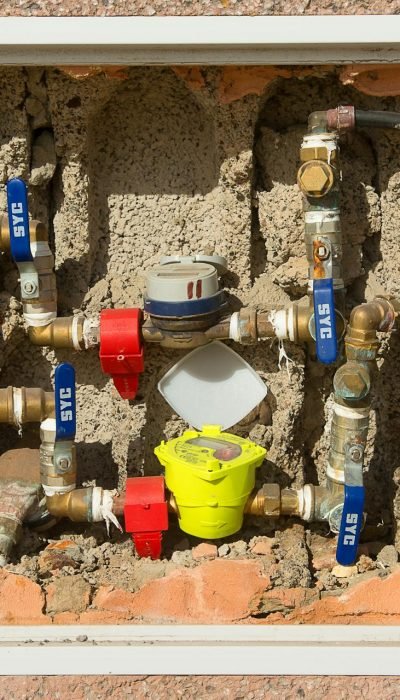
Every commercial building with a municipal water connection has a backflow compliance obligation. The specific requirements — what assembly type is required, how often it must be tested, who is authorized to test it, and what happens when deadlines are missed — vary by jurisdiction and by the nature of the business operating in the building. But the obligation itself is essentially universal for commercial property owners in the United States.
Despite this, commercial backflow compliance is one of the most frequently cited categories of water utility enforcement action. Fines are assessed, service interruption notices are issued, and in some cases water service is actually terminated — all because annual testing deadlines were missed, repair follow-ups were never completed, or notices were received and ignored because no one at the property was clearly responsible for acting on them.
The root cause is almost always not ignorance of the rules but confusion about who is supposed to handle it. Does compliance fall to the property owner or the tenant? The property manager or the building engineer? The single-tenant user or the multi-tenant operator? These questions do not have universal answers — they depend on how the property is configured, how the lease is written, and what the local water authority holds the account holder responsible for.
This guide addresses those questions directly, starting with why commercial properties face stricter requirements than residential, walking through the requirements by property type, clarifying the ownership and responsibility question in practical terms, and laying out what an effective commercial compliance management system looks like in practice.
Why Commercial Properties Face Stricter Requirements
The backflow risk at a commercial property is categorically different from the risk at a single-family home — in scale, in hazard diversity, and in the potential consequences of failure.
Scale is the most obvious factor. A commercial building may serve hundreds of employees, customers, and visitors daily. A failed backflow preventer at a 150-unit apartment building does not contaminate one household’s water — it creates a potential pathway to the municipal supply from the plumbing of 150 units simultaneously. A failed device at a hospital introduces the possibility of healthcare chemicals, biological materials, or treated water entering the municipal distribution system, where it could affect an entire neighborhood.
Hazard diversity is the less visible but equally important factor. Commercial buildings contain an enormous variety of plumbing configurations that residential properties do not: commercial dishwashers with chemical sanitizer injection, beverage dispensing equipment, boilers and HVAC systems with corrosion inhibitors, fire suppression systems with antifreeze, laboratory sinks, industrial process water connections, irrigation systems with chemical injection, and car wash reclamation systems. Each of these represents a distinct cross-connection with its own hazard classification. The aggregate risk in a commercial building is orders of magnitude higher than in a single-family residence.
Regulatory consequence also differs. When a commercial property falls out of compliance, the water utility is not simply enforcing an administrative rule. It is managing a public health risk. Utilities have broad authority to escalate enforcement against commercial properties quickly and aggressively, including service termination, because the potential downstream consequences of a commercial contamination event are severe.
Requirements by Property Type
Backflow prevention requirements are assigned based on the hazard level of the cross-connections present at a property. The type of business operating in a building is therefore the primary driver of what assembly type is required and how tightly the compliance program is enforced. The following categories cover the most common commercial property types and their typical requirements.
Office Buildings and Standard Retail
A standard office building with conventional plumbing — restrooms, break room sinks, a dishwasher — is typically classified as a low-hazard commercial property. Most jurisdictions require a double check valve assembly (DCVA) or, increasingly, an RPZ on the main domestic water service connection. Irrigation systems on the property are subject to separate backflow requirements. Annual testing is standard.
The low-hazard classification can change quickly if the building houses tenants whose operations introduce higher-hazard connections. A nail salon using chemical solvents, a dry cleaner, an auto service business, or a print shop with chemical processes all elevate the hazard profile of the property’s water connections beyond standard office classification. When tenant mix changes, property owners should reassess whether the existing backflow assembly type remains appropriate.
Restaurants and Food Service
Restaurants are among the highest-risk commercial properties for backflow from a cross-connection standpoint. A typical restaurant has multiple simultaneous cross-connections: the pre-rinse spray station (a hose that regularly lies in standing water in a sink), the commercial dishwasher with chemical sanitizer injection, the beverage dispensing system with carbonation and syrup lines, the mop sink, and ice machines that create standing water conditions.
Most water authorities classify restaurant water connections as medium to high hazard. RPZ assemblies are commonly required for restaurants, and in jurisdictions with aggressive commercial programs, all cross-connections within the restaurant — not just the main service connection — may be subject to individual protection requirements. Restaurant operators who take over existing spaces should verify that the installed backflow assembly type matches the hazard level of their specific operations rather than assuming the previous tenant’s device is appropriate.
Multi-Family Residential (5+ Units)
Apartment buildings, condominium complexes, and other multi-family residential properties with five or more units are treated as commercial properties for backflow compliance purposes in most jurisdictions. The property owner or homeowners association is responsible for the backflow assembly on the building’s main water service connection. Individual unit plumbing does not typically require separate backflow testing, but common-area irrigation systems, pool fill lines, and boiler systems do.
Multi-family properties in California, New York, Washington, and other high-compliance states with large urban utility programs are subject to the most stringent requirements and the most active enforcement. Property managers in these markets should treat backflow compliance as a standard annual operating cost and build it into their maintenance budgets accordingly.
Industrial and Manufacturing
Industrial and manufacturing properties occupy the high-hazard end of the commercial spectrum. Any facility where industrial chemicals, process water, solvents, acids, caustic compounds, or heavy metals are present in proximity to potable water connections requires RPZ protection. Testing requirements are standard annual, and in some jurisdictions additional inspections may be required following any process change that introduces new potential cross-connections.
Industrial properties being sold or repurposed require careful backflow compliance review. A change of use — from warehouse to food processing, from light manufacturing to chemical storage — may trigger new hazard classifications and require assembly upgrades even before operations begin.
Medical, Dental, and Healthcare Facilities
Healthcare facilities are universally classified as high-hazard commercial properties. Hospitals, outpatient surgical centers, dialysis clinics, medical offices, dental offices, and veterinary practices all handle substances that would create serious public health consequences if introduced to the potable water supply: pharmaceutical compounds, sterilization chemicals, dental irrigation fluids, biological waste, and medical equipment rinse water.
RPZ assemblies are mandatory for healthcare facility water service connections in virtually all U.S. jurisdictions. Testing frequency may exceed the standard annual requirement in some markets. New York City, for example, requires healthcare facilities to file a Backflow Prevention Risk Assessment with the Department of Environmental Protection and to have backflow prevention plans approved by a licensed engineer before installation. Property owners acquiring healthcare-occupied buildings should treat backflow compliance as a specialized area requiring expert review.
Commercial Property Types and Typical Assembly Requirements
| Property / Business Type | Typical Hazard Level | Assembly Usually Required | Notes |
|---|---|---|---|
|
Office building (standard) |
Low |
DCVA or RPZ |
Many utilities now mandate RPZ for all commercial |
|
Retail / strip mall |
Low |
DCVA or RPZ |
Higher hazard if salon, dry cleaner, or auto service present |
|
Restaurant / food service |
Medium–High |
RPZ |
Dishwashers, pre-rinse, beverage lines create multiple cross-connections |
|
Medical / dental / veterinary |
High |
RPZ |
Healthcare chemicals, sterilization equipment — RPZ mandatory |
|
Multi-family residential (5+ units) |
Low–Medium |
RPZ (common in CA, NY, WA) |
Treated as commercial for compliance purposes |
|
Car wash / auto service |
High |
RPZ |
Detergents, degreasers, reclaimed water systems |
|
Industrial / manufacturing |
High |
RPZ |
Chemical processes, solvents, process water — strictest requirements |
|
Fire suppression (plain water) |
Low–Medium |
DCDA |
RPDA required if antifreeze or foam additives present |
|
Commercial irrigation |
Low–High |
RPZ (if chemical injection), else DCVA/PVB |
Chemical injection mandates RPZ |
Note: The requirements in this table are typical patterns based on common utility programs. Actual requirements are set by your local water authority and may differ. Always confirm with your utility before installation or upgrade.
The Ownership and Responsibility Question
The most persistent source of commercial backflow compliance failures is not ignorance of the requirement — it is confusion about who is responsible for meeting it. This confusion is understandable because the answer depends on multiple overlapping legal relationships.
The Utility Holds the Account Holder Responsible
Water utilities hold the account holder — the entity whose name is on the water service account — legally responsible for backflow compliance. Notices go to the account holder. Fines are assessed against the account holder. Service termination affects the account holder’s service. In the overwhelming majority of commercial properties, the account holder is the property owner, not the tenant.
This means that a commercial tenant who fails to schedule a required backflow test does not insulate the property owner from the compliance consequences. Even if the lease assigns testing responsibility to the tenant, the utility will still assess fines against the property owner’s account and threaten service to the building if a passing test report is not on file by the deadline. The owner cannot point to the lease as a defense when the utility enforces compliance.
How Lease Type Affects Operational Responsibility
While the legal compliance obligation rests with the property owner, the operational responsibility for scheduling and paying for testing is often assigned through the lease. Understanding how different lease structures handle this is essential for both landlords and tenants.
Triple Net (NNN) Leases: In a triple net lease, the tenant assumes responsibility for most or all property operating expenses, including maintenance, insurance, and utilities. This typically includes backflow testing for the space the tenant occupies. However, building-level assemblies serving multiple tenants remain the owner’s responsibility even under NNN terms.
Gross Leases: In a gross lease, the landlord covers building operating costs. Backflow testing is a building operating expense and falls to the landlord.
Modified Gross Leases: These hybrid structures divide responsibilities explicitly. Whether backflow testing is the landlord’s or tenant’s obligation depends on the specific terms of the lease, which may or may not address backflow directly.
The critical point for property owners is this: regardless of what the lease says about operational responsibility, the property owner remains the party accountable to the water utility. If a tenant is responsible for testing under the lease but fails to do so, the owner must either enforce the lease obligation against the tenant or step in and arrange the testing directly — because the utility’s deadline will not move while a landlord-tenant dispute is being resolved.
Multi-Tenant Buildings: Who Owns What
Multi-tenant commercial buildings add a layer of complexity. A typical multi-tenant office building or retail center has several distinct backflow assemblies: a main domestic service assembly that protects the entire building’s water supply, separate irrigation assemblies serving common-area landscaping, a fire suppression assembly on the sprinkler system connection, and potentially individual tenant-specific assemblies serving high-hazard tenant operations.
The building-level assemblies — main domestic service, irrigation, and fire suppression — are universally the property owner’s responsibility regardless of lease structure. Tenant-specific assemblies serving individual tenant spaces may be assigned to those tenants by lease, but the owner must monitor whether tenant-level compliance is actually being maintained, because the utility will hold the owner accountable if it is not.
The Gap That Creates the Most Compliance Failures
The most common commercial backflow compliance failure is a property owner who believes the tenant is handling it, a tenant who believes it is the building’s problem, and a water utility deadline that passes while both parties point at each other. The only reliable solution is a written compliance management plan that assigns specific responsibility, tracks deadlines centrally, and has the property owner as the backstop.
Fire Suppression Backflow: The Compliance Gap Most Managers Miss
Fire suppression system backflow prevention is administered separately from standard domestic service backflow compliance in most jurisdictions, and it is subject to a separate testing cycle. Property managers who have domestic service testing current may not realize that a separate fire suppression backflow test is also required — and overdue.
The backflow prevention assemblies on fire suppression system service connections — double check detector assemblies (DCDAs) for standard systems and reduced pressure detector assemblies (RPDAs) for systems containing antifreeze, foam, or other additives — are larger and more complex than standard commercial domestic assemblies. They are often subject to compliance oversight by both the water utility’s cross-connection control program and the local fire marshal’s office, creating a two-agency compliance obligation that many property managers are unaware of.
The practical implication: property managers must verify backflow compliance separately for domestic service, irrigation, and fire suppression connections at every building in their portfolio. These three systems may have different testing deadlines, different approved tester lists, and different report submission requirements. Treating them as a single compliance obligation is a common error that leads to missed deadlines on one or more systems.
What Commercial Testing Costs
Commercial backflow testing costs more than residential testing for straightforward reasons: assemblies are larger, testing procedures are more complex, and the time and expertise required per device are greater. The following ranges represent current national averages for standard commercial applications:
Standard commercial DCVA or RPZ (3/4″ to 1-1/2″), accessible above-grade installation: $85 to $175 per device, including test report filing.
Larger commercial RPZ (2″ to 4″): $175 to $350 per device depending on size and access.
Fire suppression backflow (DCDA or RPDA, standard commercial): $150 to $450 per assembly. Fire suppression devices are larger and require coordination with the fire alarm system in some configurations.
Large industrial RPZ or fire suppression devices (4″ to 8″ and above): $350 to $1,000+ per device. These large assemblies require significant preparation, specialized equipment, and sometimes temporary system shutdown.
Multi-device properties: Most certified testers will negotiate bundled pricing for properties with multiple devices tested in a single visit. A property with three assemblies tested in one trip will cost less per device than three separate service calls.
Beyond the base testing fee, property managers should budget for potential additional costs: filing fees charged by the water authority ($15 to $50 per device in many jurisdictions), any repair costs if devices fail testing, retest fees after repair, and emergency service premiums if testing is scheduled close to a deadline when standard scheduling is unavailable.
Building a Commercial Compliance Management System
For any portfolio with more than one or two commercial properties, an informal compliance approach is a recipe for missed deadlines and escalating penalties. A functional compliance management system for commercial backflow does not need to be complicated, but it does need to be systematic. The following four elements are the foundation.
Element 1: A Complete Device Inventory
The starting point is knowing every backflow assembly in the portfolio — where it is, what type it is, what size, what the serial number is, which water authority it reports to, and what the current test due date is. Many commercial property managers discover during this inventory that they have assemblies they did not know existed, or that their records show device types that do not match what is actually installed.
A device inventory spreadsheet with one row per assembly is the minimum. Property management software platforms typically have backflow or equipment tracking modules that serve this purpose more efficiently for larger portfolios. The inventory should be treated as a living document updated whenever an assembly is installed, repaired, relocated, or replaced.
Element 2: A Calendar Trigger System
Backflow testing deadlines that are not tracked proactively will be missed. A calendar system that generates action reminders 45 to 60 days before each test deadline — not a notification on the deadline date itself — is essential. Sixty days of lead time provides room to schedule the tester, receive results, and address any failed devices with enough time for repair and retest before the deadline.
For portfolios with dozens or hundreds of assemblies across multiple water authority service areas, each with different deadline structures, a centralized tracking system is the only practical approach. Many property managers use a shared calendar or project management tool with recurring annual reminders set for each device.
Element 3: A Verified Tester Relationship
Having a certified tester on call who is familiar with your portfolio and pre-approved by every relevant water authority in your service area eliminates the frantic search for a qualified tester when a deadline approaches. Establish this relationship proactively, not when you are two weeks from a testing deadline. Confirm that your tester holds current certifications accepted by each utility you report to, that they handle test report submission as part of their service, and that they can provide same-day or next-day service for failed-test repair situations.
Element 4: A Document Retention System
Every passing test report, every failed test report, every repair invoice, and every correspondence with a water authority regarding backflow compliance should be retained for a minimum of three years. This documentation protects you in any dispute with a water authority about whether compliance was achieved, provides the repair history needed for repair-versus-replace decisions, and is a required disclosure item in many commercial property sale transactions.
When a commercial property is sold, the buyer’s due diligence should include a review of backflow compliance history. Sellers who cannot produce documentation of current compliance or who have unresolved compliance issues will face negotiation complications at closing.
For New Property Acquisitions
When acquiring a commercial property, request the complete backflow compliance history as part of due diligence: the device inventory, the most recent test reports for all assemblies, documentation of any repairs in the past three years, and confirmation of current compliance status with each relevant water authority. Inheriting a non-compliant property — even unknowingly — creates immediate liability.
What Happens When Commercial Properties Fall Out of Compliance
The enforcement sequence for commercial backflow non-compliance moves faster and escalates more aggressively than for residential properties. Water utilities prioritize commercial enforcement because the potential public health consequences of a commercial contamination event are more severe and affect more people.
The typical escalation sequence begins with the initial test due notice, followed by a reminder notice, followed by a non-compliance notice after the deadline has passed. Most utilities begin assessing fines at the non-compliance notice stage — initial fines commonly range from $100 to $500 for a first violation, escalating to $500 to $2,000 for repeat violations. Major urban utilities enforce more aggressively: New York City’s Department of Environmental Protection can assess fines of up to $2,000 per violation, and some California utilities impose daily penalty accrual for continued non-compliance.
Service termination is the ultimate enforcement tool. For a commercial property, a water shutoff means operational shutdown — a restaurant cannot serve food, a medical office cannot operate, a manufacturing facility cannot run production. The cost of a water shutoff in terms of lost business, emergency repair premiums, reconnection fees, and penalty resolution can easily run five to ten times the cost of the original testing compliance that was missed.
Property managers who receive a non-compliance notice should treat it as a time-critical operational issue, not an administrative nuisance. Scheduling testing immediately, communicating the timeline to the water authority, and documenting all actions taken reduces penalty exposure and demonstrates good faith cooperation that most utilities will consider when assessing the final penalty amount.
See also
Part of the Backflow Testing Complete Guide series | Find a certified tester at getyourbackflowtested.com