
Dezincification, Chloramine Damage, and Freeze Cracks: Failures That Cannot Be Repaired
Most backflow preventer failures are repairable: a rubber goods rebuild, a debris flush, a bonnet kit replacement. This guide covers the failures that are not. Dezincification in the brass body, elastomer degradation from chloramine-incompatible rubber compounds, freeze cracking, advanced corrosion, and discontinued assemblies with no available parts — these are the conditions where authorizing another repair is spending money on work that will fail again, and where honesty about replacement is the right answer.
Why This Guide Exists
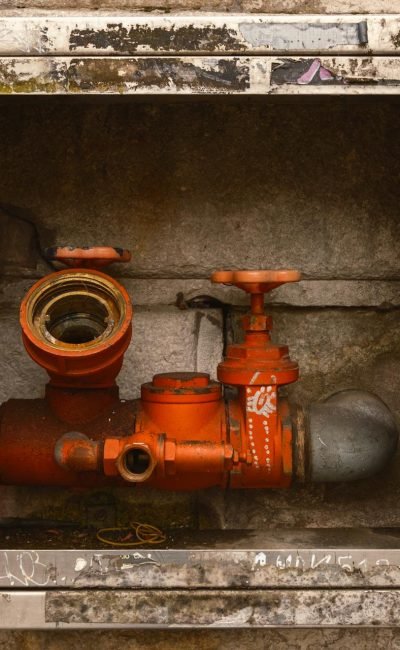
The backflow repair and rebuild industry is built on the correct premise that most assembly failures are repairable. Debris fouling clears with a flush and a seat cleaning. Worn rubber goods restore full performance with a rebuild kit. A degraded bonnet assembly on a PVB extends the assembly’s service life significantly with a $25 kit and twenty minutes of labor. These repairs work, they are cost-effective, and they are the right answer for the overwhelming majority of test failures.
But there is a category of failure where the repair-first instinct leads property owners and facility managers to spend money on work that will not hold. A rubber goods rebuild on a body with advancing dezincification is not a repair — it is a temporary cosmetic improvement on a structurally compromised assembly that will fail again within months. Rebuilding a backflow preventer with the same nitrile rubber goods in a supply system that switched to chloramine three years ago is not a maintenance solution — it is the same repair that failed last year, being performed again. Installing a brand-new bonnet kit on a PVB body with an invisible freeze crack that only appears under pressure is paying for work that will produce a leaking assembly on the first warm day of spring.
Recognizing when an assembly has crossed the line from repairable to beyond repair is not pessimism — it is the judgment that prevents repeated service calls, wasted parts costs, and compliance disruption. This guide describes each of the non-repairable failure conditions in enough detail to identify them in the field, explains why they cannot be repaired, and tells you what should happen next.
Failure Identification Quick Reference
The following table summarizes the five non-repairable failure conditions covered in this guide: how to identify each one, what you find on disassembly, whether any repair is possible, and what action is required.
| Failure Type | Visual Identification | What You Find on Disassembly | Repair Possible? | Action Required |
|---|---|---|---|---|
|
Dezincification (body or seat housing) |
Pink or reddish coloration where brass should be yellow-gold; white or chalky powdery deposits; surface pitting or cratering; soft or crumbling texture when probed |
Material that appears to have lost structural density; interior surfaces that crumble or pit when touched; white zinc oxide deposits at failure points; areas where the brass alloy has reverted to a porous copper matrix |
No. Body dezincification is a structural failure — no rubber goods kit or hardware replacement addresses it. |
Full assembly replacement. Investigate water chemistry (low pH, low alkalinity, high chloride) and specify DZR or lead-free brass replacement. |
|
Chloramine elastomer degradation (seat discs, O-rings, diaphragms) |
Before disassembly: unusually frequent test failures despite recent rebuilds; rubber fragments in the water supply (black specks from nitrile degradation). After disassembly: swollen, sticky, or crumbling rubber components |
Seat discs that are swollen beyond their original diameter and no longer fit the seat correctly; O-rings that have lost their round cross-section and taken a permanent compressed set; diaphragm material that tears or shreds rather than flexing |
Partial — rubber goods can be replaced. But rebuilding with the same elastomer compound will produce the same rapid failure. Chloramine damage is a material selection problem, not a normal wear event. |
Rebuild with chloramine-rated peroxide-cured EPDM rubber goods kits, or replace the assembly with a model using chloramine-resistant compound. Confirm supply water uses chloramine vs. free chlorine. |
|
Freeze cracking (body, bonnet, or check housing) |
Visible linear crack, fracture, or separation in the brass body, bonnet housing, or check chamber cover; may be visible only under pressure when water actively weeps from the crack; sometimes not apparent until supply pressure is restored in spring |
Crack propagates through the body wall thickness, confirming it is a structural failure. May be obscured by scale deposits. Water under pressure will always find the path through a body crack — the leak cannot be sealed. |
No. A cracked body cannot be repaired. No sealant, epoxy, or patch holds a pressurized potable water component to the standards required for backflow assembly service. |
Full assembly replacement. Close upstream shutoff immediately when crack is confirmed. Install freeze protection (drain procedure or ASSE 1060-rated heated enclosure) before putting replacement assembly in service. |
|
Body corrosion at structural failure (pitting, wall perforation) |
Through-wall perforation where corrosion has penetrated the full thickness of the brass body; deep pitting visible on external body surfaces; wall thickness measurably reduced in corroded areas; water weeping from areas with no mechanical joint or seam |
Interior surfaces showing progressive loss of material; pitting that has progressed to perforation or near-perforation; no discrete crack but a zone of material loss |
No. Advanced corrosion that has compromised wall thickness is a structural failure. Patching does not restore the pressure integrity required for potable water service. |
Full assembly replacement. Investigate the corrosion cause — aggressive water chemistry, stray electrical current, or dissimilar-metal galvanic coupling. Address the cause before installing the replacement assembly. |
|
Discontinued assembly (no replacement parts available) |
Assembly model number not found in current manufacturer catalogs or repair kit distributor databases; assembly may be 15+ years old; body design differs significantly from current production (multiple-bolt cover, no test cock in shutoff valve) |
Nothing abnormal on disassembly — the assembly body and internal surfaces may be in acceptable condition, but no OEM rubber goods or hardware is available to rebuild it |
No viable path. Aftermarket generic parts that do not match OEM specifications cannot restore the assembly to factory performance standards required for certification. |
Full assembly replacement. This is a planning replacement, not an emergency — plan it for a convenient window before the next test failure triggers a compliance deadline. |
Dezincification: The Silent Structural Failure
Dezincification is a selective corrosion process in which zinc is gradually leached from brass alloys by aggressive water chemistry, leaving behind a porous, copper-rich matrix that retains the original shape of the component but has lost most of its mechanical strength. An assembly body that has undergone significant dezincification looks intact from a distance. Under pressure, it behaves like a different material entirely.
The Chemistry: Why Zinc Leaves Brass
Standard yellow brass used in plumbing components contains roughly 30 to 40 percent zinc — the alloy composition that gives brass its characteristic gold color and its favorable machinability and casting properties. In the presence of aggressive water chemistry, an electrochemical reaction selectively removes the zinc from the alloy, leaving behind a spongy, porous copper structure. The driving conditions for dezincification are well established: low pH (below approximately 7.2), low alkalinity (which provides little buffering capacity to resist pH drop), high chloride content, elevated temperature, and the presence of chlorine or chloramine disinfectants. Soft water — low in dissolved minerals — is particularly aggressive because it lacks the calcium carbonate buffer that hard water provides.
The result of this electrochemical process is not visible from the outside in early stages. The component continues to hold pressure. The body surface shows no change. But internally and gradually, the alloy is losing density. As dezincification progresses, it eventually reaches the surface — producing the characteristic signs that allow field identification.
How to Identify Dezincification on a Backflow Assembly
The visual indicators of dezincification on brass backflow assembly bodies and seat housings follow a recognizable pattern. Yellow brass that has undergone dezincification shifts in color — the zinc-depleted copper matrix produces a distinctive pinkish or reddish hue where the brass should appear golden. White or chalky powder-like deposits (zinc oxide) accumulate on surfaces, particularly at areas of concentrated water contact or stagnation. The surface texture changes from smooth, dense metal to a rough, pitted, or granular texture that can be crumbled or probed with a fingernail more easily than intact brass.
On disassembly, dezincified material crumbles at the edges of drill-out areas, shows internal porosity that would not be present in healthy brass, and produces an abnormal texture when a probe tool is pressed against it. Seat surfaces that were previously smooth and flat show pitting and irregularity that no amount of cleaning can restore, because the material itself has been compromised at the molecular level — the zinc is gone, and the copper matrix remaining is not the alloy that the assembly was designed around.
Internal dezincification — occurring on the interior walls of the body cavity where water contacts the brass continuously — is harder to identify without disassembly. A body that has been in service for many years in a low-pH, low-alkalinity water system should be evaluated for interior dezincification during any rebuild visit, particularly if the assembly has been passing tests but showing gradually declining differentials over several years. A body cavity that crumbles or pits when inspected with a probe is telling you that the assembly has a limited and unpredictable remaining service life regardless of how well the rubber goods are performing.
Why Dezincification Cannot Be Repaired
Dezincification is not a wear event — it is a metallurgical change in the alloy composition of the body. There is no replacement component, coating, or treatment that restores the zinc content of the brass or re-densifies the porous copper matrix. A rubber goods rebuild does not address the body. A new seat disc on a dezincified seat housing seals against a structurally compromised surface. A rebuilt assembly in a dezincified body will eventually fail — through a crack in the weakened body material, through a relief port that separates from the body, or through a seating surface that gradually collapses further.
Post-2010 lead-free brass specifications have partially addressed this problem by requiring dezincification-resistant (DZR) brass alloys or silicon-bronze formulations for wetted surfaces in potable water assemblies. Modern assemblies from major manufacturers meet these requirements. The assemblies most at risk for dezincification are those installed before approximately 2012 in water systems with known aggressive chemistry.
Water Chemistry Red Flags for Dezincification Risk
Supply water pH consistently below 7.2 — low pH increases the driving force for zinc leaching
Low alkalinity (below 30 mg/L as CaCO3) — soft water lacks the buffering capacity to resist pH drop under stagnation
High chloride levels (above 50 mg/L) — chloride is a primary accelerant of dezincification in brass
Warm water temperatures (above 70 °F) — higher temperatures accelerate all electrochemical corrosion reactions
Distribution systems that use chloramine disinfection — chloramine is more corrosive to brass than equivalent concentrations of free chlorine
If any of these conditions apply in your water system and you have pre-2012 brass assemblies in service, proactive inspection and accelerated replacement planning is warranted — rather than waiting for an assembly failure to trigger compliance deadline pressure.
Chloramine Elastomer Degradation: When the Same Repair Keeps Failing
Chloramine (monochloramine, NH2Cl) is used by an increasing number of U.S. water utilities as a primary or secondary disinfectant, replacing free chlorine as a way to reduce the formation of trihalomethane disinfection byproducts. From the perspective of backflow assembly maintenance, this chemical substitution has a significant consequence: chloramine is substantially more aggressive toward the elastomeric rubber compounds used in backflow assembly rubber goods than equivalent concentrations of free chlorine.
What Chloramine Does to Rubber
The degradation of rubber compounds by chloramine is a well-documented phenomenon in water distribution system research, first studied comprehensively in the early 1990s following widespread utility conversions to chloramine disinfection. The American Water Works Association Research Foundation commissioned a study that concluded definitively that chloraminated water is more detrimental to most elastomers than water with equivalent chlorine concentrations.
The degradation mechanism depends on the specific elastomer compound. Standard nitrile rubber (NBR) — commonly used in backflow assembly O-rings and some seat discs — undergoes progressive swelling and surface degradation in chloramine environments, eventually producing fragments of degraded rubber that shed into the water supply. The now-famous case study involves Austin, Texas, which converted a portion of its distribution system to chloramine and received numerous complaints about black specks in the water within 12 months — chemical analysis confirmed the specks were nitrile rubber from distribution system components. Standard sulfur-cured EPDM (ethylene propylene diene monomer) — historically the material of choice for water applications — can exhibit severe volume swell and physical deterioration in chloramine environments when the compound is not specifically formulated for chloramine resistance.
What Chloramine Damage Looks Like on Disassembly
When a backflow assembly’s rubber goods have been degraded by chloramine exposure, the components do not simply show normal wear — they show distinctive chemical damage that is recognizable to technicians who have seen it before. Seat discs that have swollen are larger in diameter than their original specification — they either fit in the seat with abnormal resistance or no longer seat correctly at all. O-rings that have taken permanent compression set are no longer round in cross-section; they have deformed into the shape of the groove they occupied and cannot return to their designed sealing profile. Diaphragms in relief valve assemblies may tear rather than flex when handled, having lost the elasticity that makes them functional.
The clearest indication of chloramine damage, rather than ordinary wear, is the timeline of rebuild failures. An assembly that was rebuilt 18 months ago and is already failing again is almost certainly experiencing accelerated rubber goods degradation rather than normal rubber goods wear. Normal rubber goods wear in a properly functioning assembly produces test failure approximately every 3 to 8 years depending on conditions. Rebuild-to-failure cycles of 12 to 24 months are a clear signal that something in the operating environment is accelerating degradation — and chloramine in the supply water is the most common cause.
Chloramine Damage Is Partially Repairable — With the Right Materials
Unlike dezincification and freeze cracking, chloramine damage to rubber goods does not destroy the assembly body. The body, seat hardware, and check housings of an assembly that has had its rubber goods degraded by chloramine are unaffected — the metal components are intact. The damage is entirely to the elastomeric components. This means that rebuilding the assembly is a viable path — but only if the rebuild uses rubber compounds that are rated for chloramine resistance.
Chloramine-resistant rubber goods use peroxide-cured EPDM compounds rather than the standard sulfur-cured EPDM or nitrile compounds in conventional kits. The peroxide curing process creates a more oxidation-resistant polymer cross-link structure that withstands chloramine attack significantly better than sulfur-cured alternatives. Several major backflow assembly manufacturers now offer chloramine-resistant rubber goods kits as either standard or optional components in their repair kit lines.
If an assembly has experienced repeated rubber goods failures and the supply system uses chloramine disinfection, the correct response is not to rebuild with the same kit again — it is to rebuild with a chloramine-rated peroxide-cured EPDM kit, or to replace the assembly with a model whose rubber goods specifications include chloramine resistance. Confirming the disinfectant type used by your water utility requires one phone call or a check of the utility’s annual water quality report, which is publicly available and required by federal law.
How to Confirm Whether Your Water Uses Chloramine
All public water utilities in the U.S. are required to publish an annual Consumer Confidence Report (CCR) — also called a water quality report — disclosing the chemicals used in treatment. This report is available on the utility’s website or by calling the utility directly. Look for the disinfectant type under the treatment chemicals or disinfection section. ‘Chloramines’ or ‘monochloramine’ as the listed disinfectant confirms that the supply water is chloraminated and that chloramine-resistant rubber goods should be used in any backflow assembly rebuild.
Freeze Cracking: The Single-Night Catastrophic Failure
When water freezes inside a closed vessel, it expands by approximately 9 percent in volume. In an open system, this expansion has somewhere to go. In the closed cavity of a backflow assembly body — with both shutoff valves closed as required for proper winterization, and no drainage path for expanding ice — the expansion has nowhere to go except into the walls of the vessel itself. The pressure generated by freezing water inside a sealed metal cavity can exceed 2,000 PSI — far beyond the structural capability of any brass assembly body.
The result is cracking. It happens in hours, sometimes in minutes, on a single freezing night. The crack may be a visible fracture that is apparent on visual inspection. It may be a hairline crack that shows no visible separation at ambient temperature but weeps steadily under operating pressure. It may be an internal crack at a check housing or bonnet connection that is invisible without disassembly and only appears as an unexplained seeping leak when the system is pressurized in spring.
Where Freeze Cracks Appear
Freeze cracks follow the path of greatest stress concentration in the assembly body. On RPZ assemblies, the relief valve port area and the cover bolt holes are common stress concentration points — the casting is thinner at these locations and the ice expansion stress is highest there. On PVB assemblies, the bonnet housing is typically the most vulnerable component — the bonnet is thin-walled and is designed to yield under extreme pressure to protect the body, which means it is engineered to break first (by design, to serve as a sacrificial component). This is why PVB bonnet failures after a freeze event are common and sometimes fixable — the bonnet broke as intended, protecting the body. On DCVA assemblies, the check valve cover joints and body end caps are common failure sites.
The most dangerous freeze crack is the one you cannot see. An assembly that was exposed to a freeze event and appears undamaged on external inspection should not be returned to service without pressurization testing — slowly opening the supply shutoff valve while observing all body surfaces, joints, and fittings for any weeping under pressure. A crack that is invisible at atmospheric pressure will reveal itself under operating pressure.
Why Freeze Cracks Cannot Be Repaired
The physics are straightforward: a crack through the brass body of a pressurized potable water assembly is a structural failure. The pressure integrity that the assembly is rated for requires a continuous, unbroken body. A crack is a discontinuity in that structure. No sealant, epoxy compound, brazing, welding, or mechanical patch can restore a cracked backflow assembly body to the rated operating pressure and the compliance standard required for backflow prevention service. Even a repair that initially holds pressure will not hold indefinitely under the thermal cycling, vibration, and pressure transients of actual service — and a repaired body that fails under service conditions produces a sudden, potentially large water release at the installation site.
The professional standard in the backflow industry is unambiguous: a cracked body requires full assembly replacement. There is no legitimate repair option for body cracking in a pressure-rated potable water assembly.
The PVB Bonnet Exception
There is one important caveat to the ‘freeze damage requires replacement’ rule: PVB bonnet assemblies are specifically designed as sacrificial components. The bonnet is engineered to crack or deform under freeze pressure, protecting the more expensive body beneath it. A PVB whose bonnet has been damaged by freezing but whose body is intact can be restored to full service with a bonnet replacement kit — which is far less expensive than full assembly replacement. The critical inspection is of the body, not the bonnet. If the body shows any cracks, deformation, or physical damage, replacement is required. If the body is intact and undamaged, a bonnet kit restores the assembly.
This is why PVB bonnet kits are a standard stock item for contractors who service irrigation systems: bonnet damage from single-season freeze events is common, and bonnet repair is the correct and economical response when the body is intact. The error is assuming that a damaged bonnet means the entire assembly needs replacement without inspecting the body — and the complementary error of assuming a visually intact bonnet means the entire assembly survived a freeze event undamaged without inspecting the body under pressure.
Never Attempt to Re-Pressure a Freeze-Damaged Assembly Without Observation
When restoring supply pressure to any assembly that experienced a freeze event, open the upstream shutoff slowly and observe the full assembly — body, bonnet, cover joints, relief port area, and all threaded fittings — for any evidence of weeping under pressure before opening the shutoff fully. Do not leave the area while the assembly pressurizes. A crack that is not visible at zero pressure may weep immediately when pressurized, or it may not appear until full operating pressure is reached. If any weeping is observed, close the shutoff immediately and begin the replacement process.
Advanced Body Corrosion: When the Metal Itself Is Gone
Dezincification is a specific form of brass corrosion, but it is not the only corrosion mode that can render a backflow assembly irreparable. General corrosion — metal loss from electrochemical reactions, galvanic coupling with dissimilar metals, or aggressive chemistry that attacks the brass surface without the specific zinc-leaching mechanism — can also progress to the point where the body wall has lost sufficient thickness to maintain pressure integrity.
Through-wall perforation — where corrosion has eaten a hole completely through the brass body — is the most obvious manifestation. But wall perforation is typically the end stage of a corrosion process that produces visible signs long before the perforation occurs: deep pitting on external surfaces, staining that follows corrosion pit patterns, and gradual worsening of external surface condition over annual inspections.
An assembly with deep external pitting — particularly pitting that shows evidence of progressing through the wall thickness — should be evaluated by a repair technician who can assess whether the remaining wall thickness is adequate for continued service. This evaluation may require the assembly to be taken out of service for inspection. A body with through-wall perforation or with pitting that has measurably compromised wall thickness requires replacement, not repair.
Stray Current Corrosion
A specific corrosion scenario that can produce rapid body damage is stray current (electrolytic) corrosion — where a DC electrical current traveling through the water distribution system uses the backflow assembly body as part of its path, accelerating galvanic corrosion dramatically beyond what water chemistry alone would produce. Stray current corrosion can destroy a brass body in years rather than decades and produces distinctive pitting patterns that experienced technicians recognize.
If an assembly shows abnormally rapid corrosion that is inconsistent with the water chemistry and age of the installation, stray electrical current is a potential cause. Replacing the assembly without investigating and eliminating the stray current source will produce the same rapid corrosion in the replacement assembly. Stray current investigation requires an electrician familiar with cathodic protection and grounding systems, not a backflow repair contractor.
Discontinued Assemblies: The Repair That Has No Path
A final non-repairable condition is less dramatic than the physical failure modes described above but equally significant: an assembly model that has been discontinued by its manufacturer, with no OEM replacement parts available. The assembly body and internal hardware may be in entirely adequate condition. Nothing is visually wrong. But when the assembly fails its next annual test, there are no certified rubber goods kits, no replacement check modules, and no OEM parts of any kind available to perform a certified rebuild.
The Watts 775 double check valve is a well-known example in many markets — a reliable assembly that was widely installed, has now been out of production long enough that manufacturer parts are exhausted, and must be replaced rather than repaired when it fails. The Wilkins original 975 (without XL or XL2 designation) is approaching the same status. Any assembly that was manufactured primarily before 2005 should be confirmed with a specialty backflow distributor for parts availability before building a maintenance plan around it.
Why Generic Parts Are Not a Solution
Aftermarket generic rubber parts sourced from general plumbing supply houses can sometimes be matched dimensionally to the components they replace. But dimensional matching does not constitute certification. The approval of a backflow assembly for use in a cross-connection control program depends on the assembly being assembled with components that meet the ASSE standard specifications for that model — which means OEM parts or parts that have been tested and approved as replacement components by the assembly manufacturer. A repair using generic, non-certified parts produces an assembly that cannot be certified to the standard, cannot be submitted as a passing test report in most programs, and may not be covered by the water authority’s approved assembly list.
The appropriate response to a discontinued assembly is proactive replacement planning — identifying the assemblies in your inventory that have no available OEM parts and scheduling their replacement at a convenient time before a compliance deadline forces an emergency replacement under time pressure.
Proactive Replacement Saves More Than Reactive Replacement
Every failure type described in this article — dezincification, chloramine damage, freeze cracking, advanced corrosion, discontinued assemblies — is identifiable before it produces a compliance failure and deadline pressure. Annual test data that shows declining differentials in an old assembly, a technician who notes dezincification on a body inspection during a rebuild, a water utility that announces a chloramine disinfection changeover, a winter freeze event in an unprotected installation — each of these is advance warning that produces months or years of planning time if acted on. Proactive replacement on a schedule you control costs less, causes less disruption, and eliminates the premium pricing that emergency deadline-driven replacement commands.
What Happens After You Confirm a Non-Repairable Failure
Once a non-repairable failure condition is confirmed — by the repair technician’s field assessment, by laboratory analysis in the case of dezincification or chloramine damage, or by visible evidence of a freeze crack under pressure — the compliance and operational path is replacement. This follows the same process as any other assembly replacement:
Confirm the replacement assembly type required for the hazard level and connection type. If the hazard classification has changed since the original installation, this is the moment to correct it.
Confirm lead-free compliance of the replacement assembly. All new installations since 2014 must meet federal lead-free requirements (0.25% weighted average lead on wetted surfaces, NSF/ANSI 372 certified).
Obtain the required permit in most jurisdictions, assembly replacement requires a plumbing permit. Confirm permit requirements and timeline with a licensed contractor before scheduling the work.
Install a replacement assembly that addresses the root cause — not just the failed assembly. Dezincification in the supply system requires a DZR brass or lead-free replacement. Chloramine damage requires a chloramine-resistant elastomer replacement. Freeze cracking requires freeze protection installation as part of the replacement project.
Perform the initial compliance test and file the report — a new assembly must be tested after installation and a passing report filed with the water authority. The initial test closes the compliance record opened by the failed or unrepairable assembly.
Replacing an assembly that cannot be repaired is not a defeat — it is the correct maintenance decision at the appropriate point in the assembly’s service life. The goal of every article in this series has been to help property owners, facility managers, and contractors make repair decisions that produce lasting value rather than temporary compliance: rebuilding what can be rebuilt, and replacing what cannot. This article covers the second half of that equation.
Find a Qualified Contractor for Assessment and Replacement
When a technician identifies a potential non-repairable failure condition during an inspection or repair visit, ask them to document the specific condition observed — the visual signs of dezincification, the measurements showing wall thickness loss, the crack location and extent — in writing before authorizing any replacement. This documentation is valuable for insurance purposes, for capital planning records, and for understanding what caused the failure so it can be addressed in the replacement assembly specification. Find certified backflow professionals by state at getyourbackflowtested.com.