
Backflow Preventer Repair After a Failed Test: A Step-by-Step Timeline for Property Owners
You have a failed test report in hand. The clock is running. This guide covers what actually happens operationally from the moment of the failed test to the moment the compliance record is closed — not what the rules say, but what you need to do, in what order, and why each step matters for keeping the process on track.
The First Thirty Seconds: What to Do When the Tester Says 'Failed'
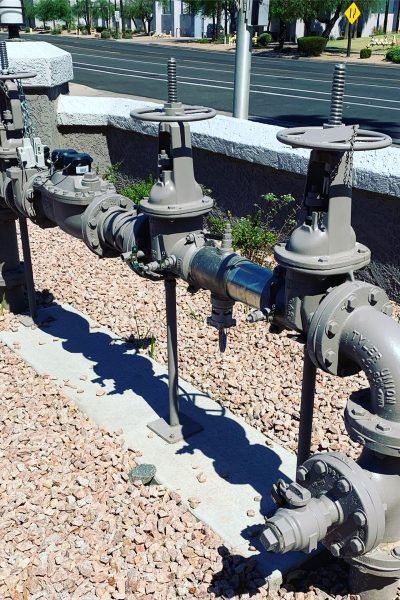
A backflow tester delivering a failed result will typically explain what failed and why, provide you with a copy of the test report, and tell you that repair is required. What they do next — and what you should do in the next few minutes — shapes the efficiency of everything that follows.
Before the tester leaves the property, confirm three things. First: did they submit the failed test report to the water authority or program administrator? In most programs, the tester is responsible for submitting both passing and failing results, and the compliance deadline clock starts from the submission date, not from when you receive your notice. If the tester plans to submit the report later, ask when. Second: can they perform the repair? If the tester holds both backflow repairer certification and a plumbing license, and if they carry rebuild kits for your assembly model, a same-visit repair and retest is possible. This is the fastest and often the least expensive path to compliance. Third: what specifically failed? Ask for the exact differential readings, not just the failure label. A first check holding 0.4 PSID versus a first check holding zero are different repair situations, and knowing the specific numbers lets you evaluate subsequent repair quotes intelligently.
These three questions take less than five minutes. The answers determine whether you leave the test appointment with a compliance record already resolved, or whether you are beginning a multi-day process that requires careful management.
The Eight-Step Owner Timeline
The following table maps the post-failure process day by day, from the test appointment through compliance closure. The ‘why it matters’ column explains the operational consequence of each step — not the regulatory requirement, but the practical risk of not doing it.
| When | Action | What to Do | Why It Matters |
|---|---|---|---|
|
Day 0 (test day) |
Get the full test report |
Ask the tester for a copy of the complete test report with specific differential pressure readings — not just a pass/fail notation. Confirm whether the tester submitted the failed report to the water authority or program administrator. |
The specific readings tell you which component failed and by how much. ‘Failed’ alone is not enough information to evaluate a repair quote. Confirming submission prevents a reporting gap that starts the deadline clock without your knowledge. |
|
Day 0–2 |
Understand your deadline |
Contact your water utility or program administrator (BSI, Safe Water Commission, Vepo, etc.) to confirm the repair deadline in days from the failure date. Note whether the deadline is calendar days or business days — these produce very different timelines. |
Deadlines range from 10 business days (Fairfax County, VA) to 30 calendar days (most programs) to longer in some jurisdictions. Misunderstanding your specific deadline is the most common cause of compliance escalation. |
|
Day 1–3 |
Contact repair contractors |
Contact at minimum two contractors from your utility’s approved tester/repairer list. Describe the assembly brand, model, and size, and share the specific test readings. Ask whether they can perform both the repair and the certified retest in a single visit. |
Dual-credential contractors (licensed plumber + certified backflow tester) eliminate the need for a second visit for the retest. Asking about single-visit capacity upfront is the most efficient way to reduce total cost and time. |
|
Day 2–5 |
Evaluate quotes |
Compare quotes for completeness: do they include parts, labor, the post-repair retest, and the test report filing fee? Confirm the contractor will use manufacturer-certified (OEM) parts and that those parts are lead-free certified. Ask about parts availability and lead time before committing. |
An incomplete quote that appears cheaper may not include the retest or filing fee — adding a return visit that pushes cost and timeline. Parts availability is critical: if the contractor must order parts, factor that lead time into whether you can meet the deadline. |
|
Day 3–7 |
Schedule and prepare for repair |
Book the repair appointment. Confirm the water outage window with all affected occupants, tenants, or operations staff. Clear the area around the assembly of landscaping, stored materials, or access obstructions. Confirm the assembly is accessible and the shutoff valves can be operated. |
Water access coordination is frequently the actual bottleneck, especially in multi-tenant commercial properties. A repair that takes 90 minutes can be delayed hours or rescheduled entirely if the water outage was not coordinated with building occupants. |
|
Repair day |
Be present or reachable |
Have a building representative present during the repair, or be reachable by phone with authority to approve any scope change. If the repair reveals an unexpected condition — shutoff valve failure, dezincification, discontinued parts — the contractor needs immediate authorization to proceed with an alternative approach. |
Scope changes discovered during the repair that require additional authorization and a callback delay can push a repair into the next day and risk missing the deadline. Having decision-making authority available on repair day eliminates this risk. |
|
Repair day (after work) |
Confirm retest and filing |
Before the contractor leaves: confirm the post-repair retest was performed (not just the repair), confirm the specific passing differential readings, confirm the test report was filed with the water authority or will be filed within the required window (typically 24–48 hours), and receive a copy of the passing test report. |
A repair without a filed passing retest report does not close the compliance record. The water authority’s database will still show the original failure as unresolved until a passing report is received. The report copy protects you if the filing is disputed. |
|
Within 48 hours of repair |
Verify compliance status |
Log into the water authority’s compliance portal (BSI, Safe Water Commission, your utility’s website) and confirm your property’s status shows as compliant. If it still shows failed or pending, contact the program administrator with the passing test report in hand. |
Third-party administrators can experience delays between report submission and database update. Proactive verification prevents a compliance gap notice arriving after you believe the issue is resolved — which would require another round of communication to correct. |
Understanding Your Deadline: The Most Common Source of Escalation
The single most avoidable post-failure compliance problem is a property owner who misunderstands their deadline and misses it — not because they ignored the failure, but because they calculated the wrong due date.
Calendar Days vs. Business Days
Repair deadlines are expressed in different terms by different jurisdictions. A 10 business day deadline in Fairfax County, Virginia is approximately two calendar weeks — but if the failure occurs on a Friday, the deadline is 10 business days from the following Monday, adding a full weekend. A 30 calendar day deadline in most other programs is 30 days from the failure date regardless of weekends or holidays. These are fundamentally different timelines, and treating a business-day deadline as a calendar-day deadline produces a compliance failure when the window expires earlier than expected.
When you confirm your deadline with the water authority or program administrator, ask explicitly: is this calendar days or business days, and from what date does it count? The failure date is typically the date of the test, not the date the report was submitted or the date you received a compliance notice.
The Deadline Is the Outer Boundary, Not the Target
A property owner who plans their repair for day 25 of a 30-day deadline is creating unnecessary risk. Parts orders can be delayed. Contractor scheduling can be disrupted by weather events, other job overruns, or illness. A commercial property repair that requires tenant coordination may take longer to schedule than expected. A repair that reveals an unexpected secondary problem — shutoff valves that won’t hold, a cracked body that requires replacement rather than rebuild — can add days to the project.
The practical approach is to target repair completion in the first half of the compliance window. If your deadline is 30 days, complete the repair by day 12 to 15. This leaves a meaningful buffer for complications without approaching the enforcement escalation threshold.
Know Your Program Administrator
Your water authority may contract compliance administration to a third party — BSI Online, Safe Water Commission, Vepo, HydroCorp, or others. Know which administrator your utility uses, because this determines where test reports are filed, where compliance status is tracked, and who to contact with questions about your deadline or status. A tester submitting to the wrong portal, or a property owner checking the wrong database, can create reporting gaps that produce compliance notices even when the repair has been completed correctly.
Evaluating Repair Quotes: What a Complete Quote Includes
When you contact repair contractors, the most important thing to evaluate is whether each quote is complete — meaning it covers all the costs you will actually incur to close the compliance record, not just the repair work itself. An incomplete quote that appears lower than a competing quote may not actually be cheaper once all costs are accounted for.
What Should Be in Every Repair Quote
Parts — identified by type (rubber goods kit, check module, relief valve kit) and confirmed as manufacturer-certified OEM parts. Ask whether they are lead-free certified if your assembly predates 2014.
Labor — for the repair itself, including any disassembly, reassembly, and air bleeding.
Post-repair retest — a certified field test using calibrated gauges performed immediately after the repair to confirm the assembly meets factory specifications. This is not optional — it is a compliance requirement in virtually every jurisdiction.
Test report filing — submission of the passing retest report to the water authority or program administrator. Some programs charge a separate filing fee ($15 to $50); confirm whether this is included or additional.
Lead time for parts — if parts must be ordered rather than carried on the truck, confirm the expected delivery date and ensure that the repair appointment can be scheduled within your compliance window after parts arrive.
What Separates a Good Quote from a Complete One
The most common quote gap is the retest. Some contractors quote the repair and the cost of the repair work, treating the retest as a separate billable service call. If this is the structure, you are looking at two service calls — one for repair, one for retest — and two scheduling windows, two visit charges, and potentially double the risk that the second appointment falls outside your compliance deadline. A contractor who can perform both repair and certified retest in a single visit is almost always the better choice operationally, even if their quote appears slightly higher than a repair-only alternative.
The second common gap is parts lead time. A contractor who quotes a competitive repair price but needs to order a rebuild kit that takes ten days to arrive may look like a better option than a contractor with slightly higher pricing who carries the kit on their truck. If your compliance window is 14 days, the contractor who carries the part is the only viable option regardless of price comparison.
The Same-Visit Repair Advantage
If your certified tester discovers the failure during the annual test and is also qualified to perform repairs (holding both tester certification and a plumbing license), authorizing a same-visit repair and retest is almost always the most efficient outcome. The assembly is already isolated, the failure has been diagnosed, and the tester has hands-on familiarity with your specific assembly. Ask upfront whether the tester carries rebuild kits for your assembly model before every annual test appointment — not after a failure is discovered.
Coordinating the Water Outage: The Hidden Timeline Risk
For a residential irrigation assembly, the water outage required for repair affects only the irrigation supply. For a commercial domestic service assembly — one that serves the entire building’s water supply — the water outage during repair affects every occupant, tenant, operation, and process that depends on water in that building.
The coordination requirement for commercial water outages is frequently the actual bottleneck in the post-failure repair timeline, not parts availability or contractor scheduling. A restaurant cannot operate without water. A medical facility cannot shut off water during business hours. A multi-tenant commercial building requires advance notice to all tenants before a supply shutoff. These coordination requirements take time — sometimes several days — that must be built into the repair schedule.
For Residential Properties
Irrigation assembly repair requires shutting off the irrigation supply, not the main house supply. In most cases, residents experience no disruption to indoor water service during the repair. Confirm with the contractor which shutoff serves the assembly before the appointment, and ensure it can be operated (not frozen, seized, or buried without access). The repair itself typically takes 45 minutes to two hours, and the retest adds another 15 to 30 minutes. Plan for the irrigation system to be offline for approximately three hours.
For Commercial Properties
Domestic service assembly repair requires shutting off the supply to the entire building or the specific service line the assembly serves. The outage window depends on the complexity of the repair — a rubber goods rebuild runs 60 to 90 minutes; replacement of shutoff valves or full assembly replacement can run three to six hours or more. For any outage affecting business operations or building occupants, provide at minimum 48 hours advance notice, and confirm the outage window with all affected parties before scheduling the repair appointment.
Some commercial properties with redundant service connections can maintain water service during the repair by routing through an alternate supply while the affected line is isolated. This option should be discussed with the contractor before the repair visit, as it affects the shutoff valve operation plan during the repair.
For Fire Suppression Systems
Any backflow assembly that serves a fire suppression system requires special coordination beyond standard water outage notification. Most jurisdictions require a formal fire impairment procedure — notifying the local fire department, the building’s fire alarm monitoring company, and potentially posting fire watches during any period when the fire suppression system is offline. Confirm the fire impairment notification requirements with your fire department and fire alarm contractor before scheduling any repair that affects a fire line backflow assembly. Many jurisdictions require a forward flow test of the fire suppression system after the backflow assembly is returned to service.
The Post-Repair Retest: What It Must Accomplish
A repair is not complete until a certified post-repair retest has been performed and a passing test report has been filed with the water authority. This is not a formality — it is the evidence that the repair actually worked. A rubber goods rebuild performed by an experienced technician almost always produces a passing result, but ‘almost always’ is not the same as confirmed, and an unverified repair is an incomplete repair.
What the Retest Must Show
The post-repair retest follows the same procedure as the original annual test — calibrated differential pressure gauges, the correct valve sequence for the device type, all threshold differentials measured. But the standard for a properly performed post-repair retest is higher than the compliance minimum: the assembly should be showing differentials significantly above the minimum thresholds, not just barely passing.
A first check valve that was rebuilt should hold 3.0 PSID or more — not 1.1 PSID. A relief valve opening point should be in the 5 to 10 PSID range on most assemblies, not 2.1 PSID. Numbers at or barely above minimum after a rebuild suggest something was not done correctly. Ask the contractor for the specific differential readings from the post-repair retest, not just a verbal confirmation that the device passed. If the numbers are at minimum threshold, ask why and request a re-inspection before the report is filed.
The Retest Report
The post-repair test report must be completed on the water authority’s approved form (or the program administrator’s equivalent) and submitted to the appropriate database. The report should clearly reference the prior failed test — either by citing the failed test date or the original test report number — so the compliance record shows a clear chain: failure, repair, restoration.
In most jurisdictions, the tester has a submission window of 24 to 48 hours from the test date to file the report electronically. Confirm that the report will be submitted within this window before the contractor leaves the property. Delays in report submission can push your compliance status update by several days, during which the water authority’s database still shows the failure as unresolved.
When Repair Is Not Possible: Navigating Replacement on the Same Timeline
Some failures lead to repair discoveries that make replacement, not rebuild, the correct response. The tester opens the assembly body and finds a dezincified check seat. The shutoff valve cannot be fully closed. The body shows a freeze crack. In these situations, the compliance clock is still running, and the repair appointment has just converted into a replacement planning session.
Immediate Steps When Replacement Is Identified
f a repair visit reveals that replacement is needed, confirm the following on the spot before the contractor leaves: the assembly brand, model, size, and connection configuration needed for replacement; whether the replacement requires a permit (it almost always does); the contractor’s timeline for completing the replacement; and whether parts and equipment for the replacement can be sourced within the compliance window.
In most jurisdictions, replacement requires a plumbing permit, and permit processing can take several days. Some jurisdictions offer expedited permit processing for compliance-deadline situations — ask the contractor whether this option is available before assuming the standard permit timeline applies. Some contractors can file an emergency or over-the-counter permit on short notice for replacement work driven by a compliance deadline.
What Replacement Does to the Compliance Record
A full replacement — new assembly installed under permit, initial compliance test performed, passing test report filed — closes the failed test compliance record in exactly the same way a repair and retest does. The water authority records show a new assembly in service with an initial passing test. The replacement does not change the annual testing schedule going forward — the next test will be due approximately twelve months from the replacement date, not from the original testing cycle date in most programs (though some programs maintain the original cycle). Confirm this with your water authority after the replacement is complete.
Verifying Compliance Closure: Don't Assume, Confirm
The repair is done. The retest passed. The contractor filed the report. You are compliant — but confirm this directly rather than assuming it.
Water authority compliance databases and third-party administrator portals are updated as reports are processed, and processing can lag submission by 24 to 72 hours in some programs. Logging into the relevant compliance portal a few days after the repair to confirm your property shows a passing status is the final step in the post-failure process.
If the portal still shows a failed or pending status several days after the repair and filing, contact the program administrator directly with the passing test report number, the filing contractor’s name and certification number, and the date of filing. This documentation resolves most database update delays quickly. Without it, the water authority’s enforcement system may generate a non-compliance notice based on a database that has not yet been updated — creating a second administrative problem on top of the already-resolved repair.
Keep the Repair Package: What to Retain After the Process Is Complete
After the compliance record is closed, retain the following documents indefinitely: the original failed test report with differential readings, the repair invoice with parts description and contractor license/certification numbers, the passing post-repair test report with differential readings, and the permit if replacement was performed. These documents protect you in any future compliance dispute, provide the device history needed for future repair-versus-replace decisions, and are required disclosure in most commercial property sales due diligence reviews. Find certified backflow repair professionals by state at getyourbackflowtested.com.