
RPZ Backflow Preventer Repair: What Goes Wrong and How It Gets Fixed
The RPZ is the most mechanically complex common backflow assembly and the one most likely to be misdiagnosed. Relief valve discharge—the most visible failure symptom—is almost never caused by the relief valve itself. This guide explains exactly how RPZ assemblies fail, how to correctly identify which component is responsible, and what a proper repair involves for each scenario.
Why RPZ Repair Deserves Its Own Guide
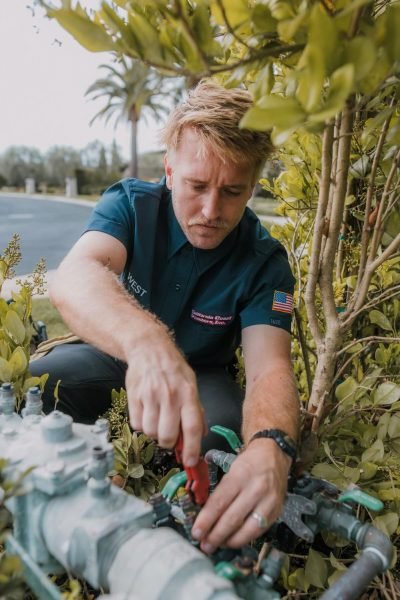
The reduced pressure zone (RPZ) assembly — also called a reduced pressure principle (RP) assembly — is required precisely because the cross-connections it protects are the most dangerous. Irrigation systems with chemical injection, commercial kitchens, medical facilities, industrial processes, fire suppression systems with antifreeze additives: these are all high-hazard applications where a simple double check valve is not considered adequate protection. The RPZ is installed because it provides a fail-safe that the double check cannot: even if both internal check valves fail simultaneously, the relief valve opens and discharges to atmosphere rather than allowing contaminated water to flow back into the supply.
This design sophistication is also what makes RPZ repair more complex than DCVA or PVB repair. An RPZ has three functional components — the first check valve, the second check valve, and the differential pressure relief valve — and all three interact hydraulically in ways that can produce confusing diagnostic signals. A failing first check valve causes the relief valve to discharge water. A failing second check valve also causes the relief valve to discharge water. A failing relief valve causes it to discharge water. From the outside, all three failure scenarios look identical: water coming out of the relief port. Getting the diagnosis right before opening the assembly is what separates a competent repair from a wasted service call.
How an RPZ Assembly Works: The Hydraulic Foundation of Diagnosis
Accurate RPZ diagnosis requires understanding the pressure relationships that govern the assembly’s normal operation. Consider a typical installation with 100 PSI supply pressure. As water enters the body and pressurizes the first check, that check opens and the sensing line draws supply pressure to the diaphragm of the relief valve, forcing the relief valve closed against its 2.0 PSID spring. Water passes through the first check and enters the reduced pressure zone — the intermediate chamber between the two checks. The combined load of both check springs reduces zone pressure: a first check spring adding 10 PSID of resistance, a second check spring adding 5 PSID, produces a zone pressure of approximately 90 PSI on a 100 PSI supply. Zone pressure is always lower than supply pressure by the combined spring load — this is the ‘reduced pressure’ that gives the assembly its name.
The relief valve spring holds the relief valve closed only as long as supply pressure applied via the sensing line exceeds zone pressure plus the 2.0 PSID spring load. In normal operation, supply pressure (100 PSI) comfortably exceeds zone pressure (90 PSI) plus relief valve spring load (2 PSID) — the math is 100 > 92, the relief valve stays closed. The instant this relationship inverts — zone pressure rises above supply pressure minus 2 PSID — the relief valve opens and discharges to atmosphere.
Every RPZ failure scenario is ultimately about something disrupting this pressure relationship. The first check leaking allows supply-side pressure to bleed into the zone, raising zone pressure and eventually forcing the relief valve open. The second check leaking or the downstream shutoff passing allows backpressure from the distribution side to raise zone pressure from the downstream side. The relief valve itself failing means the threshold for discharge drops below 2.0 PSID — the relief opens under conditions where it should remain closed. Understanding which pressure relationship has broken determines which component to repair.
The Fundamental Diagnostic Rule for RPZ Repair
If the relief valve is discharging continuously, the relief valve itself is almost never the cause. Roughly 90 percent of RPZ relief valve discharge events trace back to a first check that is no longer sealing adequately. Begin every RPZ repair diagnosis at the first check — not the relief valve. Replacing a relief valve without testing the first check first is the single most common RPZ repair error in the field.
RPZ Failure Scenarios: Diagnosis and Repair
Every RPZ failure falls into one of five patterns. The table below maps each pattern — what you observe externally, what the field test shows, the root cause, and the correct repair response. After the table, each scenario is explored in depth.
| Scenario | What You Observe | What the Field Test Shows | Root Cause & Repair |
|---|---|---|---|
|
First check failure (most common — ~90% of RPZ failures) |
Continuous steady discharge from the relief valve port while system is at rest with no downstream demand |
First check differential below 1.0 PSID minimum; relief valve opening point typically reads low or cannot be measured accurately due to first check bleed-through |
Debris on first check seat, or degraded first check disc/O-ring. Repair: disassemble first check, clean seat, replace rubber goods kit or check module. Retest — first check should hold ≥3.0 PSID on a properly rebuilt assembly |
|
Second check failure (less common, but serious) |
Relief valve discharges when downstream shutoff is closed; discharge stops when downstream shutoff is opened (counter-intuitive behavior confirms second check, not first check, is the issue) |
Second check holds inadequate differential against backpressure; first check may read normally, masking the second check problem |
Fouled or degraded second check. Backpressure from downstream system is raising intermediate zone pressure above the relief valve opening threshold. Repair: rebuild or replace second check. Also investigate downstream pressure source. |
|
Relief valve failure (least common — only after confirming both checks are good) |
Continuous discharge persists even when test port TC#4 is opened to establish flow through the assembly (flow condition takes first and second check valves out of the diagnostic equation) |
Relief valve opening point at or below 2.0 PSID minimum; or relief valve fails to close under test conditions despite adequate upstream differential |
Degraded relief valve diaphragm, worn seat disc, or debris in relief valve sensing line. Repair: replace relief valve rubber kit or complete relief valve assembly. Confirm sensing line is clear before closing assembly. |
|
Shutoff valve failure (prevents testing, not a check or relief valve problem) |
Tester observes flow through the assembly with shutoff in the closed position; standard test procedure cannot be completed; test reported as unable to complete |
Test aborted — shutoff valve does not isolate the assembly, producing continuous bleed-through that makes differential readings invalid |
Worn or damaged shutoff valve seat. Not a rubber goods repair — requires licensed plumber to replace shutoff valve with correct tapped ball valve. Test can only be completed after shutoff replacement. |
|
Pressure fluctuation discharge (not a failure — system hydraulics, not device) |
Intermittent, surging, or random discharge from relief port — not continuous; discharge often coincides with water hammer events, pump cycling, or demand surges |
Field test shows both checks and relief valve meeting or exceeding minimum differentials; assembly passes all three test procedures |
Assembly is functioning correctly. RPZ relief valve is doing its job: opening briefly when system pressure fluctuations momentarily raise intermediate zone pressure. Install soft-seated check valve upstream to buffer pressure transients. |
Scenario 1: First Check Failure — The Root Cause of 90 Percent of RPZ Problems
The first check valve is the most frequently repaired component in an RPZ assembly, and for a straightforward reason: it is the first line of defense, the component that handles every ounce of water that passes through the assembly, and the one whose failure most directly disrupts the pressure relationship that keeps the relief valve closed. When the first check’s seat disc wears, or debris lodges under the seating surface and prevents full closure, supply-side pressure bleeds into the intermediate zone. Zone pressure rises. Eventually it rises close enough to supply pressure that the 2.0 PSID relief valve spring threshold is exceeded — and the relief valve opens.
The external presentation is water discharging from the relief port in a continuous, steady stream. Not intermittent, not surging, but a consistent drip or flow that continues regardless of whether anyone is using water downstream. Property owners commonly describe this as ‘the backflow preventer is leaking,’ which is technically accurate but diagnostically misleading — the assembly is actually working precisely as designed. It has detected that the first check is no longer performing adequately and is discharging to atmosphere rather than allowing the contaminated downstream water to have a path back to the supply.
Field Test Confirmation
The field test will show the first check holding below 1.0 PSID — sometimes 0.8 or 0.5 PSID, sometimes essentially zero. The relief valve opening point reading will often also appear low, but this is a secondary effect of the first check problem: with the first check not holding, the zone pressure is already elevated before the test begins, and the differential available to the relief valve appears compressed. Do not interpret a low relief valve opening point as evidence that the relief valve also needs repair if the first check is clearly failing — restore the first check first, then retest the relief valve independently.
The Repair
Disassemble the first check valve chamber by removing the access cover (bonnet). Inspect the seat disc for wear, cracking, or chemical swelling. Inspect the seat surface for scoring from debris contact. Flush the chamber with clean water to clear any loose debris. If the seat is undamaged and debris was the only issue, reassemble with a new rubber goods kit — new seat disc, new O-rings, new spring — and retest. If the seat is scored, use a check module kit that replaces the entire check assembly as a unit, including the seat surface.
After rebuilding the first check, retest with gauges before closing the assembly fully. The first check should hold well above 1.0 PSID on a properly rebuilt assembly — typically 3.0 to 8.0 PSID depending on the spring specification. A reading barely above 1.0 PSID after a rebuild indicates that the repair was incomplete or that the seat surface was more damaged than the initial inspection suggested.
Once the first check passes its individual test, perform the complete RPZ test sequence — first check, relief valve opening point, and second check — to confirm that the entire assembly is performing to specification. Do not close out the repair after verifying only the repaired component.
Scenario 2: Second Check Failure — The Diagnostic That Trips Up Inexperienced Technicians
Second check failure is significantly less common than first check failure, but it is also significantly more likely to be misdiagnosed. The reason is counterintuitive hydraulics: a second check that is fouled or degraded raises zone pressure from the downstream side, which also forces the relief valve open. From the outside, it looks exactly like a first check problem. The external presentation — continuous relief valve discharge — is identical.
The diagnostic key is the shutoff valve test. When the downstream shutoff valve (the number two shutoff, on the outlet side of the assembly) is closed, it eliminates backpressure from the downstream system as a potential driver of zone pressure elevation. If the relief valve discharge stops when the number two shutoff is closed, the downstream pressure was the cause — and a fouled or failing second check allowed that backpressure to raise zone pressure. If the discharge continues with the number two shutoff closed, backpressure is not the cause, and the focus shifts back to the first check or the relief valve itself.
The Field Test Sequence
Close the downstream shutoff and observe. If discharge stops: open the downstream shutoff slowly and observe again. If discharge restarts, close the downstream shutoff again and perform the field test in this isolated configuration. With the number two shutoff closed, test the second check against backpressure by connecting the high-side hose to test cock four and gently pressurizing the downstream side. A second check that is fouled will show inadequate differential against this applied backpressure, while the first check tests normally. This confirms the second check as the failing component.
The Repair
Disassemble the second check valve chamber. In most RPZ assemblies, the second check access cover is on the opposite end of the body from the first check. Inspect the seat disc, seat surface, and O-rings as for the first check. Debris fouling is a common cause of second check failure — particles that passed through the first check settle in the zone between the checks and eventually reach the second check seat. Clean, rebuild with a second check rubber goods kit or module kit, and retest the complete assembly. Also investigate the source of backpressure in the downstream system if this was confirmed as a contributing factor — a pump, an elevated tank, or a thermal expansion event may be creating the backpressure condition.
Scenario 3: True Relief Valve Failure — Only Confirmed After Ruling Out Both Checks
True relief valve failure — where the relief valve diaphragm, seat disc, or sensing line is the actual problem — is the least common of the three failure types, accounting for roughly 10 percent or fewer of RPZ service events. This low frequency is precisely why it should be the last conclusion reached, not the first. A technician who replaces the relief valve rubber kit without first confirming that both checks are functioning normally has a roughly 90 percent chance of performing an unnecessary repair while leaving the actual failing component unaddressed.
True relief valve failure is confirmed by performing the TC#4 flow test: connect a hose to test cock four (TC#4) and open it to establish flow through the assembly. With flow running through TC#4, both check valves must be in the open position to allow water to pass. This takes the checks out of the pressure equation — zone pressure is now determined only by the flow dynamics, not by check valve sealing behavior. If the relief valve continues to discharge even under this flow condition, the checks are confirmed not to be the cause, and the relief valve itself is the failing component.
Relief Valve Failure Patterns
The most common true relief valve failure is a degraded diaphragm. The diaphragm is the flexible element that separates the sensing line pressure from the zone pressure and whose deflection controls the relief valve opening point. A diaphragm that has hardened, cracked, or lost elasticity cannot accurately respond to small pressure differentials — it may allow the relief valve to open at a lower differential than 2.0 PSID, or in severe cases, prevent it from closing even when the pressure relationship is favorable.
A less common but diagnostically important failure is debris in the sensing line. The sensing line — either an internal passageway or an external hose connecting the supply side of the first check to the relief valve diaphragm — can become blocked with mineral scale or debris. A blocked sensing line means supply pressure is not reaching the diaphragm, so the diaphragm cannot develop the force needed to keep the relief valve closed. The result is a relief valve that opens under conditions where it should remain closed, even though both checks are functioning normally. Clearing the sensing line — using a fine wire or compressed air, depending on the assembly design — sometimes resolves this without any parts replacement.
The Repair
Replace the relief valve rubber goods kit: diaphragm, seat disc, and any O-rings included in the manufacturer’s kit. If the relief valve body itself is damaged — corroded, scored, or physically cracked — replace the complete relief valve module or total kit. After replacement, confirm sensing line is clear before reassembly. Retest the complete assembly: first check, relief valve opening point, and second check in the standard sequence.
Never Skip the Post-Repair Complete Test Sequence
After any RPZ repair — whether to the first check, second check, or relief valve — perform the full three-component test sequence, not just the component you repaired. An RPZ that passes first check but has a degraded relief valve, or that passes all three components individually but has a sensing line issue that only shows up under specific pressure conditions, remains a non-compliant assembly. The post-repair test of a properly rebuilt RPZ should show: first check ≥1.0 PSID (and ideally ≥3.0 PSID), relief valve opening point ≥2.0 PSID, and second check holding against backpressure. All three. Every time.
The RPZ Rebuild Procedure: Step by Step
A complete RPZ rebuild — addressing all three components simultaneously rather than only the one identified by the field test — is the recommended approach for any assembly that is more than five years old, has had a previous repair, or is installed in a high-use or chemically aggressive environment. The incremental cost of replacing rubber goods in all three components simultaneously is modest compared to the cost of a return visit when an adjacent worn component reaches failure threshold at the next annual test.
Test first, disassemble second. Perform the complete field test before opening any covers. Record all differential readings. These numbers tell you which component failed and by how much, and they provide the baseline against which the post-repair retest will be compared.
Close both shutoff valves. Close the number one shutoff (inlet) first, then the number two shutoff (outlet). Open all four test cocks to relieve pressure and drain the zone between the checks. Wait until water stops flowing from the test cocks before proceeding.
Disassemble first check. Remove the first check cover using appropriate hand tools or model-specific special tools as required. Remove the check disc, retainer, spring, and all O-rings. Inspect the seat surface for scoring. Clean the chamber with clean water.
Disassemble second check. Remove the second check cover. Repeat the disassembly and inspection process. Note that the second check chamber is typically accessed from the opposite end of the assembly body.
Disassemble relief valve. Remove the relief valve access cover. Remove the diaphragm assembly, seat disc, and any accessible O-rings. Inspect the sensing line for blockage — use a thin wire or compressed air as appropriate for the assembly design.
Install new rubber goods in all three components. Working from the manufacturer’s rebuild kit, install new rubber goods in the relief valve first, then the second check, then the first check. Install O-rings carefully to avoid twisting. Apply a thin coat of manufacturer-approved synthetic lubricant to O-rings before seating. Install check discs with the correct orientation — reversed installation is a common error that produces immediate failure. Tighten all covers to the specified torque range.
Repressurize slowly and bleed air. Open the number one shutoff very slowly — a quarter turn, then pause, then another quarter turn. Watch for leaks at all reinstalled covers before continuing to open. Once pressurized, locate and open air bleed screws or use test cocks at the top of the body to remove trapped air from the zone. Air in the system produces inaccurate test readings and must be removed before retesting.
Perform the complete post-repair test. Attach calibrated gauges to all four test cocks and perform the full RPZ test sequence in the correct order: Test 1 (relief valve opening point with first check closed), Test 2 (first check differential), Test 3 (second check against backpressure). Record all readings. A properly rebuilt assembly should show all three components significantly above their minimum thresholds — not just barely passing.
File the post-repair test report. Complete and submit the passing test report to the water authority or program administrator. The report should clearly indicate it is a post-repair retest following a failure, with the original failed test date referenced.
When RPZ Repair Doesn't Make Sense
For residential and light commercial RPZ assemblies in the 3/4″ to 1″ size range, the economics of repair versus replacement can shift quickly. A full rubber goods rebuild kit plus labor for a 1″ RPZ runs $175 to $375. A new 1″ lead-free RPZ assembly installed runs $600 to $1,000. The repair clearly wins economically — but only if the rebuilt assembly will deliver several more years of reliable service. The following conditions tip the analysis toward replacement regardless of size.
Dezincification — white or pinkish powdery deposits on brass surfaces and pitting of the body indicate that the zinc has been selectively leached from the brass alloy. A dezincified body cannot be repaired; replacement with a bronze or lead-free brass assembly is required.
Freeze cracking — any visible crack in the body, particularly around the relief valve port area or check cover bolt holes, requires replacement. Cracked bodies cannot be sealed and will fail under supply pressure.
Discontinued model with no available parts — if the manufacturer no longer produces rubber goods for the specific model, replacement is the only compliant path forward.
Three or more repair events in five years — an assembly that requires rebuild at nearly every annual test has something systemically wrong with its operating environment that individual repairs are not addressing. Replacement, combined with an investigation of the root cause (water chemistry, pressure conditions, debris source), is the appropriate response.
Repair cost exceeds 50% of replacement — for large commercial RPZ assemblies in the 2″ to 4″ range, parts costs for a complete rebuild can be substantial. If the rebuild kit plus labor approaches or exceeds half the cost of a new assembly installed, the economic case for rebuilding collapses.
Large Commercial RPZ: Do the Math Before Committing to Repair
A 4″ RPZ rubber goods kit can cost $400 to $800. Labor for disassembly, reassembly, and retesting of a large commercial assembly runs $300 to $800 or more depending on access. The total rebuild cost for a 4″ RPZ can easily reach $1,000 to $1,500 — for a device that may have an additional five years of reliable service life, this is a sensible investment. For a device that is 20 years old, showing body corrosion, and has been repaired twice in the last three years, the same math produces a different answer. Always get both a repair quote and a replacement quote before authorizing work on a commercial RPZ.
Who Is Qualified to Repair an RPZ Assembly
RPZ repair is not the appropriate task for a general plumber who is unfamiliar with backflow assembly mechanics, nor for a certified tester who has not received repair training. The RPZ is the most mechanically complex assembly in common use, and the consequences of an incorrect repair — an assembly that appears repaired but is not performing to specification — are significant given the high-hazard applications for which RPZ protection is required.
The ASSE 5130 Backflow Prevention Assembly Repairer certification is the national standard for repair competency. This certification requires current ASSE 5110 tester certification as a prerequisite, followed by 20 hours of hands-on repair training covering all assembly types and a 50-question examination. A technician holding ASSE 5130 certification has demonstrated knowledge of the disassembly, rebuild, and retesting procedures for RPZ, DCVA, and PVB assemblies.
In practice, the most reliable indicator of RPZ repair competency is market experience. A technician who has rebuilt dozens of RPZ assemblies across multiple brands and sizes develops diagnostic intuition and mechanical familiarity that no certification course can fully substitute for. Ask your repair technician how many RPZ assemblies they have rebuilt, which brands they have the most experience with, and whether they stock rebuild kits for common models in your service area before scheduling a repair appointment.
Find an Experienced RPZ Repair Technician Near You
The tester and repairer directory at getyourbackflowtested.com lists certified backflow professionals by state. When contacting prospective repair technicians for an RPZ assembly, confirm they hold ASSE 5130 certification or equivalent state credential, ask specifically about their RPZ experience with your assembly brand, and confirm they will perform a complete three-component post-repair test and file the results with your water authority.