
Backflow Testing Near Me
Trenton, NJ
Backflow Testing in Trenton, NJ — Our Recommended Certified Specialist
Trenton, New Jersey's state capital, is served by New Jersey American Water for its municipal water supply. As the seat of state government, Trenton has a uniquely dense institutional water user base — state office buildings, the State House complex, courthouses, hospitals, and a large commercial downtown — all of which require annual backflow compliance under NJDEP N.J.A.C. 7:10-10. Here is what Trenton property owners need to know, and why South Jersey Backflow is our vetted recommendation.
Our Recommended Trenton Backflow Testing Specialist
South Jersey Backflow
southjerseybackflow.com
(856) 291-6809
NJDEP-certified
Licensed & insured
Family-owned since 2004
24/7 emergency service
Backflow Testing in Trenton, NJ — Certified Preventer Testing, Inspection, and Rebuilding
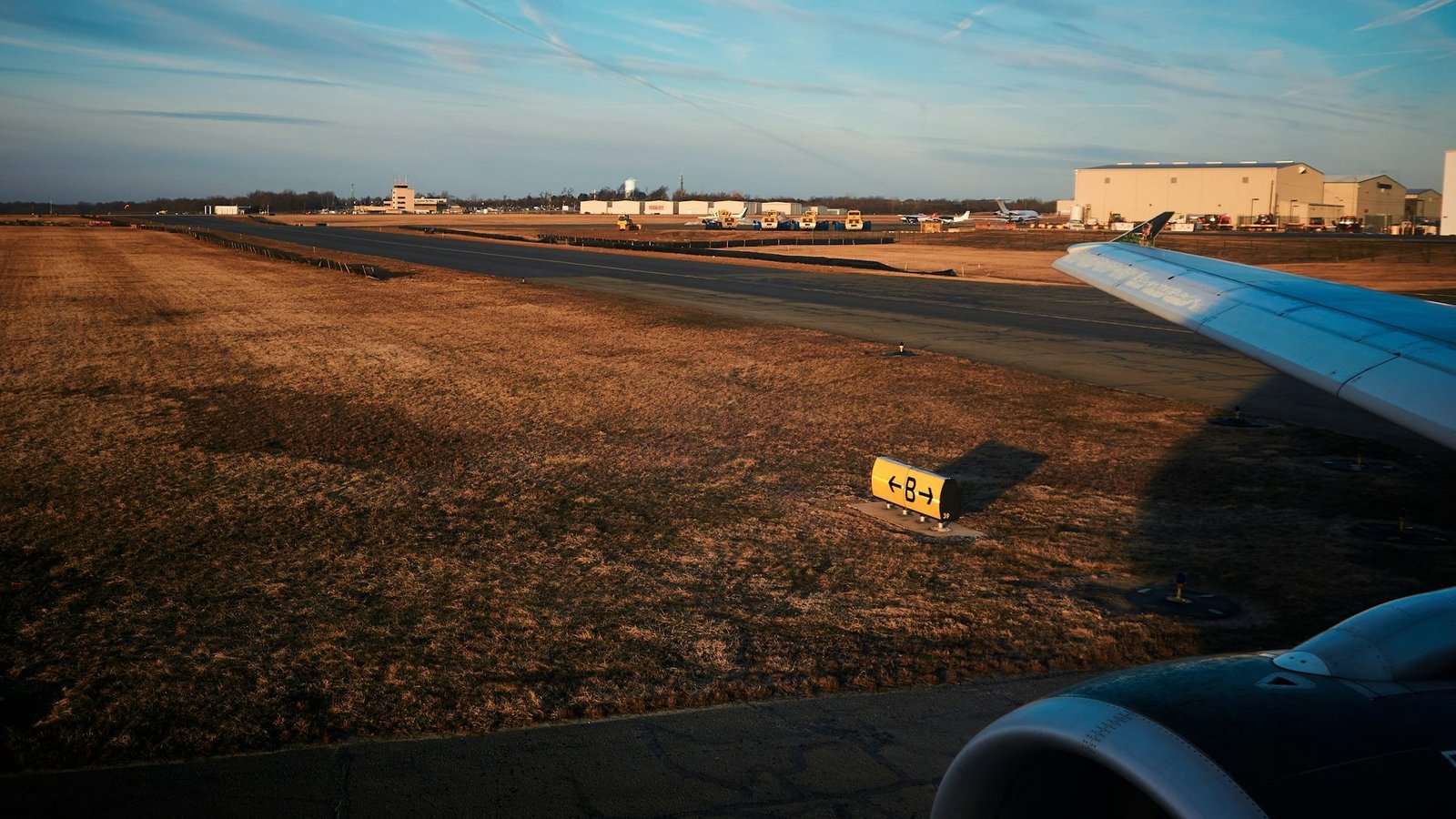
Trenton is New Jersey’s capital city and the seat of Mercer County. Its property base spans New Jersey’s state government campus, the Mercer County justice complex, two hospitals, a growing arts and dining district, light industrial operations in the South Ward, and extensive residential neighborhoods throughout the city. Water service in Trenton is provided by a combination of the City of Trenton Water Works and New Jersey American Water, depending on the specific address, and both utilities enforce the state’s crossconnection control program under N.J.A.C. 7:10.
Under N.J.A.C. 7:10, every permitted backflow prevention assembly in Trenton must be tested annually by a NJDEP-certified backflow tester, with results submitted on the NJDEP Physical Connection Test and Maintenance Report to the applicable utility before the Physical Connection Permit expires. In addition, within six months of each permit renewal, New Jersey requires a mandatory internal inspection: a physical disassembly of the assembly to visually examine its internal components for wear, damage, or contamination. This internal inspection requirement is unique to New Jersey among all 50 states and is the aspect of the state’s program most often overlooked by property owners who have managed backflow compliance in other states.
The City of Trenton Water Works also requires a local Certificate of Compliance filed with the utility in addition to the NJDEP form — a second administrative layer that many property owners only discover after their first non-compliance notice.
For Trenton property owners who want correct, complete compliance with New Jersey’s full backflow prevention program, South Jersey Backflow is the dedicated New Jersey specialist to call.
State Government, Institutional, and Healthcare Properties: Trenton’s Most Complex Backflow Environments
Trenton’s role as New Jersey’s capital creates a concentration of large, complex buildings whose water systems generate some of the most demanding backflow prevention requirements in the state:
State government buildings — New Jersey’s state house complex, department offices along West State Street, the New Jersey State Museum, and state-owned facilities throughout the capital district use water for a wide range of applications: commercial kitchen service in cafeterias, laboratory water in research offices, HVAC cooling systems, irrigation for state house grounds, and building mechanical systems. Each category of connection has its own hazard classification and requires the appropriate assembly type and annual maintenance. State facilities typically have multiple assemblies per building, and facility managers often need to coordinate compliance visits that do not disrupt normal government operations.
Capital Health Regional Medical Center and Saint Francis Medical Center — Healthcare facilities represent the most complex and highest-stakes backflow prevention environments in any city. Hospital water systems include dialysis water treatment equipment (highest hazard classification), steam sterilizers, laboratory supply connections, pharmaceutical preparation room water supply, medical gas system water connections, and large-format fire suppression systems. Each of these creates a distinct cross-connection risk, and New Jersey’s internal inspection requirement is especially important in healthcare settings where component reliability is directly linked to patient safety.
The College of New Jersey and Thomas Edison State University — Academic campuses have diverse water connections: laboratory supply lines in science buildings, irrigation systems on athletic fields and campus grounds, commercial kitchen connections in dining halls, and HVAC systems in classroom and administrative buildings. Managing backflow compliance across multiple buildings with potentially staggered permit renewal dates requires systematic tracking of the kind South Jersey Backflow provides.
Mercer County courthouse and justice complex — Institutional government buildings of this scale have HVAC systems, commercial kitchen service, and building mechanical infrastructure that create multiple backflow prevention obligations.
How N.J.A.C. 7:10’s Physical Connection Permit System Works for Trenton Properties
For Trenton property owners who are new to New Jersey’s backflow prevention program or who are coming back into compliance after a documentation gap, understanding the Physical Connection Permit (PCP) system is the starting point:
Permit Issuance — When a new backflow prevention assembly is installed in New Jersey, the installer applies for a Physical Connection Permit from NJDEP’s Bureau of Safe Drinking Water. The permit confirms that the assembly type and installation configuration are approved for the specific cross-connection hazard they are protecting. Without this permit, the assembly is not legally in service even if it has been physically installed.
Annual Testing — Before the permit’s annual expiration date, a NJDEP-certified tester must perform a differential pressure test of the assembly, complete the NJDEP Quarterly Physical Connection Test and Maintenance Report, and submit it to the applicable water utility. The form captures the assembly’s permit number, device brand and model, installation address, test date, and differential pressure readings across each check valve and the relief valve (for RPZ assemblies).
Internal Inspection — Within six months before each permit renewal, the assembly must also be physically disassembled and internally inspected. The inspection results are documented on the same NJDEP form with a notation indicating that internal inspection was performed and identifying any components that were replaced during rebuild.
Local Certificate of Compliance — Trenton properties served by the City of Trenton Water Works must file a separate Certificate of Compliance with the local utility in addition to the NJDEP form. This certificate confirms that the NJDEP-required testing has been completed and provides the utility with the documentation needed to update their local crossconnection tracking system. 30-Day Repair Window — If an assembly fails the annual pressure test, the property owner has 30 days to repair and retest. The failed test report is submitted to the utility just like a passing report, with a notation of the failure. The repair and retest report must also be submitted within the 30-day window.
South Jersey Backflow manages all of these steps on behalf of Trenton clients, from the initial test through NJDEP form submission, local certificate filing, and (when needed) repair and retest documentation.
Aging Assembly Stock in Trenton: Why the Internal Inspection Matters So Much
Trenton’s building stock is among the oldest in New Jersey, and many backflow prevention assemblies currently in service throughout the city were installed in the late 1990s and early 2000s under the initial wave of NJDEP cross-connection control enforcement. These assemblies — now 20 to 25 years old — have been through thousands of pressure cycles, years of chlorinated water contact, and multiple seasonal temperature swings.
The most common findings during South Jersey Backflow’s internal inspections on Trentonarea older assemblies:
Hardened and cracked seat discs — The rubber disc that seats against the check valve’s metal seat ring hardens with age, loses flexibility, and eventually develops surface cracks. A
cracked disc may still create a pressure seal in the static conditions of an annual test but will flex incorrectly under dynamic backpressure, allowing contaminated water to pass.
Compressed O-rings and disc bumpers — The O-rings and bumper rings that maintain assembly geometry and create secondary seals lose their resilience with age. Compressed O-rings allow slow internal leakage that bypasses the check valve without creating sufficient differential pressure to register on a test gauge.
Guide pin corrosion — The stainless steel or brass guide pins that control check valve disc travel corrode over time in environments with aggressive water chemistry. Corroded guide
pins cause the disc to travel erratically rather than moving straight to its seat, resulting in inconsistent sealing.
Relief valve fouling (RPZ assemblies) — The hydraulically operated relief valve in an RPZ assembly is particularly susceptible to fouling by mineral deposits, biofilm, or debris. A
fouled relief valve may refuse to open when required (allowing contaminated water to flow under backpressure), or may remain partially open during normal operation (wasting water constantly). Internal inspection of the relief valve requires removing the diaphragm assembly and inspecting the seat, spring, and body for fouling and corrosion.
When South Jersey Backflow finds any of these conditions during an internal inspection on a Trenton property, they rebuild the assembly on-site that day using the manufacturerapproved rebuild kit. The rebuilt assembly is retested before the technician leaves to
confirm it meets all NJDEP differential pressure requirements.
The 30-Day Repair Window: Navigating Compliance in Trenton After a Failed
Test
When a Trenton backflow assembly fails its annual pressure test, the property owner has 30 days to arrange repair and retest. This window is workable for most situations, but it requires prompt action — particularly for large commercial assemblies that may require special-order replacement parts.
Rebuild in the field (most common outcome) — The majority of assembly failures on Trenton properties can be resolved by a field rebuild performed during the same visit or a follow-up appointment within a few days. When a failed assembly’s check valve is fouled by debris or scale, the same internal inspection that discovered the fouling can clear it and replace the affected components immediately. South Jersey Backflow prioritizes same-day or next-day rebuild for failed assemblies when their rebuild kit inventory covers the affected device.
Full assembly replacement (less common but sometimes necessary) — When a Trenton assembly’s body casting is cracked, when the inlet/outlet threads are damaged, or when internal corrosion has reached the metallic components of the assembly body, rebuilding is not viable and full replacement is required. South Jersey Backflow carries a selection of the most common replacement assembly sizes in their service vehicles and can often install a replacement unit the same day the failed assembly is identified. When the required replacement model must be special-ordered, they document the pending replacement with the City of Trenton Water Works or New Jersey American Water to maintain the property’s compliance status while the new assembly is procured.
South Jersey Backflow’s Full Service Offering for Trenton and Mercer County
South Jersey Backflow serves Mercer County including Trenton as part of its statewide
New Jersey coverage. Their complete service offering for Trenton properties includes:
- Annual NJDEP pressure testing with calibrated differential pressure gauges, same-day NJDEP form submission to City of Trenton Water Works or New Jersey American Water as applicable
- Local Certificate of Compliance filing with the City of Trenton Water Works (local administrative layer)
- Mandatory internal inspection — full disassembly, visual inspection of all internal components, manufacturer-approved rebuild, reassembly to specification, and final pressure test
- State government and institutional facility scheduling with coordination around building access protocols and operational requirements
- Emergency repair within the 30-day compliance window, including same-day rebuild for the most common failure modes
- Assembly replacement with permit documentation updates for devices requiring full replacement
- Permit record research for Trenton properties with documentation gaps or missing compliance histories
- Multi-building and portfolio management for property management companies and institutional clients overseeing multiple Trenton addresses
What Backflow Testing Costs in Trenton
Annual backflow preventer pressure testing in central New Jersey — Mercer County including Trenton — typically ranges from $70 to $155 per assembly depending on device type, pipe size, and accessibility. Large commercial assemblies and those in difficult-toaccess locations are priced according to the scope of work. Internal inspection is most economical when bundled with annual testing in a combined service visit, and South Jersey Backflow strongly recommends this approach for any assembly approaching its first permit renewal.
Upfront, itemized pricing is provided before any visit is scheduled. For Trenton properties with multiple assemblies or multiple addresses, South Jersey Backflow offers multi-property scheduling packages with advance compliance tracking.
Schedule your Trenton backflow preventer testing, internal inspection, and Certificate
of Compliance filing at southjerseybackflow.com.
Frequently Asked Questions — Backflow Testing in Trenton, NJ
It depends on your specific service address. The City of Trenton Water Works serves properties within the city limits in certain zones, while New Jersey American Water serves others. South Jersey Backflow confirms which utility holds your Physical Connection Permit before the service visit and submits the NJDEP test form and local Certificate of Compliance to the correct authority. If your utility account has
changed due to a service territory transfer or a recent acquisition, South Jersey Backflow helps confirm the correct current holder of your permit records.
Yes. The mandatory internal inspection under N.J.A.C. 7:10 applies to every permitted backflow prevention assembly in New Jersey, regardless of age, type, or size. This is particularly relevant for Trenton’s older building stock, where assemblies from the late 1990s and early 2000s may have significant internal wear that is invisible on an external pressure test but detectable through internal inspection. South Jersey Backflow frequently rebuilds aging assemblies during Trenton compliance visits, replacing hardened elastomers, corroded guide pins, and fouled check valve seats with manufacturer-approved replacement components.
After each service visit, South Jersey Backflow provides the property owner or manager with a copy of the completed NJDEP Physical Connection Test and Maintenance Report, documentation of any internal inspection and rebuild work performed, and confirmation of submission to the applicable utility and local Certificate of Compliance filing. For Trenton government and institutional properties that require specific documentation formats for facilities management records, South Jersey Backflow can accommodate those requirements.
South Jersey Backflow works with institutional clients — state agencies, hospital systems, universities, property management companies — to create a comprehensive compliance calendar that maps all permit renewal dates across their Trenton footprint. They schedule testing and internal inspection visits on a proactive timeline well ahead of each permit expiration date, and they provide advance notifications 90 and 60 days before each renewal to ensure no assembly goes untested. For institutions with dozens of assemblies across multiple buildings, this systematic approach eliminates the reactive scramble that leads to missed deadlines and compliance notices.
The NJDEP Physical Connection Test and Maintenance Report is the state-level document required under N.J.A.C. 7:10, submitted to your utility to document the annual pressure test results. For City of Trenton Water Works customers, the utility may also require a local Certificate of Compliance as a separate document confirming compliance with their specific cross-connection control program. South Jersey Backflow
handles both submissions simultaneously after each service visit, ensuring that your property’s compliance record is complete at both the state NJDEP level and the local utility level.
Schedule your Trenton backflow testing, inspection, and compliance filing at
southjerseybackflow.com.
South Jersey Backflow: The Right Specialist for New Jersey’s Capital City
Trenton’s combination of government facilities, hospital systems, academic campuses, and a large residential and commercial base makes it one of the more complex backflow compliance environments in Mercer County. Property owners and facilities managers who work with a generalist rather than a dedicated New Jersey backflow specialist risk missing the internal inspection requirement, filing paperwork with the wrong utility, or using nonapproved rebuild components — all of which can result in compliance notices from the City of Trenton Water Works or New Jersey American Water. South Jersey Backflow exists precisely for this environment. Every service call they make is a New Jersey backflow compliance call. Their technicians carry the NJDEP forms, calibrated instruments, manufacturer rebuild kits, and administrative knowledge of Trenton’s specific utility landscape needed to complete a visit correctly and completely. From the annual pressure test through internal inspection, rebuild, NJDEP form submission, and local Certificate of Compliance filing, every step is handled in a single, coordinated service visit.
Visit southjerseybackflow.com to learn more and schedule your Trenton backflow compliance appointment today.
Contact South Jersey Backflow for Trenton Backflow Testing
southjerseybackflow.com
(856) 291-6809
24/7 emergency service
NJDEP-certified
Serving Trenton, Mercer County, and all of New Jersey since 2004
Full New Jersey backflow law guide:
getyourbackflowtested.com | Backflow Testing in Trenton, NJ | Recommended Specialist: South Jersey Backflow | southjerseybackflow.com | (856) 291-6809