
Backflow Preventer Relief Valve Discharge: What It Means and What to Do
Water coming out of a backflow preventer's relief port is one of the most misunderstood — and misdiagnosed — events in plumbing maintenance. Sometimes it signals a genuine assembly failure. Sometimes it means the assembly is working exactly as designed. And sometimes it means the problem isn't in the backflow preventer at all. This guide explains how to tell the difference, what to do in each case, and when calling a repair technician is actually necessary.
The Most Important Thing to Understand First
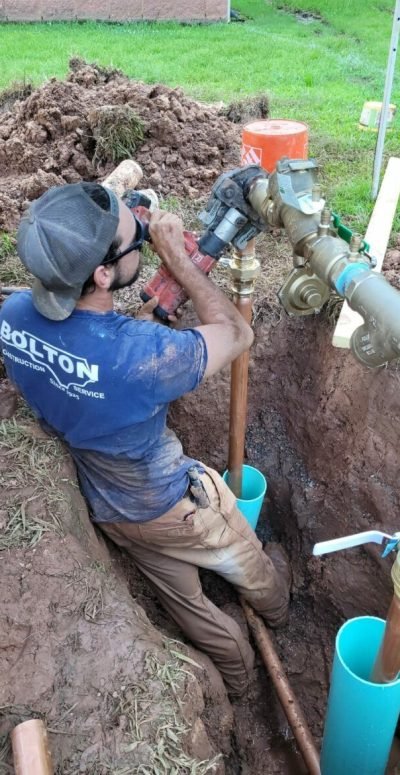
When water comes out of the relief port on a backflow preventer, the single most common reaction — from property owners, building managers, and even some plumbers unfamiliar with backflow mechanics — is to assume something has broken and needs to be fixed. This reaction is understandable but frequently wrong.
The relief valve on a reduced pressure zone (RPZ) assembly is designed to open. It is a deliberately engineered discharge mechanism, not a seal that should never leak. The relief valve exists precisely to discharge water when it detects that the internal pressure relationship has been compromised — whether that compromise is caused by a failing check valve inside the assembly, by backpressure from the downstream system, or by a supply pressure fluctuation that briefly reduces supply pressure below the threshold the relief valve needs to stay closed. In all of these cases, the relief valve opening and discharging water is the assembly doing its job: choosing to discharge to atmosphere rather than allow any possibility of contaminated water flowing back into the supply.
This means that water coming out of the relief port is not automatically evidence that anything has failed. It is evidence that the assembly detected a condition that the relief valve is designed to respond to. The question is not ‘why is my backflow preventer leaking’ — it is ‘what condition triggered the relief valve to open, and is that condition a problem that requires repair?’ Those are very different questions, and the answers lead to very different responses.
This article works through every type of relief valve discharge — from normal startup behavior to genuine catastrophic failure — so that property owners, facility managers, and maintenance personnel can correctly identify what they are dealing with before calling anyone or authorizing any repair.
Never Block the Relief Valve Port
The immediate instinct when water is coming from the relief port is to stop the water — wrap it with tape, cap it off, redirect it into a bucket. Do not do this. The relief valve port must remain open and freely draining at all times. Blocking it can cause pressure buildup that damages the assembly body or creates conditions where a genuine backflow event has no discharge path. If the discharge volume is causing a drainage problem, call a certified technician — do not create a blockage.
The Five Types of Relief Valve Discharge — and What Each Means
Relief valve discharge from an RPZ assembly falls into five distinct patterns, each with a different cause and a different correct response. The pattern of the discharge — its timing, its duration, and whether it is correlated with specific events — is the primary diagnostic tool for distinguishing normal operation from genuine failure.
| Discharge Pattern | What You See | What It Means | Right Next Step |
|---|---|---|---|
Brief discharge on startup or when irrigation runs |
Short burst of water from relief port when system first pressurizes or when a zone valve opens; stops within seconds |
Normal pressurization event — the assembly is equalizing pressure as the system comes to operating pressure. Not a defect or failure. |
No action required. Confirm drainage is routed appropriately and not causing pooling damage. Monitor to ensure it stops within 15–30 seconds. |
Intermittent, sporadic discharge — no clear pattern |
Drips or brief bursts at irregular intervals, often correlated with fixture use elsewhere in the building, pump cycling, or street pressure changes |
Pressure fluctuations in the supply system are momentarily dropping supply pressure below the zone pressure threshold, causing brief relief valve openings. The assembly is functioning correctly. |
Schedule a certified field test to confirm the assembly passes all three tests. If assembly passes, install a soft-seated check valve upstream to buffer supply pressure fluctuations. No assembly repair needed. |
Intermittent discharge on a predictable schedule |
Discharge occurs at regular intervals — often correlating with water heater recovery cycles, pump timing, or closed plumbing system thermal events |
Thermal expansion from a downstream closed system (no expansion tank, or failed expansion tank) is raising downstream pressure and forcing the relief valve open. |
Confirm expansion tank is correctly sized, properly charged, and functioning. Replace or install expansion tank. Do not repair the backflow preventer — the assembly is responding correctly to an abnormal downstream condition. |
Continuous steady drip or flow — no interruption |
Water discharges from the relief port in a continuous stream regardless of whether water is being used; does not stop when all fixtures are closed |
A check valve is no longer sealing adequately. First check is the cause roughly 90% of the time. This is an assembly failure requiring repair — the assembly is still protecting the supply by discharging, but it cannot be left in this condition. |
Call a certified backflow repair technician. Do not cap or block the discharge port. Schedule a field test and repair immediately — most programs require repair within 10–30 days of a known failure condition. |
Heavy or flooding discharge |
Large, uncontrolled flow of water from the relief port causing significant pooling or flooding around the assembly |
Relief valve diaphragm has failed in the open position, or the assembly has suffered physical damage (freeze crack, impact). The relief valve cannot close. |
Close the upstream shutoff valve immediately to stop flow. Contact a certified repair technician or licensed plumber for emergency service. Do not restore supply until the assembly has been inspected and repaired or replaced. |
The most critical diagnostic distinction is between intermittent discharge and continuous discharge. Intermittent discharge that correlates with identifiable system events — startup, fixture use, pump cycling, or thermal expansion — almost always means the assembly is functioning correctly. Continuous discharge that does not stop regardless of system conditions almost always means an internal component has failed. When in doubt about which category applies, leave the system running and observe for at least ten minutes before concluding that discharge is truly continuous.
Normal Discharge: When Water from the Relief Port Is Not a Problem
Understanding normal discharge behavior prevents unnecessary repair calls and the expense that comes with them. Several common scenarios produce relief valve discharge that requires no repair action.
Startup and Pressurization Events
When an irrigation system is first turned on for the season, or when supply pressure is restored after being shut off for maintenance, the RPZ assembly goes through a pressurization sequence. The first check valve opens, water fills the intermediate zone, the sensing line pressurizes, and the diaphragm forces the relief valve closed. This process takes a few seconds, and during that transition, the relief valve may discharge briefly — sometimes visibly, sometimes as just a short drip or spray from the relief port.
This startup discharge is normal and requires no action. If the discharge stops within 15 to 30 seconds after the system pressurizes fully, the assembly is functioning correctly. If it continues beyond that point without stopping, the startup discharge has become continuous discharge, which points to a check valve problem.
Pressure Fluctuation Discharge
Supply water pressure is not constant. Municipal water mains experience pressure fluctuations throughout the day — when a fire hydrant is opened nearby, when a large draw event occurs in the distribution system, when street valves are operated for maintenance. These fluctuations can temporarily reduce supply pressure on the upstream side of the RPZ assembly.
When supply pressure drops, the sensing line pressure that holds the relief valve closed also drops. If supply pressure drops enough — specifically, if it drops below the zone pressure plus the 2.0 PSID relief valve spring load — the relief valve opens briefly and discharges water until supply pressure recovers. This discharge may last only a second or two and may recur irregularly throughout the day or week.
Pressure fluctuation discharge does not indicate that the assembly has failed. A field test performed while the system is at stable operating pressure will typically show the assembly passing all three tests normally. The solution, if the discharge is causing a nuisance or drainage problem, is to install a soft-seated check valve on the upstream supply line immediately before the RPZ assembly. This upstream check valve traps the highest recent supply pressure to the assembly and prevents the brief pressure drops from reaching the sensing line, effectively buffering the assembly against supply fluctuations. This is a plumbing installation task, not a backflow assembly repair.
Thermal Expansion Discharge
Thermal expansion discharge is one of the most commonly misdiagnosed RPZ discharge events. It occurs most often on properties where the RPZ protects a closed plumbing system — such as a building with a water heater, a boiler, or any heating system that contains water — where there is no properly functioning expansion tank.
When a water heater heats a tank of water, the water expands. In an open plumbing system, that expanded volume flows back toward the supply main without difficulty. In a closed system — one where the meter has a backflow check or the RPZ itself prevents reverse flow toward the supply — the expanded water has nowhere to go. Pressure rises on the downstream side of the RPZ. When that downstream pressure exceeds supply pressure plus the relief valve spring load, the RPZ relief valve opens and discharges the expanded volume.
This discharge is often predictable: it occurs on a schedule that corresponds to the water heater’s recovery cycles, typically once or twice per day, often in the early morning hours when hot water demand has been low and the heater runs to recover temperature. The discharge stops when the expanded volume is released and system pressure returns to normal.
The correct response to thermal expansion discharge is to address the expansion tank — install one if absent, confirm the charge pressure matches the system supply pressure if one is present, or replace a waterlogged expansion tank that has lost its air charge. Repairing or replacing the RPZ assembly addresses none of the underlying cause and will produce the same discharge from a brand-new assembly.
The Boiler Expansion Tank Trap
A building manager who replaces an RPZ assembly because of regular relief valve discharge — without diagnosing the discharge pattern — will have an identical discharge problem from the new assembly within days. Always observe the discharge pattern before authorizing any repair. Discharge that occurs on a schedule, correlates with temperature changes, or occurs in the early morning hours in a building with a water heater almost always points to thermal expansion, not a failed assembly.
When Continuous Discharge Means a Real Problem
A relief valve that runs continuously — discharging water in a steady stream or drip that does not stop when all downstream fixtures are closed and the system is at rest — is a different situation entirely. Continuous discharge indicates that an internal component of the assembly is no longer maintaining the pressure relationship that keeps the relief valve closed. This is a genuine failure condition that requires a certified field test and repair.
First Check Failure: The Cause 90 Percent of the Time
The first check valve is responsible for keeping supply pressure from bleeding into the intermediate zone. When the first check seals correctly, zone pressure stays well below supply pressure, and the relief valve remains firmly closed. When the first check begins to leak — because debris is lodged under the seat disc, because the disc has worn smooth, because an O-ring has hardened and lost resilience — supply pressure bleeds continuously into the zone. Zone pressure rises. Eventually it rises close enough to supply pressure that the 2.0 PSID relief valve spring threshold is exceeded, and the relief valve opens.
This discharge cannot resolve itself without a physical repair to the first check. It may fluctuate in volume — more discharge during periods of low downstream demand, less when fixtures are running — but it will not stop. If you observe the relief valve discharging and closing the downstream shutoff valve stops the discharge, this confirms the second check or downstream backpressure is involved. If closing the downstream shutoff does not stop the discharge, the first check is almost certainly the cause.
The repair is a first check rebuild: disassemble the first check chamber, inspect the seat disc and O-rings, clean the seat surface, install new rubber goods from a manufacturer-certified rebuild kit, reassemble, and retest. In many cases an experienced technician can perform this on-site in the same visit as the field test, particularly for residential or light commercial assemblies where standard rebuild kits are available.
Second Check Failure: The Counterintuitive Scenario
A fouled or failing second check valve can also produce continuous relief valve discharge, through a different mechanism: backpressure from the downstream system enters the intermediate zone through the leaking second check, raising zone pressure until the relief valve opens. The distinguishing feature of second check failure is that closing the downstream shutoff valve stops the discharge — because closing the shutoff eliminates the backpressure source.
If you close the downstream shutoff on an RPZ that is continuously discharging and the discharge stops, the second check is the likely cause. This does not mean the first check is fine — a complete field test is still required to evaluate all three components. But the diagnostic tells you where to look first.
Second check failure is also associated with specific operational contexts: systems where a pump downstream of the RPZ can create backpressure, buildings where thermal expansion creates elevated downstream pressure (the same condition described above, but here it is severe enough to get through the second check), and systems where debris that passed through the first check has now settled on the second check seat.
True Relief Valve Failure
A relief valve that is genuinely failing mechanically — rather than responding to a check valve problem — produces continuous discharge that persists even when both the upstream and downstream shutoffs are closed and all check valve effects have been eliminated. True relief valve failure typically involves a degraded diaphragm that cannot maintain the pressure differential required to keep the valve closed, or physical damage to the relief valve seat or body.
True relief valve failure is the least common of the three failure types. Before concluding that the relief valve itself has failed, confirm that both checks are functioning correctly with a field test. A relief valve that fails its opening point test (reading below 2.0 PSID) while both checks test normally is a true relief valve failure candidate. A relief valve that fails its test while the first check is also testing low is almost certainly responding to the first check problem, not failing on its own.
The Four-Step Field Diagnostic Without Gauges
A certified technician uses calibrated pressure gauges and the formal test procedure to confirm which component has failed. But a trained observer can narrow down the diagnosis significantly before gauges are attached, using only the shutoffs and test cocks that are already present on the assembly. This pre-test diagnostic works as follows:
Observe the discharge character. Is it continuous and steady, or intermittent and sporadic? Intermittent means system pressure events — proceed to pressure fluctuation or thermal expansion diagnosis before calling anyone. Continuous means a component failure — proceed to Step 2.
Close the downstream shutoff valve and observe. Turn the number two shutoff valve (on the outlet side of the assembly) to fully closed. Watch the relief valve discharge. If discharge stops within 30 seconds: backpressure from the downstream system is involved — second check or downstream pressure source. If discharge continues: the second check and downstream pressure are not the cause — proceed to Step 3.
Open test cock four (TC#4) to create flow through the assembly. With the downstream shutoff still closed, use a flat-head screwdriver to open TC#4 — the fourth test cock, located on the outlet side of the second check. This creates a flow path through the assembly that forces both check valves to open. If the relief valve discharge stops: both checks are functioning (they must be open for flow through TC#4), which means the relief valve itself is the failing component. If the relief valve discharge continues with TC#4 open: the checks are both open and in the flow path, so neither can be causing the relief valve to discharge — debris directly in the relief valve sensing line or the relief valve body is the cause.
Document your observations and call a certified repair technician. The pre-test diagnostic narrows the field significantly: you can tell the technician whether closing the downstream shutoff stopped the discharge (second check / backpressure), whether it stopped when TC#4 was opened (relief valve itself), or whether it continued throughout all steps (debris in the relief valve or sensing line). This saves diagnostic time during the service call.
Patience Is a Diagnostic Tool
The pre-test diagnostic for second check involvement requires patience. After closing the downstream shutoff, it may take several minutes for backpressure from a downstream pump or thermal source to build enough to push through the second check and raise zone pressure. If the discharge stops immediately when the downstream shutoff is closed, the second check is clearly involved. If it takes several minutes to restart after the shutoff is reopened, the cause is a slow-building backpressure condition — often thermal expansion — rather than a mechanically failed second check. The distinction matters for how the repair is approached.
What You Must Not Do When the Relief Valve Is Discharging
Several common responses to relief valve discharge make the situation worse rather than better. The following actions should be avoided.
Do Not Cap or Block the Relief Port
The relief valve port must remain open at all times. Wrapping it with tape, installing a cap or plug, redirecting the drain line to a closed container, or in any way restricting the discharge path defeats the fundamental safety function of the RPZ assembly. If the first check is leaking and the relief valve cannot discharge, zone pressure will rise until the second check is also compromised — and at that point, there is no longer any barrier between the contaminated downstream water and the supply. A capped RPZ relief port is a contamination event waiting to happen. It may also violate local plumbing code, which typically requires the relief discharge to terminate with an air gap to an open drain.
Do Not Attempt Repair Without a Post-Repair Field Test
Some property owners or maintenance staff who are comfortable with basic plumbing attempt to rebuild the first check themselves after reading that debris fouling is the common cause. The rebuild itself may be done correctly, but without a calibrated post-repair field test filed with the water authority, the repair does not close the compliance record. An assembly that was observed to be failing (because the relief valve was continuously discharging) and then repaired must have a passing certified test report on file — not a self-assessment that it now appears to be working. The water authority’s record will show an open failure until a passing test report is received.
Do Not Ignore Continuous Discharge
Continuous relief valve discharge is a condition that many programs require to be reported within 24 hours and repaired within 10 to 30 days. An assembly that is continuously discharging is documented as a failing assembly in the water authority’s records the moment a tester submits a failed test report. If a tester visits for the annual test and finds continuous discharge, the failure is recorded and the clock starts running. The discharge itself can also cause property damage — a relief valve discharging 500 to 2,000 gallons per day over a compliance repair window represents significant water waste and potential flooding around the assembly.
500 Gallons Per Day: The Real Cost of Ignoring Discharge
A continuously discharging RPZ relief valve can discharge hundreds to thousands of gallons per day depending on supply pressure and the extent of the first check failure. At typical municipal water rates, this represents $3 to $10 per day in wasted water — and more importantly, it represents a progressively worsening compliance situation as the repair deadline approaches. First check repair typically costs $100 to $300 for a residential assembly. The water waste from a three-week delay before repair can exceed the repair cost itself.
Causes Specific to Other Backflow Assembly Types
While the RPZ is the primary focus of this article because it is the only common assembly type with an external relief port, other assembly types produce their own leak patterns that are worth understanding.
PVB: Discharge from the Top Vent
Pressure vacuum breaker assemblies discharge from the air inlet at the top of the bonnet rather than from a side-mounted relief port. A PVB bonnet that is weeping or dripping continuously indicates that the air inlet poppet is not sealing properly — either the bonnet rubber is worn, the poppet assembly is degraded, or debris is preventing the air inlet from closing fully when the system is pressurized. A PVB that discharges briefly when water flow through it stops (during irrigation zone transitions) is behaving normally; a PVB that drips continuously during pressurized operation has a failing bonnet assembly. PVB bonnet replacement is a straightforward repair using the manufacturer’s bonnet/poppet kit.
DCVA: No Relief Port — Leaks from Elsewhere
Double check valve assemblies have no relief valve and no relief discharge port. Any water visible around a DCVA is coming from a test cock fitting, a body seam, a shutoff valve packing nut, or a pipe connection — not from an internal relief valve. A dripping test cock is typically a loose or damaged test cock fitting. A dripping shutoff valve packing nut may be snugged slightly, though persistent dripping usually indicates the shutoff valve seat is worn and the valve requires replacement. Any crack in the DCVA body producing water is cause for immediate replacement.
When to Call a Certified Technician — and When You Don't Need To
The decision of when to involve a certified backflow technician should be made based on the discharge pattern, not on the mere presence of any discharge.
Call immediately for any continuous discharge — one that does not stop when all fixtures are closed and the system is at rest. This is a failure condition with a compliance deadline.
Call for discharge that is causing flooding, property damage, or significant water waste regardless of whether it is intermittent or continuous.
Call to schedule a field test when discharge is intermittent but frequent, to confirm the assembly passes and to document that no compliance failure has occurred.
No immediate call required for brief startup discharge that stops within 30 seconds, or for discharge that is clearly correlated with pressure fluctuations or thermal expansion events and stops reliably.
Address thermal expansion through an expansion tank installation or service call before scheduling a backflow repair — a functioning assembly does not need repair for thermal expansion discharge.
When you do call a certified technician, describe what you observed: whether the discharge is continuous or intermittent, whether it is correlated with any system events, and the result of the shutoff valve diagnostic if you performed it. This information allows the technician to arrive prepared with the likely repair parts and to structure the service visit efficiently.
Find a Certified Backflow Repair Technician
If your RPZ assembly is producing continuous discharge, the certified tester and repairer directory at getyourbackflowtested.com lists qualified professionals by state. When you call, tell them the assembly brand, model, size, and the nature of the discharge — continuous vs. intermittent, and whether closing the downstream shutoff stops it. This information allows them to estimate the likely repair scope and arrive with appropriate rebuild kits.