
Backflow Testing Near Me: Alabama
Backflow Testing in Alabama: Costs, Requirements & How to Find the Best Certified Testers
If your property in Alabama has a lawn irrigation system, fire sprinkler, boiler, or commercial water connection, state law requires an annual backflow test — and Alabama's water utilities will disconnect service for non-compliance. Here's everything Alabama property owners need to know about cost, process, and finding a certified tester near you.
Why Backflow Testing Matters in Alabama
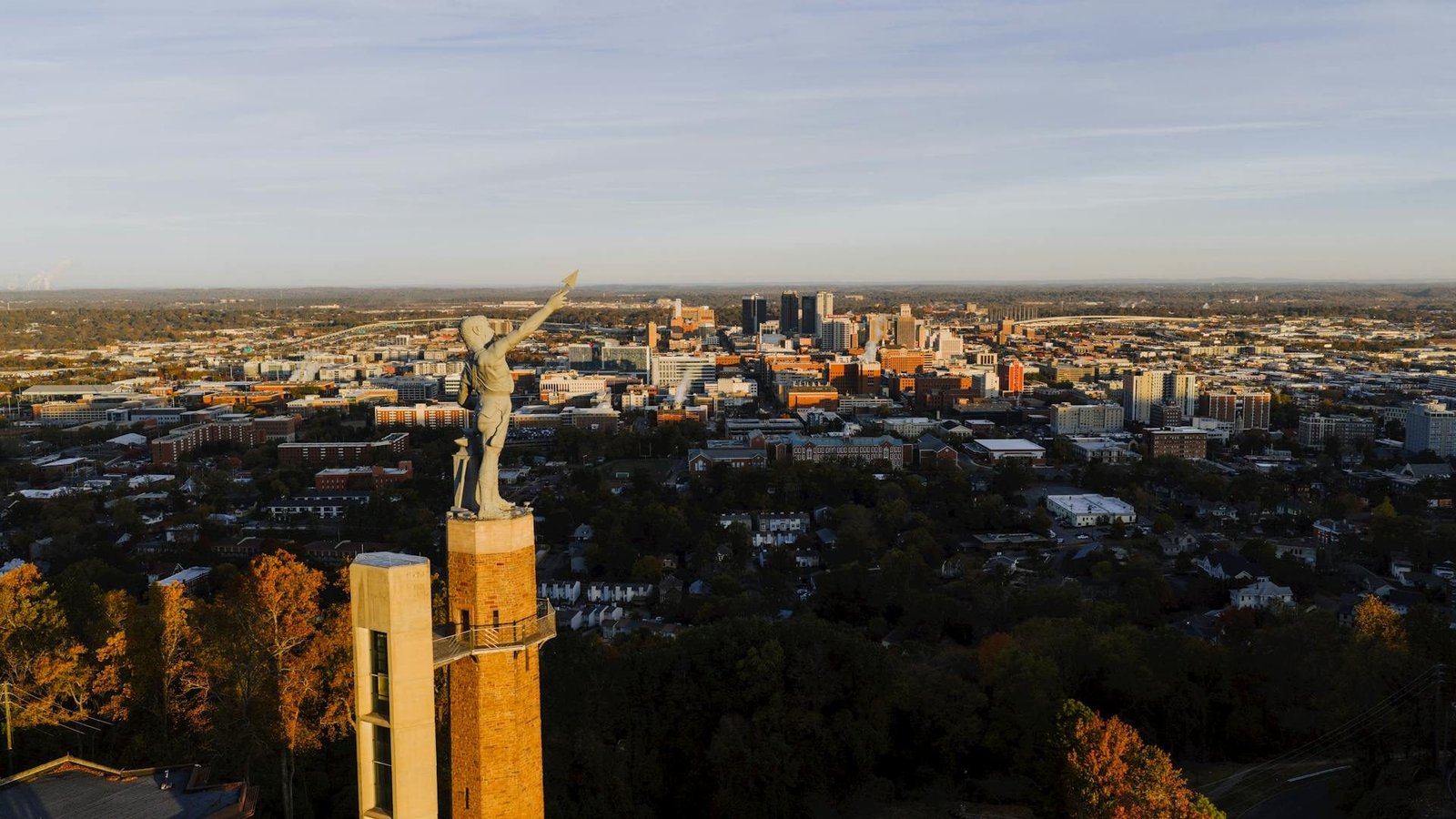
Alabama’s humid subtropical climate drives year-round irrigation use, particularly across the Greater Birmingham area, the Mobile Bay coastal region, and the Huntsville-Madison County tech corridor. That heavy irrigation activity — combined with Alabama’s significant agriculture, manufacturing, and healthcare sectors — creates a high density of cross-connections requiring annual protection. The Alabama Department of Public Health (ADPH) Bureau of Environmental Services enforces cross-connection control statewide, and Alabama is classified as a high-regulation state requiring a written CCC policy, five-year record retention, and service disconnection for non-compliance.
Alabama has documented backflow contamination events dating back decades — in Hope Mills (just across the Georgia border), a pressure drop pulled pesticide into a water main through an unprotected irrigation system. Similar risks exist at Alabama’s thousands of commercial irrigation systems, boiler rooms in Birmingham’s hospital district, and industrial facilities in Tuscaloosa, Decatur, and Anniston. Annual testing is not just a compliance checkbox — it’s the only way to know your mechanical backflow preventer is still doing its job.
Alabama Backflow Testing Law — The Plain-Language Version
Alabama requires all public water systems to implement and enforce cross-connection control programs under the Alabama Safe Drinking Water Act. The ADPH Bureau of Environmental Services administers certification of backflow assembly testers through its Environmental and Technical Certification (ETC) Program. Key requirements: all backflow assembly testers must hold a current ADPH ETC certificate (32-hour course minimum); assemblies must be on the ADPH-approved list (USC-FCCCHR basis); annual testing is required for all testable assemblies; repair or replacement within 30 days of a failed test; and records must be retained for at least 5 years. Local utilities — Birmingham Water Works, Mobile Area Water and Sewer System (MAWSS), Huntsville Utilities, and others — each administer their own tester registration requirements on top of the state credential.
Full Alabama Backflow Law Details
For the complete regulatory breakdown — including ADPH ETC certification requirements, utility-specific programs for Birmingham Water Works, MAWSS, Huntsville Utilities, and more — see our Alabama Backflow Laws page at getyourbackflowtested.com/backflow-laws/alabama-backflow-prevention-laws
How Much Does Backflow Testing Cost in Alabama?
Backflow testing in Alabama typically costs between $50 and $150 per assembly for a standard annual test on a residential or light commercial assembly. The range reflects the type of assembly, ease of access, and the tester’s travel distance — properties in rural Alabama counties may see slight travel surcharges compared to Birmingham or Huntsville metro rates.
Typical Alabama Backflow Testing Price Ranges
Residential irrigation assembly (PVB or RPZ): $50 – $100 for most Birmingham, Huntsville, and Mobile metro properties. Single-assembly residential tests are the most competitive.
Commercial DCVA or RPZ (domestic service): $75 – $150 per assembly. Multi-assembly commercial buildings often receive volume pricing.
Fire protection backflow assembly: $100 – $200. Fire system assemblies require larger equipment and coordination with building management.
Same-day or emergency testing: Add $50 – $100 surcharge. If you receive a non-compliance notice from Birmingham Water Works or MAWSS, same-day scheduling is worth the premium over a service disconnection.
Failed test repair + retest: Repair costs vary widely ($75 – $400+ depending on parts). The retest after repair typically runs $50 – $100 additional.
Note: Some Alabama testers bundle the test and report submission fee together; others charge separately for the test report filing with your water utility’s portal. Confirm what’s included before scheduling.
How Long Does Alabama Backflow Testing Take?
A standard backflow preventer test in Alabama takes 20 to 45 minutes per assembly from the time the tester arrives on-site. Your water will be off for most of this period — typically 15 to 30 minutes — while the tester installs their differential pressure gauge, runs the test protocol, and verifies results. For a single residential irrigation assembly in Hoover, Vestavia Hills, or Madison, the entire appointment from arrival to departure is usually under an hour. For a large commercial facility in downtown Birmingham or a hospital in Huntsville with multiple assemblies, plan for a half-day to full-day visit.
After the test, the tester should provide you with a printed or digital copy of the test report on the ADPH-approved form. They are then responsible for submitting the results to your water utility within the required window — confirm this has been done within 5 business days if your utility uses an online portal.
What to Expect on Alabama Backflow Test Day
Your certified tester will arrive, locate your backflow preventer (typically near the water meter, outside), and connect their calibrated differential pressure gauge to the assembly’s test cocks. They’ll close the downstream shutoff, check valve seating and differential pressures, and verify the relief valve function on RPZ assemblies. The assembly either passes or fails on the spot. If it passes, you’ll get a signed test report and the tester files it with your utility. If it fails, the tester will identify which component failed and either repair it on the spot (if they carry parts) or schedule a return visit for repair and retest within Alabama’s 30-day compliance window.
How We Vet Alabama Backflow Testers — Our Selection Criteria
Every tester listed in our Alabama city pages has been screened against the following criteria before inclusion. We do not list every tester who submits a request — we list testers who meet a meaningful bar:
Current ADPH ETC certificate: Active certification from Alabama’s Environmental and Technical Certification Program. We verify this against the ADPH published tester database, not self-attestation.
Utility registration: Registered and in good standing with the specific utility (Birmingham Water Works, MAWSS, Huntsville Utilities, etc.) for the service area where they’re listed. A credential alone doesn’t authorize you to file results with Alabama utilities.
Calibrated test equipment: Test kits calibrated within the current 12-month window. We ask testers to confirm calibration status on their listing application.
Insurance: General liability insurance appropriate for field work. Many Alabama utilities require minimum coverage.
Local service area: We verify the tester actually serves the metro area or county where they’re listed — not just that they hold a state credential.
Customer track record: We review any available customer feedback and utility non-compliance records. Testers with patterns of late or incomplete filings are not listed.
Alabama Cities and Metro Areas We Cover
Our Alabama backflow tester directory covers property owners across the entire state, with dedicated city pages for the highest-demand markets. In the Birmingham metro, we cover Birmingham, Hoover, Vestavia Hills, Homewood, Mountain Brook, Trussville, Gardendale, Bessemer, and Jefferson County communities served by Birmingham Water Works and Jefferson County Water and Sewer. In north Alabama, we cover Huntsville, Madison, Decatur, Athens, and communities served by Huntsville Utilities and Athens Utilities. On the Gulf Coast, we cover Mobile, Saraland, Prichard, Daphne, Fairhope, and communities across the MAWSS and other Bay-area utility service areas. We also cover Montgomery, Tuscaloosa, Auburn-Opelika, Dothan, Gadsden, Anniston, Florence-Muscle Shoals, and dozens of smaller Alabama markets.
Find a Certified Alabama Backflow Tester Near You
Browse our vetted Alabama backflow tester directory at getyourbackflowtested.com/backflow-testing-near-me/alabama-backflow-testing — select your city or metro area to see screened testers, typical pricing, and direct contact information. All listed testers hold current ADPH ETC certification.
getyourbackflowtested.com | Backflow Testing in Alabama