
Backflow Testing for Irrigation Systems: What Homeowners and Landscapers Need to Know
Everything property oThe in-ground irrigation system is the most common source of residential backflow notices — and one of the most misunderstood compliance obligations homeowners face. Here is what is actually required, why it matters, and how to stay ahead of it.wners, managers, and tenants need to know about backflow prevention — from public health basics to state-by-state compliance.
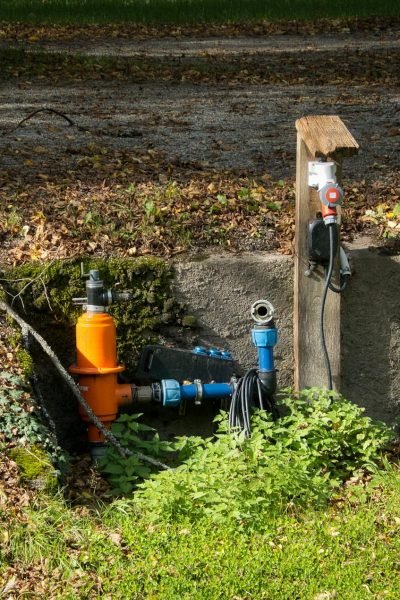
Every spring, water utilities across the country mail out tens of thousands of backflow testing notices to homeowners. A large majority of those notices are addressed to people who have an in-ground lawn irrigation system connected to their municipal water supply. Many of those homeowners have no idea why they received the notice, what the requirement means, or that they had any compliance obligation at all.
This is the nature of irrigation backflow testing: it is legally required in most U.S. jurisdictions, it affects millions of residential properties, and it is consistently one of the most overlooked compliance obligations in property maintenance. Most homeowners learn about it for the first time when the notice arrives — or, in the worst cases, when they receive a fine for ignoring a series of notices they assumed were junk mail.
This article explains exactly why irrigation systems create backflow risk, what kind of device is installed on your system and what it does, what the annual testing requirement involves, how testing costs break down, what differs depending on whether you use fertilizer or chemical injection, and how to build a simple annual routine that keeps you current without any scrambling. If you have a lawn sprinkler system, this is information you need.
Why Irrigation Systems Create a Unique Backflow Risk
An in-ground irrigation system seems straightforward: water from the municipal supply enters the system, flows through underground pipes to your sprinkler heads, and waters the lawn. The problem is the direction of that flow is not guaranteed.
Water pressure in a municipal distribution system is not perfectly constant. It fluctuates throughout the day as demand rises and falls. It drops sharply when a large main break occurs, when fire crews open a hydrant nearby, or when a surge in high-demand users draws down local pressure. Any significant reduction in supply pressure can reverse the direction of flow in connected systems — drawing water backward from your irrigation pipes, through your backflow preventer (if it is working), and back toward the supply.
What makes this specifically dangerous is what is sitting in and around those irrigation pipes. Lawn irrigation water is not the same as the clean potable water that entered your system. After running through underground pipes surrounded by soil, it has picked up soil bacteria. The sprinkler heads are surrounded by grass, fertilizer residue, pet waste, and whatever else has been applied to your lawn. If your system uses a fertilizer or pesticide injector, the water in the lines contains concentrated chemical compounds. All of that material — bacteria, chemicals, and organic contaminants — is sitting in your irrigation system at pressure, directly connected to the municipal supply through a single cross-connection point.
The backflow preventer on your irrigation system is the only barrier between that contaminated water and your drinking water supply. If it fails and a pressure reversal event occurs, there is nothing else stopping the flow.
A Real-World Example
The Texas Commission on Environmental Quality documents a case in which a homeowner mixing pesticide pushed a garden hose to the bottom of a mixing tank. When nearby utility workers opened a flush valve, pressure dropped at the homeowner’s location, and pesticide solution was drawn back through the hose and into the residential water lines — and from there, into the municipal distribution system. An irrigation system with a chemical injector creates this exact scenario at a larger scale every time the system runs.
What Device Is on Your Irrigation System — and Where to Find It
Before your irrigation system connects to the underground pipe network, there should be a backflow prevention assembly installed on the supply line. This device is the one your water utility is asking you to have tested. If you have never looked for it, here is where to find it and what to expect.
Where It Is Located
For most residential properties, the irrigation backflow preventer is installed outside the home, typically mounted on a riser pipe near the foundation or along the exterior wall where the irrigation supply line exits the house. It sits between your water meter (or the irrigation supply shutoff) and the underground irrigation manifold. In colder climates, it may be housed in a green or grey plastic box at ground level, or mounted on a pipe stand 12 to 18 inches above grade. In very mild climates, it may be mounted directly on the supply pipe without additional housing.
If you cannot locate the device, your water utility’s notice may describe its location, or your original irrigation contractor may have documentation. A certified backflow tester can also locate it for you as part of a service call.
What Device Type You Likely Have
The type of backflow preventer on your irrigation system depends largely on when it was installed, where you live, and what your local water authority has required over the years. Three device types are most commonly found on residential irrigation systems:
Pressure Vacuum Breaker (PVB): The most common device on residential irrigation systems installed before roughly 2010. It is a vertically mounted above-ground assembly, recognizable by its bonnet cap and two test cocks on the side. A PVB protects against backsiphonage only — it cannot protect against backpressure, which limits its use to systems without pumps or elevated tanks. Many utilities that accepted PVBs for new installations in the past now require RPZ assemblies instead, though most existing, properly maintained PVBs are grandfathered.
Double Check Valve Assembly (DCVA): A low-profile device that can be installed inline with the pipe, including below grade in some configurations. The DCVA contains two independently acting check valves and protects against both backsiphonage and backpressure. It is increasingly common on residential systems installed in the past fifteen years, particularly where above-ground installation of a PVB is impractical or prohibited.
Reduced Pressure Zone Assembly (RPZ): Required wherever the irrigation system uses chemical injection — fertilizer injectors, pesticide applicators, or any device that adds substances to the water stream. Also required in an increasing number of jurisdictions for all new irrigation installations regardless of chemical use, as utilities standardize on the highest available protection level. If you have an RPZ on your irrigation system, it will be an above-ground assembly, typically larger than a PVB, with a visible discharge port in the center of the body.
If you are unsure what device type you have, the device body will typically have a model number stamped or printed on it. A certified tester can identify the device type from the model number and advise you on whether it is appropriate for your current system configuration.
Device Types at a Glance
| Device Type | Protects Against | Chemical Injection? | Can Go Underground? | Typical Irrigation Use |
|---|---|---|---|---|
Atmospheric Vacuum Breaker (AVB) |
Backsiphonage only |
No |
No |
Individual zone valves, not widely permitted |
Pressure Vacuum Breaker (PVB) |
Backsiphonage only |
No |
No |
Residential irrigation, being phased out |
Double Check Valve Assembly (DCVA) |
Both types |
No |
Yes |
Residential & light commercial |
Reduced Pressure Zone (RPZ) |
Both types |
Yes — required |
No (above grade) |
Chemical injection, high-hazard, commercial |
The Annual Testing Requirement: What It Is and Who Enforces It
Annual testing of irrigation backflow preventers is required in the vast majority of U.S. jurisdictions. The International Plumbing Code — the model plumbing code adopted, with local amendments, by most states — specifically requires that the potable water supply to lawn irrigation systems be protected against backflow, and that testable backflow prevention assemblies be tested annually. Most state plumbing programs and water utility cross-connection control programs reinforce this requirement at the local level.
The practical enforcement mechanism is your water utility. The utility maintains a database of every registered backflow assembly in its service area, tracks testing compliance for each one, and sends annual notices to property owners when a test is due. If no passing test report is received by the deadline, the utility issues non-compliance notices and, if compliance is not achieved, may fine the property owner and ultimately interrupt water service.
Testing deadlines vary by utility. Some require testing between specific calendar dates — often between April 1 and October 1, aligned with the irrigation season. Others use an anniversary date based on when the device was last tested. And some utilities allow any time during the calendar year as long as a passing report is filed before December 31. Your annual notice will specify your deadline; if you did not receive a notice or cannot find it, contact your water utility directly.
If You Use Your Irrigation System Seasonally
Even if you winterize your irrigation system and do not use it for several months of the year, the testing requirement still applies as long as the system remains connected to your plumbing. The potential for backflow exists whenever the cross-connection is present, regardless of whether the system is actively running. The only way to eliminate the testing requirement is to have the irrigation system physically disconnected and capped from the supply line, confirmed by a utility inspection.
What the Testing Process Involves
Backflow testing for an irrigation system follows the same general structure as all backflow assembly testing, but the specifics vary slightly by device type. For most homeowners, the process is simple and low-impact. Here is what to expect:
The certified tester arrives and locates the backflow assembly. For most residential systems, this takes less than a minute if the device is visible and accessible. If the device is buried in vegetation, covered by mulch, or obstructed by lawn equipment, clearing the area in advance saves time and may reduce your bill.
The tester performs a visual inspection of the assembly body, test cocks, and shutoff handles. They check for visible damage, corrosion, debris, and correct installation orientation.
For PVB assemblies, the tester attaches a calibrated differential pressure gauge to the two test cocks and checks the pressure differential across the check valve and air inlet valve. For DCVA assemblies, both check valves are independently tested. For RPZ assemblies, both check valves and the relief valve are tested.
Water supply to the assembly is temporarily shut off during the test — typically for 15 to 30 minutes. For a residential irrigation system, this means no water to the sprinkler zones during testing, but indoor water supply is typically unaffected.
The tester records the pressure differential readings, makes a pass or fail determination, and completes the test report. For a passing device, the report is submitted to the water authority and you receive a copy for your records. For a failing device, the tester will typically explain what failed and what repair options are available.
The full testing process for a standard residential irrigation backflow preventer takes 20 to 30 minutes at the property. Most testers can work without the homeowner present if the device is accessible from the exterior — many homeowners choose to schedule testing while they are at work. However, confirming access to the device in advance — clearing it of obstructions, ensuring both shutoff handles are operable — makes the tester’s job easier and may affect pricing.
What Irrigation Backflow Testing Costs
Residential irrigation backflow testing is typically the most affordable category of backflow service. The devices are smaller and simpler than commercial assemblies, the testing process is faster, and many testers can complete multiple residential tests in the same neighborhood on the same day, which reduces per-property cost.
Nationally, residential irrigation backflow testing ranges from $55 to $125 per device for a standard PVB or DCVA on an accessible above-grade installation. Urban markets in high cost-of-living states — California, Washington, New York, Massachusetts — typically run at the higher end of this range. Lower-cost rural and suburban markets often see prices at or below $75 for a straightforward residential test.
Several factors can push the cost higher than the base range:
Difficult access. A device buried under overgrown shrubs, blocked by a deck structure, or installed in a shallow vault with water in it will take longer and cost more. The simplest way to reduce your testing cost is to ensure the device is visible, unobstructed, and reachable before the tester arrives.
Filing fees. Some water utilities charge a separate fee — typically $10 to $25 — to process test reports. In some programs this fee is collected by the tester; in others it appears on your water bill. Confirm whether this fee is included in your quote.
Repair costs. If the device fails its test, repair costs are separate from the testing fee. Minor repairs — a fouled check valve, a worn O-ring — run $75 to $200 on top of the test fee. A full assembly replacement adds $350 to $700 or more depending on device type and installation complexity.
Retest fees. After a repair, the device must be retested. Many testers charge a separate retest fee of $40 to $75, though some include a same-visit retest in their repair pricing.
Money-Saving Tip: Bundle with Spring Activation
If you use an irrigation service company for spring system startup, ask whether they can include backflow testing in the same visit or arrange it through a partnered certified tester. Volume arrangements between irrigation contractors and backflow testers often result in lower per-test pricing than booking independently.
Chemical Injection and Fertigation: When the Rules Change
If your irrigation system uses a fertilizer injector, pesticide applicator, or any device that introduces chemical compounds into the water stream — a setup often called fertigation or chemigation — the backflow requirements for your system are fundamentally different from a standard sprinkler system.
Chemical injection elevates your cross-connection from a low-hazard classification to a high-hazard classification in virtually all U.S. jurisdictions. The distinction matters enormously: a high-hazard cross-connection cannot be protected by a PVB or a standard double check valve. It requires a Reduced Pressure Zone assembly. If you have a fertilizer injector on your irrigation system and a PVB or DCVA as your backflow preventer, you are almost certainly out of compliance with your local plumbing code and your water utility’s cross-connection control program — regardless of whether your device passes its annual test.
This is one of the most common hidden compliance gaps in residential irrigation. Homeowners install a fertigation system — often a simple hose-end proportioner connected to the irrigation supply — without realizing that it changes the hazard classification of the entire irrigation cross-connection and triggers an RPZ requirement. If you have added any form of chemical injection to your irrigation system since the original backflow preventer was installed, the existing device may no longer be appropriate for your current configuration.
A certified backflow tester can assess whether your current assembly type matches the hazard level of your system. If an upgrade to RPZ is required, plan for an installed RPZ cost in the $600 to $1,200 range for a standard residential size, plus the cost of any required permit.
Seasonal Considerations: Winterization and Spring Startup
Fall Winterization
In northern states and higher-elevation regions where irrigation systems are blown out and winterized in the fall, the backflow preventer requires specific attention. PVB assemblies retain water in their internal cavities and will crack if that water freezes. The correct winterization procedure for a PVB is to close the upstream isolation valve, open a downstream drain or bleeder valve to relieve pressure, and hold the bonnet cap in the open position to allow trapped water to drain fully. Once drained, cover the assembly with an insulated enclosure or foam cover for the winter.
DCVA assemblies installed below grade in a properly drained irrigation box are less vulnerable to freeze damage, but any above-grade piping connecting to the assembly should be insulated or drained. RPZ assemblies must be protected as described in the main RPZ article in this series — above-grade installation requires either an insulated enclosure for moderate climates or a heated cabinet for severe winters.
Spring Startup and Testing Timing
Spring irrigation system activation is the ideal time to schedule the annual backflow test for two reasons. First, the test will confirm that the device was not damaged during the freeze-thaw cycle over winter, before the irrigation season begins. Second, activating the irrigation system and having the backflow test completed in the same service call or coordinated appointment eliminates a separate scheduling effort and often results in lower combined pricing.
Many water utilities set spring or early-summer testing deadlines specifically aligned with the irrigation season — a common deadline is June 1 or July 1. Testing during the spring activation window provides a comfortable margin before these deadlines and ensures that any device failures discovered during testing have adequate time for repair before the deadline passes.
Add Backflow Testing to Your Spring Checklist
Spring irrigation activation typically involves checking sprinkler heads for winter damage, adjusting zone schedules, and testing controller operation. Add backflow testing to this checklist as a standing annual item. A device that fails in April gives you several weeks to arrange repair before most testing deadlines. A device that fails in late June, discovered because you finally got around to scheduling the test, creates a compliance scramble.
A Note for Landscaping and Irrigation Contractors
In most jurisdictions, the compliance obligation for backflow testing rests with the property owner, not the contractor who installed or services the irrigation system. Property owners who receive testing notices are responsible for scheduling testing, paying for it, and ensuring results are filed with the water authority — even if they are largely unaware of how their irrigation system works.
However, irrigation contractors who install new systems or modify existing ones carry specific obligations of their own. Installing a new irrigation system without a compliant backflow assembly — or without notifying the water utility of a new cross-connection — exposes the contractor to liability and creates an immediate compliance problem for the property owner. In most jurisdictions, a permit is required for backflow preventer installation as part of a new irrigation system installation, and a licensed contractor must be involved.
Irrigation contractors who recognize an existing non-compliant situation — a client with a fertilizer injector and a PVB, for example — have an ethical obligation to advise the client of the compliance issue and the corrective action required. Documenting that advice in writing protects the contractor if a compliance problem or contamination incident later occurs.
For contractors who want to add backflow testing to their service offerings, becoming a certified backflow tester through an ASSE or state-approved program is a direct path to providing more complete service to irrigation clients and generating additional annual recurring revenue. The demand is consistent and non-discretionary — properties must test regardless of economic conditions, weather, or discretionary budget decisions.
Finding a Certified Tester for Your Irrigation System
The most reliable source for finding a certified tester approved to test your irrigation backflow preventer is your water utility. Most utilities maintain a published list of approved testers for their service area, available on the utility’s website or by calling their cross-connection control program. Approved testers have been vetted by the utility and are authorized to submit test reports in the format the utility accepts.
Many irrigation service companies have relationships with certified backflow testers and can coordinate testing as part of their spring service packages. This is often the most convenient option for homeowners who already have a regular irrigation service relationship — one phone call handles both spring activation and backflow compliance.
When evaluating a tester, confirm that they hold current certification recognized by your utility (typically ASSE 5020, USC FCCC&HR, or the state equivalent), that they will handle test report submission to the water authority as part of their service, and that their quote is fully inclusive — covering testing, report preparation, and filing rather than the test fee only.
If you have received a notice from your water utility requiring testing, the path forward is simple: find a certified tester in your area, schedule the inspection, and submit the results by the deadline. The cost is modest, the process is quick, and the alternative — penalties, service interruption, or in the worst case a contamination event — is not.
If you are not sure whether your property is subject to testing requirements, look up your state in our state requirements directory. Requirements vary, and the only way to know for certain what applies to your property is to check the rules for your specific jurisdiction.
Clean water is easy to take for granted. The network of devices, tests, regulations, and certified professionals described in this guide is a significant part of why that remains true.
One More Thing Worth Knowing
If you receive a backflow testing notice and your property does not have an in-ground irrigation system — or if the irrigation system was removed before you purchased the property — contact your water utility. In most programs, you can request an account audit that will either confirm you have no testable device on record or identify a device you were unaware of. Responding to a notice you believe was sent in error is always better than ignoring it.
See also
Part of the Backflow Testing Complete Guide series | Find a certified tester at getyourbackflowtested.com