
How to Become a Certified Backflow Tester: Licensing, Training, and What the Career Looks Like
Backflow testing certification is one of the most in-demand, recession-resistant credentials in the trades. Here is a complete picture of what the path to certification looks like, what state-by-state variation means for your specific situation, and what income potential realistically looks like at each stage.
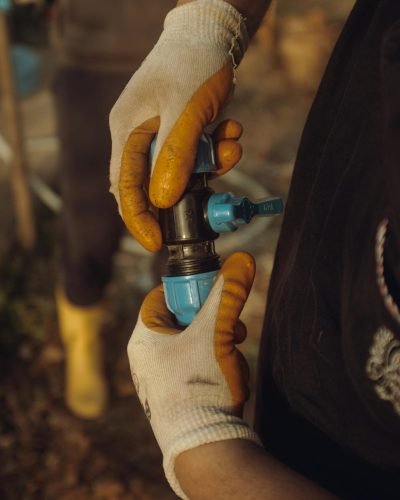
Certified backflow testing sits at an unusual intersection in the trades: it is a specialized skill that requires formal training and examination to practice, serves a legally mandated annual demand that never disappears regardless of economic conditions, and remains consistently undersupplied relative to the number of properties that need testing every year. For plumbers, irrigation contractors, water utility employees, and mechanical service technicians looking to add a high-value, recurring revenue credential, backflow certification is worth serious consideration.
This article explains what becoming a certified backflow tester actually involves — the prerequisites that most programs require, the primary certification pathways, what the training and examination process looks like in practice, how state-by-state variation affects what you need to do depending on where you plan to work, what tools and equipment the work requires, what the realistic day-to-day job looks like, and what income potential looks like across different work arrangements. If you are evaluating whether backflow certification is right for you, or if you have decided to pursue it and want to understand the path ahead, this is the complete picture.
Why Backflow Testing Certification Is a Strong Career Move
Three characteristics make backflow testing certification stand out among trade specializations:
Non-Discretionary, Recurring Demand
Annual backflow testing is legally required. Property owners do not choose whether to test — they test because non-compliance results in fines and water service interruption. This means demand for certified testers does not follow economic cycles the way discretionary renovation or new construction work does. During the 2008 financial crisis, during the COVID-19 pandemic, during every economic contraction in recent memory, backflow testing continued. Buildings needed their compliance maintained regardless of what else was happening in the economy. For a tradesperson building a client base, recurring mandatory compliance work is as stable as revenue gets.
Supply Consistently Trails Demand
In most U.S. markets, there are fewer certified backflow testers than the testing demand in that market requires. The certification barrier is real — it takes five years of qualifying experience, 40 hours of specialized training, and passing both a written and practical examination before you can submit a test report to a water utility. That barrier keeps supply constrained. In high-density urban and suburban markets, especially during spring testing season, certified testers frequently have more work than they can schedule, and properties near compliance deadlines scramble to find available testers. This structural supply shortage is a recurring feature of the market, not a temporary anomaly.
Complements Existing Trade Skills
Backflow certification does not require abandoning an existing trade career — it enhances one. A plumber who adds backflow certification can offer annual testing to every client in their service area, converting one-time installation or repair work into an annual compliance relationship. An irrigation contractor who becomes certified can complete the testing requirement that their installation clients need every spring. A water utility employee who earns certification can advance into a cross-connection control specialist role. In each case, the certification adds a revenue stream and a client retention mechanism to work that is already being done.
Prerequisites: What You Need Before You Can Certify
Backflow tester certification is not an entry-level credential. Every major certification program requires documented relevant experience before a candidate is eligible to sit for the examination. The standard ASSE International requirement, which most programs align to, is a minimum of five years of experience in a qualifying field.
Qualifying experience for ASSE 5110 certification includes work in plumbing, pipefitting, sprinklerfitter trades, lawn irrigation installation or maintenance, mechanical contracting, water utility operations, water distribution system work, building maintenance involving plumbing systems, and plumbing inspection. The five-year threshold is a minimum — programs do not require candidates to have any prior exposure to backflow prevention specifically, but they do need the underlying plumbing system familiarity that comes from years of hands-on trade work.
For candidates who do not have a plumbing license but have the required years of related experience, the certification door is open. A plumbing license is not a universal prerequisite for backflow tester certification. Several states — including Minnesota, California, and Texas — offer dedicated backflow tester registration categories that do not require a plumbing license, requiring only the ASSE 5110 certification and the applicable state registration. However, without a plumbing license, the scope of work is limited to testing only: installation, repair, and replacement of assemblies requires a licensed plumber in most jurisdictions.
A Note on the Five-Year Rule
The five-year experience requirement is assessed on eligibility for the exam, not just on completing the training course. Most ASSE-accredited schools require you to attest to your qualifying experience before enrolling in the 5110 course. If you are approaching this credential earlier in your trade career, plan your timeline accordingly.
The Primary Certification Pathways
There is no single national backflow tester license — certification requirements are set at the state level, and the certifying bodies whose credentials are accepted vary by jurisdiction. However, several nationally recognized certification programs serve as the foundation for most state programs. Understanding these programs and how they relate to your state’s requirements is the critical first step in planning your certification path.
| Program | Administered By | Course Length | Exam Format | Renewal |
|---|---|---|---|---|
ASSE 5110 |
ASSE International / IAPMO BPI (accredited schools) |
40 hours (5 days) |
100-question written + practical on 4 assembly types |
Every 3 years |
USC FCCC&HR |
USC Foundation for Cross-Connection Control |
Varies by state program |
Written + practical |
Varies by jurisdiction |
ABPA |
American Backflow Prevention Association |
Varies |
Written + practical |
Every 3 years |
State-specific programs |
State plumbing board or health dept. |
Varies by state |
Written + practical (often state-administered) |
Varies — often 3 years |
ASSE International — The Dominant Standard
The American Society of Sanitary Engineering (ASSE) Series 5000 professional qualification standards are the most widely adopted certification framework for backflow prevention professionals in the United States. The ASSE 5110 credential — Backflow Prevention Assembly Tester — is accepted as qualifying certification in the majority of states and by most water utility cross-connection control programs nationwide. It is the credential that the largest number of programs reference, and for most candidates it is the right starting point.
ASSE certification is administered through ASSE-accredited training schools, the largest of which is IAPMO’s Backflow Prevention Institute (IAPMO BPI). Accredited schools are located in most major metro areas and offer courses on a rotating schedule throughout the year. The 5110 course runs 40 hours over five consecutive days, includes a laboratory segment on live assemblies, and concludes with both a written and practical examination administered on the final day.
USC FCCC&HR — The Western States Standard
The University of Southern California Foundation for Cross-Connection Control and Hydraulic Research (USC FCCC&HR) administers a certification program that is specifically required or strongly preferred by many water utilities in California, Oregon, Washington, and other western states. The USC program predates ASSE’s backflow certification program and is embedded in the cross-connection control frameworks of California’s State Water Resources Control Board and many Pacific Northwest utility programs.
If you intend to work primarily in California or the Pacific Northwest, the USC FCCC&HR certification is not optional — many utilities in these states only accept test reports from testers who hold this credential, or require it in addition to ASSE certification. Candidates planning to work in these markets should research which specific credentials their target utilities accept before choosing a certification program.
State-Specific Programs
Some states operate their own certification programs administered through the state plumbing board, department of health, or environmental quality agency. Texas, for example, requires a state-issued Backflow Prevention Assembly Tester (BPAT) license administered by the Texas Commission on Environmental Quality (TCEQ), which requires both qualifying experience and passing both a written exam at an approved computer-based testing center and a practical exam at a TCEQ-approved training provider. Florida has its own state program. Illinois has specific requirements beyond ASSE certification.
The practical implication: before enrolling in any training program, identify the specific certification credentials accepted by the water utilities you intend to serve. Your state plumbing licensing board or the water utility’s cross-connection control program office are the authoritative sources for this information.
The Training and Examination Process in Detail
For most candidates pursuing ASSE 5110 certification — the most common pathway — the training and examination process follows a consistent structure regardless of which accredited school delivers it.
The 40-Hour Training Course
The initial ASSE 5110 certification course runs 40 hours, typically delivered as five consecutive 8-hour days. The curriculum covers backflow prevention theory and hydraulics, cross-connection hazard identification and classification, the four primary testable assembly types (RPZ, DCVA, PVB, and spill-resistant vacuum breaker), test procedures for each assembly type following ASSE Series 5000 standards, basic troubleshooting and repair concepts, documentation and report filing requirements, and applicable federal, state, and local regulations.
Each day includes both classroom instruction and laboratory time. The laboratory component is critical: students practice connecting test gauge equipment to live assemblies, executing the correct valve sequence for each device type, recording pressure differential readings, and interpreting results. The practical exam on day five tests these skills from memory — no notes, no assistance, and all four assembly types tested within a 90-minute window. Candidates who have spent time in the lab during training are far better prepared for the practical exam than those who focused primarily on the written material.
Course costs range from approximately $600 at community college programs to $1,200 or more at private training providers, depending on location and materials included. Most courses include textbooks, reference materials, and the examination fee for the initial sitting. Students are responsible for bringing their own writing materials and, in many programs, appropriate attire for water exposure during lab work.
The Written Examination
The ASSE 5110 written examination consists of 100 questions covering the full curriculum of the training course. A score of 70 percent or higher is required to pass. Questions cover backflow theory, cross-connection identification, device types and their applicable installation conditions, test procedure sequences, minimum pressure differential specifications, documentation requirements, and regulatory compliance. The examination is administered at the end of the five-day training course, immediately following the practical exam.
Candidates who fail the written exam on the first attempt are typically permitted to retake it within a specified window. ASSE provides guidance on retake procedures through the accredited school that administered the initial examination.
The Practical Examination
The practical exam is the component that most candidates find the most demanding. The candidate must demonstrate the complete field test procedure for four assembly types — reduced pressure zone assembly (RPZ), double check valve assembly (DCVA), pressure vacuum breaker (PVB), and spill-resistant vacuum breaker (SRVB) — entirely from memory, without notes or reference materials, within a 90-minute time limit.
For each assembly, the correct procedure requires: confirming the shutoff valve positions, attaching the test gauge in the correct port sequence, bleeding air from the gauge hoses, opening valves in the precise prescribed order, recording pressure differentials at each step, identifying pass or fail conditions, and resetting the assembly to service condition. The sequence varies for each assembly type, and a procedural error on any step — such as opening valves in the wrong order — results in a failing score for that assembly.
Most candidates who fail the practical exam on the first attempt do so because of insufficient hands-on practice during training, not because of a lack of theoretical understanding. The difference between a candidate who passes and one who fails is almost always the number of times they physically worked through each test sequence before exam day.
After Certification: State Registration and Utility Approval
Passing the ASSE 5110 examination earns you the ASSE certification credential, but in most states it does not automatically authorize you to submit test reports to water utilities. Two additional steps are typically required before you can begin working.
State Registration
Most states require backflow testers to register with a state agency — typically the plumbing licensing board or state department of health — in addition to holding ASSE or equivalent certification. The registration process generally requires submitting your ASSE certificate, completing a state application, paying a registration fee, and in some cases providing proof of general liability insurance or a bond. State registrations typically run concurrently with your ASSE certification cycle — three years — and must be renewed together.
Texas requires a separate state exam administered by the TCEQ in addition to the practical exam administered at the training school. California, as of July 2025, requires that all backflow assembly testers hold certification through programs recognized by the State Water Resources Control Board, with additional ANSI accreditation requirements taking effect by July 2027. Check your state’s current requirements directly with the relevant licensing body before beginning the certification process.
Water Utility Approval Lists
Beyond state registration, most water utilities maintain their own approved tester lists and require testers to apply for inclusion before they can submit test reports within the utility’s service area. The application process typically requires a copy of your certification, your state registration number, proof of calibration for your test gauge equipment, and completion of a utility-specific application form. Some utilities charge a small annual fee for list maintenance.
Being listed on every water utility’s approved tester list in your intended service area is as important as holding the certification itself — a test report submitted by a tester not on the utility’s approved list will be rejected, leaving the property owner out of compliance and you without payment for work performed. Build your approved list registrations before you begin marketing your services.
Equipment: What You Need to Work
A certified backflow tester needs two primary pieces of equipment beyond a standard set of hand tools: a calibrated differential pressure test gauge and a reliable vehicle.
The Test Gauge
The differential pressure test gauge — often called a test kit — is the specialized instrument used to measure the pressure differentials across check valves and relief valves during a backflow test. Test kits consist of a differential pressure gauge with high and low pressure connections, control valves, vent valves, and flexible hoses with fittings that connect to the device’s test cocks. Quality test kits from manufacturers such as Watts, Dresser, Mid-West Instruments, and Flomatic range from $300 to $800 depending on configuration and features.
Most jurisdictions require that test gauges be calibrated annually by an approved calibration laboratory. Annual calibration typically costs $50 to $100 and must be documented. A gauge that is not within its annual calibration window cannot be used to produce test reports accepted by the water authority — keeping calibration current is a compliance obligation, not an optional maintenance item.
Many testers eventually carry multiple gauges — a primary gauge in active use and a backup gauge for use when the primary is out for calibration or in the event of field damage. Starting with one quality gauge and adding a backup as the business grows is the standard approach.
Vehicle and Logistics
Backflow testing is a mobile trade. A reliable vehicle with adequate storage for test equipment, rebuild kits and common repair parts, safety equipment, documentation materials, and any additional tools needed for on-site repairs is the operational foundation of a backflow testing business. Many experienced testers work from a pickup truck or enclosed service van that is organized for efficient access to commonly needed items.
What the Day-to-Day Work Looks Like
A working backflow tester’s schedule is shaped primarily by the annual testing cycle in their service area. Most utilities send test due notices to property owners in waves — typically in late winter and early spring for spring deadlines, or in summer for fall deadlines. This means testing demand is seasonal, with peak volume concentrated in the two to three months before each major deadline wave.
A productive solo tester in a suburban or urban market can typically complete eight to fifteen residential tests per day when properties are clustered geographically and devices are accessible above grade. Commercial testing volume is lower — four to eight devices per day — because individual tests take longer, access is more complex, and travel between commercial properties typically covers more distance than neighborhood residential routing.
The administrative side of the work — completing test reports, submitting results to water authorities or program administrators, communicating with property owners about failed tests and repair timelines, and maintaining calibration records — takes roughly 30 to 60 minutes per day for a solo tester at moderate volume. Many testers handle submissions electronically through BSI Online or similar program administrator platforms, which streamlines the filing process considerably.
Income Potential at Each Stage
Income from backflow testing varies significantly depending on work arrangement, geography, testing volume, and whether repair services are offered alongside testing. The following table provides a realistic picture across different scenarios:
| Work Arrangement | Daily Volume | Per-Test Rate | Estimated Annual Gross |
|---|---|---|---|
Employee (utility or plumbing co.) |
N/A — hourly |
$22–$28/hr |
$46,000–$58,000 |
Part-time independent (add-on to plumbing) |
4–6 residential/day |
$75–$100 |
$30,000–$60,000 (side income) |
Full-time solo independent (residential focus) |
8–15 residential/day |
$75–$125 |
$80,000–$160,000 gross |
Full-time solo independent (commercial focus) |
4–8 commercial/day |
$100–$250 |
$100,000–$200,000+ gross |
Multi-tech backflow business |
20–40+ devices/day across team |
Blended |
$250,000–$600,000+ gross |
The gross revenue figures for independent testers represent testing fees before operating expenses — vehicle costs, fuel, insurance, calibration, repair parts inventory, and marketing. Net income after expenses typically runs 55 to 70 percent of gross for a well-managed solo operation. The highest earners in the field are typically multi-tech operations with service agreements covering commercial property management portfolios, where predictable annual volume across dozens or hundreds of properties provides scheduling efficiency and volume pricing advantages.
Geography matters significantly. A tester in a dense metro area — Los Angeles, New York, Chicago, Houston, Seattle — can complete substantially higher daily volume than one in a dispersed rural or suburban market because travel time between jobs is shorter. Urban markets also tend to support higher per-test pricing due to cost-of-living factors and greater commercial testing complexity.
The Recurring Revenue Advantage
Unlike most service trade work, backflow testing generates predictable recurring revenue from the same clients every year. A tester who builds a client base of 200 commercial properties at $150 per device per year has $30,000 in recurring annual revenue from those accounts alone — before adding new residential volume or repair work. Building that recurring base through consistent service quality and proactive scheduling reminders is the foundation of a stable backflow testing business.
Recertification: Maintaining Your Credential
ASSE 5110 certification is valid for three years. Recertification requires completing a shortened refresher course — typically one to two days — and passing both a written examination (50 questions) and a practical examination covering the same four assembly types as the initial exam. The recertification process is less intensive than initial certification but still requires active preparation, particularly for the practical component.
ASSE provides a six-month grace period after the certification expiration date, during which testers can still recertify without losing their certification history. However, most water utilities will not accept test reports from testers whose certification has lapsed, even within the grace period — check your utilities’ specific policies before allowing your certification to expire.
Continuing education requirements vary by state. Texas requires 24 hours of continuing education — including eight hours of practical skills training — for each renewal cycle. Other states have their own requirements. Building continuing education into an annual professional development budget, rather than scrambling to meet requirements at the end of a three-year cycle, is the sustainable approach.
Getting Listed and Building Your First Client Base
Once you hold your certification, your state registration, and approvals from relevant water utilities, the next challenge is practical: finding the first clients. The most effective starting points for a new certified tester are:
Leverage your existing trade relationships. If you are a plumber, irrigation contractor, or service technician adding backflow testing to your existing services, your current client base is your first testing market. A direct offer to existing clients — letting them know you are now certified and can handle their annual testing — is the lowest-friction customer acquisition path available.
Get listed on every relevant utility’s approved tester directory. These directories are where property owners search for testers. Being listed — and having all your credentials current and visible — puts you in front of property owners who are actively looking to schedule their required tests.
Contact local property management companies. Property managers with multi-building portfolios need reliable testers who can service multiple properties efficiently and handle report filing without being managed closely. A direct conversation with a property manager who currently uses multiple testers, or is unhappy with their current tester’s responsiveness, can translate to a substantial recurring account.
Reach out to irrigation contractors who are not certified. Many irrigation service companies tell their clients to find their own backflow tester for the annual compliance requirement. A partnership arrangement — where you handle the testing for all of an irrigation company’s residential clients — can fill a schedule quickly.
List your business on getyourbackflowtested.com. The tester directory at this site connects certified testers with property owners who are actively seeking testing services in their area. Listing your service area and credentials puts you in front of motivated prospects who have a deadline to meet.
The Bottom Line on Certification Value
Backflow tester certification is a three-to-five-year investment from building qualifying experience to earning the credential and establishing a client base. It is not a quick path to income. But the credential, once earned, generates recurring annual demand that compounds over time as your client base grows. For trade professionals who value stable, non-discretionary revenue and year-round work in a market that consistently has more demand than supply, it is one of the most defensible specializations available.
See also
Part of the Backflow Testing Complete Guide series | Find a certified tester at getyourbackflowtested.com