
Backflow Preventer Installation: What It Costs, What's Involved, and What to Ask Your Contractor
Whether you are installing for the first time or replacing a failed device, knowing what the installation process involves and what it should realistically cost puts you in a position to evaluate quotes, avoid overpaying, and ensure the job is done right.
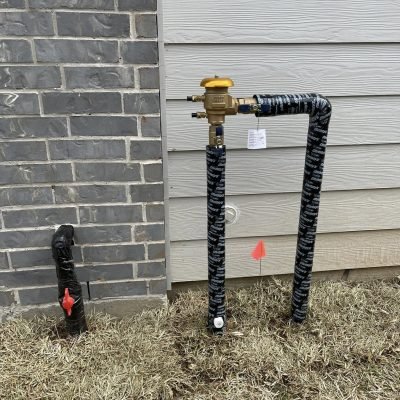
Backflow preventer installation is one of those plumbing jobs that seems like it should be simple — screw a device onto a pipe and you’re done — but consistently produces price surprises for property owners who did not understand the full scope of work before accepting a quote. The device itself is only part of the cost. Add the permit, the licensed labor, the initial compliance test, the test report filing fee, and any necessary plumbing modifications to make the installation code-compliant, and the total can be two to three times the cost of the device alone.
This article breaks down every component of a backflow preventer installation cost, explains what each element covers and why it matters, identifies the factors that drive costs higher or lower in a specific situation, and closes with a comprehensive cost reference table and a set of questions to ask any contractor before approving work. The goal is to leave you fully informed before the first quote arrives.
Who Can Install a Backflow Preventer
This is the first question to resolve, because the answer determines everything that follows about cost and process. In most U.S. jurisdictions, backflow preventer installation is plumbing work that must be performed by a licensed plumber or licensed plumbing contractor. This requirement applies regardless of how simple the installation appears — threading a new device onto an existing connection is still plumbing work under most state licensing laws, and performing it without a license creates permit and inspection problems that add cost and delay later.
There are important distinctions to understand. A licensed plumber is not automatically a certified backflow tester, and a certified backflow tester is not automatically a licensed plumber. These are separate credentials. Installation requires a plumbing license. The initial compliance test required after installation must be performed by a certified backflow tester. Many contractors hold both credentials, which allows them to handle the full project — install and test — in a single engagement. When getting quotes, confirm explicitly whether the contractor holds both a plumbing license and backflow tester certification, or whether testing will be subcontracted to a separate party.
Some jurisdictions extend installation authority to licensed irrigation contractors for backflow preventers that serve irrigation systems specifically. If you are replacing a device on an existing irrigation system, your irrigation contractor may be authorized to handle the installation depending on your state. Confirm with your local water utility or building department before assuming this applies to your situation.
The Permit Requirement: Why It Exists and What It Costs
Backflow preventer installation is a permitted activity in most jurisdictions. A permit is required before work begins, and an inspection is conducted after installation to verify that the assembly is the correct type for the application, that it is installed per local code, and that it is accessible for testing. Most jurisdictions also require that the initial compliance test report be filed with the water authority as part of closing out the permit.
Property owners sometimes encounter contractors who offer to skip the permit in exchange for a lower price. This is a false economy. An unpermitted backflow preventer installation creates several downstream problems: the water utility may reject test reports submitted for an assembly that was not installed under permit; the installation may need to be demolished and redone if discovered during an inspection; and the property sale may be complicated by an undocumented plumbing modification. The $50 to $200 permit fee is a cost worth paying.
In cities with highly developed cross-connection control programs — New York City is the most complex example — the permit process goes further. NYC DEP requires that plans for a new backflow preventer installation be drawn by a registered architect or professional engineer, submitted to the DEP for approval (a process that can take three weeks or more), and then permitted through the Department of Buildings before a licensed master plumber can begin installation. This level of pre-installation approval is specific to NYC and a small number of other highly regulated programs, but it illustrates why installation timelines and associated professional fees can vary enormously depending on jurisdiction.
The Four Cost Components of Any Installation
Every backflow preventer installation has four primary cost components. Understanding each one separately allows you to evaluate whether a quote is reasonable and complete.
1. The Device (Parts Cost)
The backflow prevention assembly itself is typically the starting point for any installation quote. Device costs vary significantly by type and size:
Atmospheric Vacuum Breakers (AVB), small residential: $15 to $50. Simple devices for low-hazard applications; increasingly restricted by utility programs.
Pressure Vacuum Breakers (PVB), residential 3/4″ to 1″: $80 to $200. The most common residential irrigation device; quality range between entry-level and commercial-grade.
Double Check Valve Assemblies (DCVA), residential 3/4″ to 1″: $100 to $250. Below-grade installations typically use this type.
Reduced Pressure Zone assemblies (RPZ), residential/light commercial 3/4″ to 1″: $300 to $700. Commercial-grade assemblies from Watts, Febco, Wilkins, or Apollo.
RPZ assemblies, commercial 1-1/2″ to 4″: $600 to $2,500+ depending on size and manufacturer.
Fire suppression assemblies (DCDA, RPDA): $500 to $3,000+ for standard commercial sizes.
Device cost alone does not determine installation cost. A $150 PVB on an existing supply connection with existing isolation valves takes significantly less labor to install than the same device on a new installation requiring supply line modification. The device is the starting point, not the whole story.
2. Labor
Labor is typically the largest single cost component in a backflow preventer installation. Licensed plumbers charge $75 to $175 per hour in most U.S. markets, with the highest rates in major coastal cities. The time required depends heavily on the specific installation:
A straightforward replacement of an existing residential PVB on an accessible above-grade supply connection takes one to two hours for an experienced contractor. The supply line is already there, isolation valves are presumably present, and the installation is a matter of removing the old device and installing the new one to the same connections. Total labor cost: $150 to $350.
A new installation where no backflow preventer previously existed requires cutting into the supply line, installing isolation valves on both sides, making new pipe connections, positioning the device at the required height and orientation, and installing drainage provisions if required. On a straightforward residential above-grade installation, this takes two to four hours. On a commercial installation with larger pipe, confined access, or drainage requirements, it takes longer. Labor cost range: $200 to $600 for residential new installs; $400 to $1,500+ for commercial.
3. Permit, Inspection, and Filing Fees
Permit fees vary by jurisdiction and by the scope of work. Residential irrigation backflow permits typically run $50 to $150. Commercial backflow permits run $100 to $300 or more. In jurisdictions that require plan review — New York City, Los Angeles, and others — add professional fees for the architect or engineer who prepares the plans: typically $500 to $2,500 depending on scope and complexity.
After installation, a water utility inspection fee may apply — typically $75 to $150 where this is charged separately from the permit. And after the initial compliance test, most water utilities or their program administrators charge a filing fee for registering the test report: typically $15 to $50 per device. These fees are often small individually but add up to $150 to $400 in aggregate for a typical project.
4. Initial Compliance Test
Every new or replaced backflow preventer must be tested by a certified tester and the results filed with the water authority before the installation is considered complete for compliance purposes. This initial test is separate from the ongoing annual testing requirement — it is the commissioning test that confirms the new device is functioning correctly and registers it in the utility’s compliance database.
Initial compliance testing typically costs $75 to $150 for a residential or light commercial assembly. If the contractor who installs the device is also a certified tester, this can be performed in the same visit immediately after installation, saving a separate service call. If the installation contractor does not hold tester certification, a second appointment with a certified tester must be scheduled before the permit can be closed and the compliance record can be established.
Full Installation Cost Reference Table
The following table presents all-in installed costs — device, labor, permit, initial test, and report filing — for the most common backflow preventer installation scenarios. Figures represent current national market averages and will vary by region, property access, and local permit structures.
| Scenario | Device Size | Parts Only | Total Installed (All-In) | Notes |
|---|---|---|---|---|
Residential PVB replacement (irrigation) |
3/4″ – 1″ |
$80–$200 |
$350–$650 |
Includes permit, labor, initial test, report filing |
Residential DCVA replacement (irrigation) |
3/4″ – 1″ |
$100–$250 |
$400–$750 |
Below-grade install may add $100–$200 for vault work |
Residential new installation (no existing plumbing) |
3/4″ – 1″ |
$100–$250 |
$500–$900 |
Includes cutting into supply line and new isolation valves |
Commercial RPZ new installation |
3/4″ – 1-1/2″ |
$300–$700 |
$900–$2,000 |
Includes drain provisions, permit, initial test |
Commercial RPZ new installation |
2″ – 4″ |
$700–$2,500 |
$2,000–$6,000+ |
Larger pipe; may require engineering and multiple inspections |
Fire suppression backflow (DCDA, standard) |
2″ – 4″ |
$500–$1,500 |
$2,500–$6,000 |
Fire marshal permit often required separately |
Fire suppression backflow (RPDA, with additives) |
2″ – 6″ |
$800–$3,000 |
$3,500–$12,000+ |
Highest complexity; engineering involvement typical |
Add freeze protection enclosure (heated, installed) |
Any |
N/A |
$300–$700 |
One-time add-on; essential in climates below 25°F |
Add anti-theft cage (installed) |
Any |
N/A |
$200–$450 |
Required by some utilities in urban markets |
Note
These ranges assume standard access conditions — an above-grade device in a reasonably accessible location, standard pipe sizes, and a contractor who holds both plumbing license and tester certification. Difficult-access installations, older properties requiring supply line remediation, and jurisdictions with plan review requirements will trend toward the higher end of each range or exceed it.
Factors That Push Costs Higher
Difficult Physical Access
The single biggest labor cost variable is how easy it is for the installer to access the installation point and work on it. An above-grade PVB mounted on an exposed supply pipe in an open utility area takes half the labor time of the same device crammed into a narrow utility closet with tight clearances, or installed on a below-grade vault that has accumulated a foot of water. Clear, unobstructed access to the installation point is worth something — clearing the area before the contractor arrives is a small effort that can reduce your bill by an hour of labor.
Old or Non-Standard Pipe
Properties built before 1970 often have galvanized steel or cast iron supply lines. These materials are significantly harder to work with than modern copper or PVC — they corrode at threaded connections, they do not adapt easily to modern fittings, and in some cases they require partial pipe replacement to achieve a reliable connection. If your property has older galvanized supply piping at the installation point, ask the contractor to assess the pipe condition before quoting. A quote based on standard installation that becomes a partial pipe replacement mid-job produces a significantly higher final bill.
Absence of Isolation Valves
A compliant backflow preventer installation requires isolation valves on both sides of the device so the assembly can be isolated for testing, repair, and replacement without shutting off the entire building’s water supply. If existing isolation valves are absent, corroded to the point of non-function, or incorrectly positioned, they must be added or replaced as part of the installation. Each isolation valve adds $75 to $200 to the project cost depending on size and pipe material.
RPZ Drainage Requirements
RPZ assemblies require a drain point for the relief valve discharge. If the installation location does not have an existing floor drain or approved drainage point within reach of the discharge port, the installer must create one — routing a drain line to the nearest approved discharge point. This can add $200 to $600 to the project cost depending on the distance and the complexity of the routing.
Commercial Pipe Sizes
Backflow assembly installation cost increases substantially with pipe size. A 1″ RPZ installation involves manageable hardware costs and standard labor techniques. A 4″ RPZ involves larger, heavier, and more expensive assemblies; requires more complex piping modifications; and may require two-person labor for safe handling. The jump from 1″ to 4″ can triple or quadruple the installation cost above what the device price alone suggests.
The Installation Process Step by Step
For property owners who have not watched a backflow preventer installation, understanding what is actually happening during the work helps set realistic timeline expectations and makes contractor conversations more productive.
Pre-installation preparation. The water supply to the installation area is shut off. For a residential irrigation system, this is typically the irrigation supply shutoff. For a commercial domestic service installation, it may require a main building shutoff, which affects all building occupants and must be coordinated accordingly.
Pipe preparation. The supply line is prepared at the installation point — existing pipe is cut, threaded, or soldered as appropriate for the connection type. New isolation valves are installed if not already present. For below-grade installations, the vault is accessed and prepared.
Device installation. The backflow assembly is installed in the correct orientation for the device type — vertical for PVBs, horizontal or vertical depending on device specifications for DCVAs and RPZs — and secured to prevent movement or vibration. Test cocks must face in a direction that allows test gauge connection. All threaded connections are sealed with appropriate thread sealant or tape.
Drainage provisions (RPZ). The discharge port is oriented downward over a drain, or a drain line is routed to an approved discharge point. This step is not required for PVBs or DCVAs.
System pressurization and leak check. Water supply is slowly restored. The installer checks all connections, fittings, and the device body for leaks under operating pressure before proceeding.
Initial compliance test. The certified tester attaches differential pressure gauge equipment to the test cocks and performs the full test protocol for the device type. Pass/fail results are recorded.
Documentation and permit closeout. The test report is completed and submitted to the water authority. A copy is provided to the property owner. The installation permit is closed out with the building department or utility.
How Long Does Installation Take?
A straightforward residential PVB or DCVA replacement takes two to three hours total, including the initial test. A new commercial RPZ installation with drain provisions and a larger pipe size typically takes a full day. Complex commercial projects with plan review, multiple devices, or difficult access can span multiple days. Get a timeline estimate from your contractor when you get the cost quote.
New Installation vs. Replacement: What Changes
Whether you are installing a backflow preventer for the first time or replacing an existing device affects both cost and process in important ways.
New installation means adding a backflow preventer where none previously existed. This always requires more labor than a replacement because the supply line must be modified to create the installation point. Isolation valves must be added. Drainage provisions must be established for RPZ installations. The permit process is typically more involved than for a simple like-for-like replacement.
Replacement — swapping an existing device for a new one — is generally faster and less expensive than new installation, because the supply connections, isolation valves, and drainage provisions are already in place. A replacement quote that is significantly higher than the device cost and two hours of labor warrants explanation. Ask the contractor what additional work beyond the device swap is included in their scope.
Upgrade replacement — replacing a device that no longer meets the hazard classification of the current application, such as replacing a PVB with an RPZ because a chemical injector was added to the irrigation system — is a hybrid: replacing an existing device but at a different size, type, or configuration. This typically requires some plumbing modification and approaches new installation in cost.
Questions to Ask Before Approving the Work
Before approving any backflow preventer installation quote, the following questions will confirm that you are comparing complete proposals and that the contractor understands your specific requirements:
Is this quote all-in? Does it include the device, all labor, the permit, the initial compliance test, and the test report filing fee? Any quote that does not include all of these elements is an incomplete quote.
Do you hold both a plumbing license and backflow tester certification? If so, can you perform the initial compliance test in the same visit as the installation?
What device type are you proposing, and why is it appropriate for my application? Ask them to reference the local utility requirement or the applicable plumbing code provision.
Is this device on the approved assembly list for my water utility? In California, Washington, and other states that specify particular approved assembly lists, this matters.
Is freeze protection included, and if not, what do you recommend for my climate? Any residential or commercial above-grade installation in a climate with regular freezing temperatures should include a freeze protection plan.
Are isolation valves present and functional, or do they need to be replaced? Ask this specifically for older properties.
What is the timeline from permit application to final inspection and test report filing?
Do you carry liability insurance, and can you provide a certificate of insurance? A contractor modifying your supply line should be insured for water damage claims.
The Skipped-Permit Red Flag
If a contractor quotes you a price that seems unusually low and mentions that they can “skip the permit” to save money, decline. An unpermitted backflow installation creates compliance problems that cost more to fix than the permit itself. Additionally, a contractor willing to skip permits on your job is signaling a level of code familiarity that should give you pause about the quality of the installation itself.
Ongoing Costs After Installation
Installation is a one-time cost, but backflow prevention involves ongoing annual expenses that should be factored into your total cost of ownership picture when making installation decisions.
Annual compliance testing: $55 to $175 per device for residential; $85 to $350+ per device for commercial. Mandatory in virtually all jurisdictions. This is a non-negotiable recurring cost from the day the device is installed.
Annual test report filing fee: $15 to $50 per device in jurisdictions that charge separately for report processing.
Periodic repair or rebuild: Budget $100 to $400 every five to ten years for check valve cleaning, O-ring replacement, or partial rebuild. Well-maintained devices in moderate climates can go longer between repairs; devices in hard water or aggressive-chemistry environments require more frequent attention.
Freeze protection (if using seasonal insulated covers rather than a permanent heated enclosure): $35 to $75 per year for insulated pouch replacement or professional winterization service.
Factoring these ongoing costs into the comparison between device types can sometimes change the economics. A PVB may cost less to install than an RPZ, but if your jurisdiction is transitioning to RPZ-only requirements and a PVB will need to be upgraded within a few years, the lower initial cost of the PVB may not represent true long-term savings. Ask a knowledgeable contractor to advise on the likely longevity and code compliance trajectory of any device before committing to it.
After Installation: Keep Your Records
Retain copies of the permit, the installation contractor’s invoice, the initial compliance test report, and any warranty documentation from the manufacturer. These records are required for property sales due diligence, protect you in any compliance dispute with your water utility, and provide the installation history that informs future repair-versus-replace decisions.
See also
Part of the Backflow Testing Complete Guide series | Find a certified tester at getyourbackflowtested.com