
Backflow Preventer Repair vs. Replacement: A Decision Guide With Real Cost Comparisons
When a backflow preventer fails its annual test, the first question is whether to repair it or replace it. The answer depends on a set of overlapping factors — cost, age, body condition, parts availability, failure history, and lead-free compliance — that interact differently for a residential PVB than for a large commercial RPZ. This guide works through every factor, shows the real cost math, and tells you when the 50 percent rule holds and when it breaks down.
The Decision Is Not as Simple as One Rule Makes It Sound
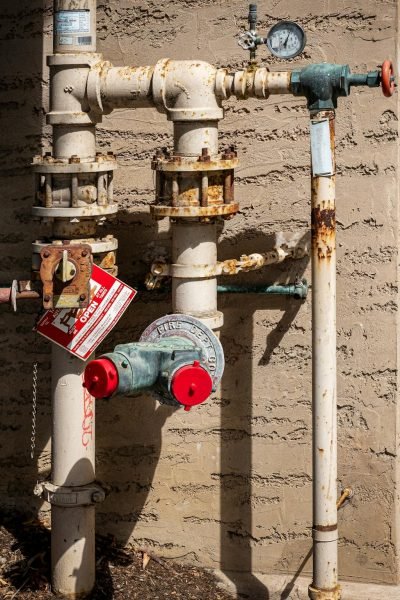
Ask anyone in the backflow industry what rule governs the repair-versus-replace decision and most will cite the 50 percent rule: if repair costs more than 50 percent of the cost of a new assembly installed, replace it. This is a reasonable starting point. It is also regularly applied in isolation in ways that produce wrong answers.
A residential property manager who receives a quote of $200 to rebuild a 3/4″ PVB on an eight-year-old assembly and compares it to $500 to replace it — concluding that $200 is 40 percent of $500, well under 50 percent, so repair is correct — has reached the right answer. But the same property manager who applies the same math to a 4″ commercial RPZ, calculating that a $1,200 rebuild is 20 percent of a $6,000 replacement, has also confirmed that repair is correct — without considering whether the assembly’s epoxy coating is flaking, whether it has already been rebuilt twice in four years, or whether lead-free replacement parts are available for that model.
The 50 percent rule is one factor in a multi-variable decision. Size economics, body condition, failure frequency, parts availability, lead-free compliance, and installation compliance are all factors that can override the pure cost ratio. This article works through each factor in order of how definitively it can settle the decision — starting with the factors that make replacement mandatory regardless of cost, and working toward the factors that are purely economic.
Factors That Make Replacement Mandatory — No Cost Calculation Required
Before running any cost comparison, confirm whether any of the following conditions apply. If they do, replacement is required regardless of what the repair quote says.
1. Physical Body Damage
A cracked valve body, a freeze-shattered bonnet, or a body showing dezincification cannot be repaired. These are structural failures of the assembly itself, not wear of the internal components. No rubber goods kit addresses a crack in a brass body. No rebuild restores the structural integrity of dezincified material. When the body is damaged, the assembly’s repairable life is over.
Dezincification — the selective leaching of zinc from brass alloys in aggressive water conditions — is identifiable by white or pink powdery deposits on brass surfaces, surface pitting, and a chalky texture where the alloy has been compromised. It is more common in older assemblies and in areas with soft, acidic water. An assembly showing dezincification on its body or check seat housing should be flagged for replacement at the next service visit, regardless of whether it currently passes its annual test. It will fail eventually, and the dezincification will progressively worsen.
Freeze cracking is similarly absolute. Any visible crack in the valve body — particularly around the relief valve port on an RPZ, around the bonnet bolt holes on a PVB, or along body seams on a DCVA — requires replacement. The crack will not heal and will fail catastrophically when supply pressure is restored after repair of the surrounding plumbing.
2. Lead-Free Compliance Requirements
Since January 4, 2014, the federal Reduction of Lead in Drinking Water Act has required that any plumbing component installed in contact with potable water contain no more than a weighted average of 0.25 percent lead content across all wetted surfaces. Any assembly manufactured before approximately 2012 is likely to contain leaded brass above this threshold.
The practical implication: if a pre-2014 leaded brass assembly fails its annual test and the manufacturer no longer produces lead-free certified replacement parts for that model, the assembly must be replaced with a lead-free assembly. Rebuilding a leaded assembly with non-certified parts is not a compliant repair in most jurisdictions. California enacted its own lead-free requirement as early as 2010 under AB 1953, making this issue even more time-sensitive for California properties.
Before authorizing a rebuild on any assembly that appears to be more than ten years old, confirm with the repair technician whether the rebuild kit components are lead-free certified. A technician who cannot answer this question specifically should not be performing repairs on potable water assemblies.
3. Discontinued Assemblies with No Available Parts
Some assembly models have been out of production long enough that the manufacturer no longer offers rebuild kits. The Watts 775 double check is a well-known example in several markets — discontinued for years, with manufacturer parts no longer available. When a rebuild kit does not exist for a specific model, rebuilding that model is not possible. Replacement is the only path.
Before accepting a repair quote for any assembly that is more than fifteen years old or that is not a model you recognize as current production, ask the technician to confirm that manufacturer-certified rebuild parts are available and in stock. A technician who plans to source aftermarket parts for an obsolete assembly when OEM parts are unavailable should disclose this clearly — and the property owner should factor it into the repair-versus-replace calculation.
4. Mandatory Hazard Reclassification
If the cross-connection being protected has changed in hazard level since the assembly was installed — for example, if a chemical injection system was added to an irrigation loop that was originally protected by a standard double check valve — replacement with the appropriate device type may be mandatory under the local cross-connection control program, regardless of the existing assembly’s condition. A functioning DCVA that is now protecting a high-hazard connection requires replacement with an RPZ, not repair.
Any time a business operation changes, a new system is added, or a renovation affects the plumbing configuration, confirm with the water utility whether the hazard classification of the existing connections remains appropriate for the current installed assemblies. This is a separate question from whether the assemblies are functioning correctly.
If Any Mandatory Replacement Condition Applies, Stop the Cost Calculation
There is no point in comparing repair quotes to replacement quotes if body damage, lead-free compliance, parts unavailability, or hazard reclassification makes replacement mandatory. Authorizing a repair in these circumstances does not resolve the underlying compliance problem. Confirm mandatory replacement conditions first, then proceed to the economic analysis only for assemblies where repair is actually a viable option.
The 50 Percent Rule: When It Works and When It Doesn't
For assemblies where none of the mandatory replacement conditions apply, the 50 percent rule provides a useful starting framework. If the all-in repair cost — parts plus labor plus the post-repair retest and report filing — exceeds 50 percent of the cost of a new assembly installed including permit, the economic case for repair becomes weak.
The logic is straightforward: if you spend 50 percent of replacement cost on repair, you still have an assembly of the same age, the same wear history, and the same proximity to the next failure as you did before the repair. You have bought compliance for the next twelve months. A new assembly, for twice the cost, resets the service life clock.
The rule works well for residential and light commercial assemblies in the 3/4″ to 1″ size range, where the cost of replacement is modest enough that repair and replacement are genuinely competing economic choices. It works less well — and often misleads — at larger commercial sizes.
Where the 50 Percent Rule Breaks Down: Large Commercial Assemblies
Consider a 4″ commercial RPZ assembly installed on a domestic service line at a mid-size commercial building. The assembly fails its annual test. The rebuild quote is $1,200. The replacement quote is $7,000 installed. By the 50 percent rule, the repair at $1,200 is only 17 percent of replacement cost — a strong case for repair.
Now add the context: the assembly is 22 years old. The epoxy coating on the body interior is showing signs of flaking. The assembly has been rebuilt twice in the last six years. And the lead-free certified check module for this model is now only available from a single secondary supplier at significant markup. The cost calculation still shows repair as the answer, but the totality of the situation points strongly toward replacement.
Industry veteran Sean Cleary, vice president of IAPMO and the Backflow Prevention Institute, has put this directly: an assembly with flaking epoxy coating, even one that can be repaired, is a candidate for replacement because ‘the water is going to start eating at the valve body itself’ once the protective coating has failed. A $1,200 rebuild on a body in this condition buys uncertain additional service life at mounting risk of body failure. The same $7,000 for a replacement buys a modern assembly with a shorter lay length, fewer components, better rubber goods, and a new service life of 15 to 25 years.
The 50 percent rule works best when the body is in good condition and the failure is clearly a normal rubber goods wear event. It works poorly when body condition, chronic failures, or parts availability concerns are layered on top of the pure cost comparison.
How Assembly Size Changes the Economics
Size is the single factor that most predictably changes whether the economic case favors repair or replacement. At small sizes, replacement may be cheaper than repair in terms of total cost including labor. At large sizes, replacement is almost always far more expensive, making repair the default choice for any repairable assembly.
Small Assemblies (3/4" to 1")
Many experienced backflow contractors carry new 3/4″ and 1″ assemblies in their service vehicles for exactly this reason: when a small residential PVB or RPZ fails its annual test, swapping it out for a new assembly and discarding the old one is often faster, simpler, and comparable in cost to ordering parts, scheduling a second visit, and performing a rebuild. Some large mechanical contractors have a standing policy of replacing any assembly 1″ or smaller that fails its test rather than rebuilding it.
This policy makes sense when the assembly is more than five or six years old and the rubber goods cost plus labor plus the time value of two visits approaches or exceeds the cost of a new assembly. It makes less sense for a two-year-old assembly that failed due to a one-time debris event — cleaning and reassembling the first check may be a ten-minute task that restores the assembly to factory performance at minimal cost.
For small assemblies, ask the technician at the time of the failing test: can you repair this in this visit, and what will that cost versus installing a new assembly? Getting a same-visit comparison is the most efficient approach.
Medium Assemblies (1-1/4" to 2")
At 1-1/2″ and 2″ sizes, the economics become clearly favorable for repair over replacement for assemblies in good body condition. A 2″ RPZ rebuild costing $400 to $700 compared to a replacement cost of $2,000 to $3,500 installed — a ratio of 15 to 30 percent — provides a strong case for repair in almost any circumstance except the mandatory replacement conditions described above. These are the sizes most commonly encountered in commercial light industrial and multi-unit residential applications, and a well-performed rebuild on a sound assembly body should deliver three to seven years of additional reliable service.
Large Assemblies (2-1/2" and Above)
At large commercial sizes, the cost of replacement is so substantially higher than the cost of rebuild that the economic case for rebuilding is compelling for any assembly whose body is in sound condition. A 4″ RPZ that costs $600 to $1,500 to rebuild versus $5,000 to $10,000 to replace installed is not a close call economically. The calculus shifts only when body condition, chronic failure history, or parts availability make the rebuild value questionable.
For large assemblies, the right approach is a body condition inspection as part of the rebuild diagnosis: examine the interior surfaces for epoxy coating integrity, check for dezincification on all brass surfaces, assess the shutoff valve condition, and confirm that certified parts are available before committing to repair. A $1,200 rebuild on a sound 4″ body is an excellent value. The same $1,200 on a body with flaking epoxy and a 22-year service history is a temporary fix for a device that needs to be replaced.
Full Cost Comparison: Real Numbers by Scenario
The following table presents repair and replacement costs for the most common backflow assembly scenarios encountered in cross-connection control programs, with decision guidance for each. All costs are national market averages; regional labor rates and parts availability will affect specific quotes.
| Scenario | Device Size | Repair Cost (All-In) | Replacement Cost (Installed) | Decision Guidance |
|---|---|---|---|---|
Residential PVB — rubber goods only (first failure) |
3/4″–1″ |
$100–$200 |
$350–$650 |
Repair: cost ratio is strongly favorable; device likely has years of service remaining |
Residential PVB — body cracked (freeze damage) |
3/4″–1″ |
N/A — cannot repair cracked body |
$350–$650 |
Replace: no repair option exists for a cracked body |
Residential DCVA — check disc replacement |
3/4″–1″ |
$125–$275 |
$400–$750 |
Repair if first failure and body is sound; replace if repeated failures or dezincification visible |
Residential RPZ — first check rebuild |
3/4″–1″ |
$175–$350 |
$650–$1,100 installed |
Repair: rebuild cost is well under 50% of replacement; strong economic case |
Commercial RPZ — full rubber goods rebuild |
1-1/2″–2″ |
$300–$600 |
$1,200–$2,500 installed |
Repair: rebuild is 20–35% of replacement; favorable unless body condition is poor |
Commercial RPZ — full rebuild |
2″–4″ |
$600–$1,500 |
$3,000–$8,000+ installed |
Repair: rebuild is 10–25% of replacement; rebuild almost always preferred unless body damaged |
Large commercial RPZ — dezincified body |
2″–4″ |
N/A — body not repairable |
$3,000–$8,000+ installed |
Replace: dezincification is structural failure; no rebuild can address it |
Discontinued assembly — no parts available |
Any size |
N/A — parts not available |
Varies by size and type |
Replace: no alternative exists; confirm hazard classification for replacement type selection |
Assembly with 3+ failures in 5 years |
Any size |
Recurring cost every 1–2 years |
One-time replacement cost |
Replace: chronic failure signals systemic condition; rebuild will not break the pattern |
Pre-2014 leaded brass — failed test, lead-free parts unavailable |
Any size |
Rebuild with non-lead-free parts — not compliant |
Lead-free assembly: replacement required |
Replace: federal and most state law requires lead-free in contact with potable water |
Failure History as a Decision Factor
A single failed test on an assembly with no prior repair history is a completely different situation than the same failed test on an assembly that has been rebuilt twice in four years. Failure frequency provides information about whether the assembly’s operating environment is degrading rubber goods faster than normal — and whether a rebuild will hold.
What Repeated Failures Signal
An assembly that requires rebuild every one to two years is telling you something about the conditions it operates in. High chloramine levels in the supply water are degrading rubber faster than expected. Debris from the distribution system is repeatedly fouling check valve seats. Pressure fluctuations are cycling the check valves more aggressively than the spring specifications were designed for. Or the assembly’s body material is no longer compatible with current water chemistry. A rebuild resolves the immediate failure but does not address any of these systemic conditions.
The appropriate response to chronic failure is to investigate the cause before authorizing another rebuild. Ask the repair technician: what is causing this assembly to fail so frequently, and will a rebuild fix that cause? If the answer is debris, adding an upstream strainer may extend the rebuild interval significantly. If the answer is chloramine degradation, replacing with a modern assembly whose rubber compounds are chloramine-rated may solve the problem permanently. If there is no clear systemic cause and the assembly continues to fail, replacement is the right answer — not another rebuild.
The Three-Strike Framework
A practical industry guideline: if an assembly has required rebuild three or more times in any five-year period, the next failure should trigger a serious replacement evaluation regardless of the cost ratio. Chronic failures that cannot be attributed to a correctable systemic cause indicate that the assembly has reached effective end of service life even if the body appears intact. The cumulative cost of repeated rebuilds — parts, labor, compliance testing, and the water waste from each failure event — eventually exceeds the cost of replacement, even for large commercial assemblies.
The Lead-Free Issue in Depth
The 2014 federal lead-free requirement is the factor most often overlooked in repair-versus-replace decisions, particularly for assemblies installed between 2005 and 2013 that are entering their prime repair years at exactly the time when lead compliance is becoming a focus of enforcement.
Not every assembly installed before 2014 is non-compliant — some manufacturers transitioned to lead-free alloys earlier, and some assembly models were already manufactured with bronze or other low-lead materials. But many common residential and commercial brass assemblies from this era contain leaded brass in wetted components above the current threshold.
The practical compliance test: ask your repair technician whether the rebuild kit they plan to use is certified lead-free to NSF/ANSI 372 standard. If the answer is yes, the rebuild is compliant. If the answer is no — or if the technician is uncertain — the rebuild is potentially non-compliant with federal and state requirements. California, which has the most aggressive lead-free requirements, requires replacement of any assembly that fails and cannot be repaired with certified lead-free parts.
Properties that are considering a rebuild on an assembly from the 2005–2013 installation window should specifically raise the lead-free question before authorizing work. A repair technician who cannot confirm lead-free certification on their parts is either working with non-compliant components or does not know the lead content of what they are installing — neither of which is acceptable for a potable water application.
How to Get a Complete and Comparable Quote
When getting both repair and replacement quotes, insist that both quotes be fully all-in: repair quote must include parts, labor, post-repair retest, and report filing fee. Replacement quote must include the new assembly, all installation labor, permit, initial compliance test, and report filing. Comparing a repair parts quote against a replacement all-in quote produces a misleading comparison that falsely favors repair.
The Replacement Opportunity: What a New Assembly Offers Beyond Compliance
When replacement is the right decision, it is not only a cost event — it is an opportunity to address installation issues that have been accumulating on the existing assembly.
Modern backflow assemblies are shorter in lay length, lighter in weight, and designed with fewer internal components than assemblies from fifteen or twenty years ago. Modern rubber compounds have significantly better chloramine resistance than assemblies from the pre-2010 era. Modern check modules are designed for field serviceability — easier to disassemble, clean, and rebuild than many older designs. A replacement on a 20-year-old assembly typically results in a device that is meaningfully easier and cheaper to maintain going forward.
Replacement also allows correction of installation deficiencies that may have accumulated on the original installation. If the existing assembly is installed at a height that makes testing difficult, replacing it provides an opportunity to reposition it to the code-required range. If the drain provisions for an RPZ discharge port are inadequate, replacement allows proper drain installation. If the shutoff valves are so corroded that they barely operate, they should be replaced as part of the assembly replacement rather than left in place.
A licensed plumber performing a replacement should assess all of these installation factors as part of the scope, not just swap the assembly body. A replacement that corrects an installation deficiency permanently removes a recurring compliance complication.
Making the Decision: A Practical Framework
The following sequence applies the decision factors in the right order:
Step 1: Check mandatory replacement conditions. Does the body have freeze cracks, dezincification, or structural damage? Are lead-free certified parts unavailable? Is the model discontinued? Has the hazard classification changed? If yes to any of these, replacement is required — skip to replacement planning.
Step 2: Calculate the cost ratio. Get a complete all-in repair quote (parts + labor + retest + filing) and a complete all-in replacement quote (assembly + install + permit + initial test + filing). If repair exceeds 50 percent of replacement, the economic case for repair is weak — proceed to Step 3 with replacement likely.
Step 3: Assess body condition. Have the technician inspect the body for epoxy coating integrity, dezincification risk on any brass surfaces, and shutoff valve condition. If body condition is poor, add this weight to the replacement side even if the cost ratio is below 50 percent.
Step 4: Review failure history. If this is the first or second failure in the device’s history, repair is more defensible. If this is the third or more failure in five years, investigate the systemic cause before authorizing another rebuild.
Step 5: Confirm parts lead-free status. Confirm the rebuild kit is certified lead-free. If it is not, and the assembly contains leaded brass, replacement may be required for compliance.
Step 6: Consider the replacement opportunity. Will replacement allow correction of any installation deficiencies? Will a modern assembly with chloramine-rated rubber eliminate repeated failures? These are real long-term value factors, not just expenses.
This framework consistently produces the right answer across the full range of assembly sizes and conditions because it applies each factor in the order of how definitively that factor can settle the decision — mandatory conditions first, then economics, then condition assessment, then history.
Get Both Quotes Before Deciding
For any assembly where the mandatory replacement conditions do not clearly apply, ask your repair contractor for both a complete repair quote and a ballpark replacement quote before authorizing work. A technician who will only provide a repair quote without discussing replacement may not be giving you the information needed to make an informed decision. The right contractor presents both options with their honest assessment of which is appropriate for your specific assembly and situation.