
Backflow Preventer Repair Cost: What You Should Actually Pay and Why Quotes Vary So Much
Backflow repair quotes for the same type of assembly can differ by hundreds of dollars between contractors in the same market. Some of that difference reflects legitimate cost factors. Some of it reflects incomplete quotes, unqualified contractors, or work that will not close your compliance record. This guide explains every cost variable, shows you what realistic repair pricing looks like, and tells you exactly what a complete quote must include — and what low-price quotes are usually missing.
Why Repair Quotes Vary So Much
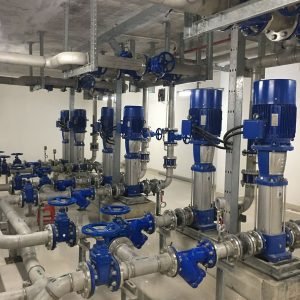
Ask three contractors to quote a backflow preventer repair and you may receive three quotes ranging from $85 to $475 — all for the same assembly with the same failure. This variation is genuinely confusing, and most property owners interpret it as evidence that some contractors are overcharging. Sometimes that’s true. More often, the variation reflects a combination of structural cost differences and quote incompleteness that makes direct comparison misleading.
There are six legitimate variables that cause repair quotes to differ between contractors in the same market, and two types of quote problems that make low-price quotes falsely attractive. Understanding all eight gives you the framework to evaluate quotes accurately.
The Six Legitimate Cost Variables
First: assembly type and size. An RPZ assembly has three components to evaluate and potentially rebuild; a DCVA has two; a PVB has one primary failure component. A 4″ RPZ has substantially higher parts costs and labor time than a 3/4″ RPZ even for the same type of rebuild. Assembly complexity and size are the largest legitimate sources of price variation.
Second: repair scope. A debris flush that cleans a fouled first check seat and requires no parts replacement costs far less than a full rubber goods rebuild across all three RPZ components. A quote for the first scenario and a quote for the second are not comparable even if they both describe ‘backflow repair.’ Confirm with each contractor what specific work their quote covers.
Third: parts type. OEM manufacturer-certified rebuild kits typically cost 30 to 60 percent more than aftermarket alternatives. A contractor using OEM parts on a 1″ RPZ may quote $280; a contractor using aftermarket parts may quote $195. The difference reflects a real difference in parts quality, not contractor overcharging. Ask which type of parts each quote specifies.
Fourth: labor rate by market. Licensed plumbing labor rates vary significantly across U.S. markets. A certified backflow repair technician in San Francisco or New York City may bill at $150 to $200 per hour; the same credential in a mid-sized midwestern market may bill at $85 to $120 per hour. A repair that takes 90 minutes produces a $225 to $300 labor charge in a lower-rate market and a $300 to $450 labor charge in a higher-rate market — purely from geographic pricing differences, not from any difference in the quality of work.
Fifth: access difficulty. A backflow assembly installed in an accessible above-grade location with clear approach and functional shutoff valves takes substantially less time than the same repair on an assembly in a below-grade flooded vault, a cramped indoor mechanical room, or a location requiring landscape removal for access. Hard-to-access installations add one to three hours of labor to repairs that would otherwise take 45 to 90 minutes. Some contractors quote access difficulty explicitly; others price it into a flat rate.
Sixth: credentials and overhead. A contractor who holds both a plumbing license and backflow tester certification can perform the repair and the certified post-repair retest in a single visit. A contractor who holds only a plumbing license must subcontract or coordinate a second visit for the retest. A contractor who holds only tester certification is not authorized to perform the repair in most jurisdictions. The credential combination affects both what the contractor can include in a single quote and the overhead structure of their business.
The Two Quote Problems That Make Low Quotes Falsely Attractive
Beyond legitimate cost variation, two structural problems in how some contractors quote repair work make low-price quotes appear more competitive than they actually are.
Problem 1: The Missing Retest
A certified post-repair retest is required in virtually every U.S. jurisdiction before a repair is considered complete for compliance purposes. Without a passing retest report filed with the water authority or program administrator, the original failed test remains unresolved in the compliance database regardless of what was done to the assembly. Yet a significant portion of repair quotes omit the retest entirely — either because the repair contractor does not hold tester certification and cannot perform it, or because it is priced as a separate second service call that the property owner does not realize is required.
When comparing quotes, the correct comparison is repair plus retest plus filing, from every contractor. A quote that includes all three at $375 is genuinely cheaper than a quote that prices only the repair at $250 and will require a separate $100 retest appointment that must be coordinated separately on a compliance deadline timeline. The lower-number quote produces a higher total outcome.
Problem 2: Aftermarket Parts Without Disclosure
Some contractors source rebuild kits from general plumbing supply houses that carry aftermarket alternatives to OEM kits. Aftermarket kits range from acceptable near-equivalent quality to genuinely inferior rubber compounds and dimensional tolerances that produce another failure at the next annual test. A contractor using aftermarket parts is not necessarily doing anything wrong — but they should be disclosing what they are installing and why.
When you request a repair quote, ask specifically: are you using OEM manufacturer-certified rebuild parts or aftermarket? If aftermarket, from which distributor, and can they confirm the rubber compound specifications for chloramine resistance? A contractor who cannot answer these questions, or who uses vague language like ‘quality parts,’ is not providing you the information needed to evaluate the long-term value of the repair they are proposing.
How to Make Quotes Comparable
When requesting quotes from multiple contractors, give each the same information: the assembly brand, model, size, specific failed component(s) from the test report, and your compliance deadline. Ask each to quote: (1) the repair including OEM parts, (2) a same-visit post-repair retest, and (3) test report filing. Any contractor who cannot or will not quote all three in a single package requires additional coordination from you to complete the compliance cycle.
Repair Cost Reference Table
The following table presents realistic current repair cost ranges for the most common backflow assembly repair scenarios, showing both budget-market and premium-market pricing and the factors that drive variation within each range.
| Repair Type | Parts Only | Total (Budget Market) | Total (Premium Market) | What Drives the Range |
|---|---|---|---|---|
Debris flush / clean — no parts replaced |
$0 |
$75–$130 |
$130–$200 |
Labor rate by market; single-check flush is faster than full RPZ flush |
PVB bonnet/poppet rebuild (3/4″–1″) |
$15–$45 |
$100–$200 |
$175–$325 |
Parts availability (OEM vs. sourced); whether tester carries kit on truck |
DCVA rubber goods kit (3/4″–1″) |
$25–$65 |
$125–$275 |
$225–$400 |
Single-check vs. both-check rebuild; separate spring kit if not included |
RPZ rubber goods — first check (3/4″–1″) |
$40–$90 |
$150–$300 |
$275–$475 |
Kit type (rubber-only vs. check module); retest included vs. separate |
RPZ full rubber goods — all three components (3/4″–1″) |
$65–$130 |
$200–$375 |
$350–$600 |
Whether same-visit retest is included; whether springs are separate |
RPZ rubber goods kit (1-1/2″–2″) |
$80–$200 |
$300–$575 |
$475–$800 |
Larger kit costs; additional labor for larger component handling |
RPZ rubber goods kit (1-1/2″–2″) |
$80–$200 |
$300–$575 |
$475–$800 |
Larger kit costs; additional labor for larger component handling |
RPZ full rubber goods (2″–4″) |
$150–$400 |
$550–$1,100 |
$900–$1,800 |
Significant parts cost increase; heavy components; two-person labor for large assemblies |
Shutoff valve replacement (tapped ball valve) |
$40–$120 |
$175–$350 |
$300–$550 |
Requires cutting into piping; licensed plumber required; permit in most jurisdictions |
Test cock replacement (one fitting) |
$8–$25 |
$80–$150 |
$130–$225 |
Small parts cost; majority of fee is service call / minimum billing |
Post-repair retest (separate visit) |
$0 parts |
$55–$100 |
$95–$175 |
Calibrated gauge connection, full test procedure, and report filing |
Emergency / after-hours service premium |
Add to above |
+$75–$150 |
+$100–$250 |
After-hours, same-day, or holiday scheduling commands significant premium |
These ranges are based on national market data for 2024–2025 and reflect OEM parts with a qualified dual-credential contractor performing repair and retest in a single visit. Costs at the lower end of each range assume straightforward access, standard residential or light commercial assembly sizes, and contractors who carry rebuild kits on their vehicles. Costs at the upper end reflect premium labor markets, difficult access conditions, or situations where parts must be ordered and a second visit scheduled.
The Access Factor: The Biggest Source of Surprise Charges
Of all the variables that affect repair cost, physical access to the assembly produces the most unexpected charges and the most disputes between property owners and contractors. A repair quote based on an above-grade residential assembly in an accessible utility area can increase by 50 to 150 percent when the actual assembly turns out to be in a flooded below-grade vault, a confined mechanical room with no clear workspace, or behind landscaping that must be removed for access.
Standard Access vs. Difficult Access
Standard access conditions — an above-grade assembly on an exposed supply pipe with clear approach, functional shutoff valves, and no confined space — allow a technician to complete a residential rubber goods rebuild in 45 to 90 minutes. Difficult access conditions can extend the same repair to three to six hours:
Below-grade valve vaults that must be pumped out or dewatered before work can begin add 30 to 60 minutes of equipment setup and water removal time.
Confined indoor mechanical rooms with limited workspace around the assembly require slower, more careful tool handling and may require two technicians where one would suffice in open access conditions.
Landscaping overgrowth around above-grade assemblies that must be cleared before the assembly can be accessed — and cleared carefully to avoid damaging the landscaping — adds 30 to 60 minutes of non-repair labor.
Seized or corroded shutoff valves that must be replaced before the repair can begin add a separate repair task that requires cutting into the supply piping and sourcing a tapped ball valve replacement.
Non-functional access panels on indoor enclosures that are painted shut, rusted, or structurally compromised add time and sometimes require equipment to open safely.
When getting a repair quote over the phone or by email, describe the access conditions honestly: the assembly’s location, whether there is a vault that has water in it, the approximate clearance around the assembly, and the condition of the shutoff valves. A quote developed without this information is necessarily a rough estimate that may change significantly when the contractor arrives and sees actual conditions.
Emergency and After-Hours Premiums
Backflow repair requests that require emergency or after-hours service carry premium pricing that is both legitimate and predictable. Understanding the premium structure helps you decide whether emergency service is truly necessary or whether scheduling within the compliance window during regular hours is the better choice.
Most contractors define emergency service as repairs needed outside normal business hours (typically before 7am or after 5pm on weekdays, and any time on weekends or holidays), repairs needed the same day a request is made, or repairs where the urgency is operationally driven — for example, a continuously discharging RPZ relief valve that is flooding a mechanical room.
Emergency premiums typically add $75 to $250 to the base repair cost, depending on the contractor and market. Some contractors charge a flat emergency call fee; others apply a percentage premium to the total job. Weekend and holiday rates are typically higher than weekday after-hours rates.
The practical question is whether the compliance deadline actually requires emergency service. A 30-day repair deadline that starts on a Monday does not require same-day emergency service on a Monday. A 10 business day deadline starting on a Friday afternoon — where the weekend does not count — may effectively require service within the first two or three business days, but still within normal business hours. Calculate your actual deadline before authorizing a premium service call. Emergency service is appropriate for flooding situations, fire line impairments, or compliance windows so short that normal scheduling cannot work. It is not appropriate for the majority of standard annual test failures with 14 to 30 day windows.
The Cost of Delay
The most expensive backflow repair is the one that gets delayed until enforcement escalates. A rubber goods rebuild that costs $250 during the compliance window may still cost $250 after the window expires — but it comes with accumulated daily civil penalties ($100 per day in some jurisdictions), a potential service termination fee ($100–$500), and a reconnection fee after service is restored. The total cost of a $250 repair delayed by 30 days of non-compliance can easily exceed $1,500 in penalty fees alone.
Regional Market Differences: Why Your Location Matters
Labor rates for licensed plumbing and certified backflow repair work vary substantially across U.S. markets. The following gives a sense of the range, though specific contractor rates within any market vary further based on overhead, specialization, and business model.
High-cost markets — major coastal cities including San Francisco, Los Angeles, New York, Boston, and Seattle — typically see labor rates of $130 to $200 per hour for licensed plumbing/repair work. In these markets, a 90-minute rubber goods rebuild produces a labor charge of $195 to $300 before parts. Permit fees, when required, run $75 to $250 for repair work.
Mid-range markets — most mid-sized metro areas, including Denver, Chicago, Atlanta, Dallas, and Phoenix — typically see rates of $90 to $140 per hour. The same 90-minute rebuild produces a labor charge of $135 to $210.
Lower-cost markets — rural areas and smaller cities — may see rates of $65 to $95 per hour for qualified repair work. A 90-minute rebuild produces a labor charge of $98 to $143. Note: lower labor rates do not reduce parts costs — OEM rebuild kits are priced nationally regardless of geographic market.
This means that a property owner comparing quotes across markets is not comparing apples to apples. A $200 all-in quote in a rural market may represent the same quality of work as a $375 all-in quote in a major coastal city. Neither is overpriced for its market; neither is underpriced for the other.
Red Flags in Repair Quotes: What Low-Price Quotes Are Often Missing
A quote that is significantly below the market range for your assembly type and location is not necessarily a bargain — it is often missing components that will appear as additional charges later, or it reflects credentials that do not allow the contractor to close the full compliance cycle. The following are the most common deficiencies in below-market repair quotes.
No Retest or Separate Retest Billing
The single most common deficiency. The quote covers the repair labor and parts, but the certified post-repair retest is either omitted entirely or described as a ‘separate service’ priced at an additional fee. Evaluate the total cost inclusive of the retest before accepting any repair quote.
Aftermarket Parts Without Disclosure
A quote built on generic aftermarket parts sourced from a general plumbing supply house may undercut OEM-based quotes by 30 to 50 percent. This is not fraud, but it should be disclosed. Ask for the part source and confirm lead-free certification before authorizing the repair.
Non-Licensed Contractor Performing Repair
In most jurisdictions, backflow assembly repair is plumbing work that requires a licensed plumber. A contractor who holds only backflow tester certification — without a plumbing license — is not authorized to disassemble and rebuild a backflow assembly in most states. Work performed by a non-licensed contractor typically cannot be permitted, may not be covered by the contractor’s liability insurance for water damage claims, and may be rejected by the water authority even with a passing retest. A low quote from an uncredentialed contractor is not a quote for valid repair work.
No Report Filing or Unknown Filing Process
Some contractors complete the repair and retest but leave report filing to the property owner, do not use the water authority’s required form, or submit to an outdated portal. Confirm before authorizing any repair that the contractor will file the passing test report directly with the relevant water authority or program administrator (BSI, Safe Water Commission, Vepo, or the utility directly), and that they will provide you with a copy of the filed report for your records.
Parts Lead Time Not Disclosed
A quote that prices a repair but does not confirm parts are available and in stock creates scheduling uncertainty that can result in a missed compliance deadline. If parts must be ordered, the contractor should disclose the expected lead time — typically two to five business days for OEM kits, longer for specialty or discontinued models. Confirm parts availability before booking any repair appointment.
The $85 Quote Red Flag
Quotes below $100 for a backflow preventer repair almost always indicate one of three situations: the tester is offering only a debris flush with no parts replacement (sometimes appropriate, sometimes insufficient), the quote excludes the retest entirely, or the work will be performed by someone without the credentials to perform a certified repair. Before accepting any quote below the lower bound of the market range for your assembly type, ask specifically: what parts are being replaced, who holds the license or certification to perform this repair, and is a certified retest included?
How to Get Accurate Quotes: What to Tell Contractors
The quality of a repair quote is directly proportional to the quality of the information you give the contractor. Generic requests (‘my backflow preventer failed — what does repair cost?’) produce generic ranges that may bear no relationship to the actual scope of work. Specific requests produce accurate quotes.
When requesting a repair quote, provide the following information:
Assembly manufacturer and model number — stamped or cast on the body of the assembly (e.g., ‘Watts 009M2, 1 inch’).
The specific failure from the test report — which component failed and the differential pressure reading (e.g., ‘first check holding 0.4 PSID, minimum is 1.0’).
Access conditions — above-grade and open, below-grade in a vault, indoor mechanical room, whether the vault currently has water in it, the condition of the shutoff valves.
Your compliance deadline — the contractor needs to know whether same-day service is required or whether scheduling within two weeks is adequate.
Any prior repair history — if this assembly has been rebuilt before, provide the date and scope of prior work. This helps the contractor assess whether a rebuild is the appropriate response or whether replacement is more appropriate.
With this information, a contractor who specializes in backflow work can provide an accurate fixed quote or a narrow range before arriving on-site. Without it, any quote is an estimate built on assumptions that may not match your actual situation.
Questions That Reveal Whether a Contractor Is Qualified
Before hiring any contractor for a backflow repair, ask these questions. The answers tell you quickly whether the contractor has the credentials and knowledge to perform the work correctly and close the compliance record.
‘Do you hold a current plumbing license and backflow tester certification?’ — Both are required to repair and certify the retest in most jurisdictions. One credential alone is not sufficient to complete the full compliance cycle.
‘Can you perform the repair and the certified retest in a single visit, and will you file the test report directly with my water authority?’ — A ‘yes’ to all three means you are dealing with a contractor who can close the compliance record in one appointment.
‘What parts are you planning to use — OEM manufacturer-certified kits or aftermarket?’ — A contractor who cannot answer this specifically is either using generic parts or does not know what they are installing.
‘Are those parts lead-free certified?’ — Required for any repair on potable water assemblies since 2014. A contractor who cannot confirm this is using potentially non-compliant materials.
‘Do you have the rebuild kit for my specific assembly in stock, or do you need to order it?’ — Parts availability determines whether same-day or next-day repair is realistic given your compliance timeline.
‘Is your liability insurance current, and does it cover water damage from work performed on pressurized plumbing?’ — Any contractor working on a pressurized potable water supply line should be insured for water damage claims. Uninsured contractors transfer full financial risk for any damage caused during the repair to the property owner.
Find Qualified Backflow Repair Professionals Near You
The tester and repairer directory at getyourbackflowtested.com lists certified backflow professionals by state, including their credentials and service areas. When contacting a contractor from the directory, use the questions above to confirm they hold dual credentials (plumbing license plus tester certification), carry OEM rebuild kits, and can provide a complete all-in quote covering repair, retest, and filing. This eliminates the most common sources of quote incompleteness and compliance process failures.