
Backflow News
Firefighting Foam Enters Grand Prairie, Texas Water Supply in Major Backflow Event
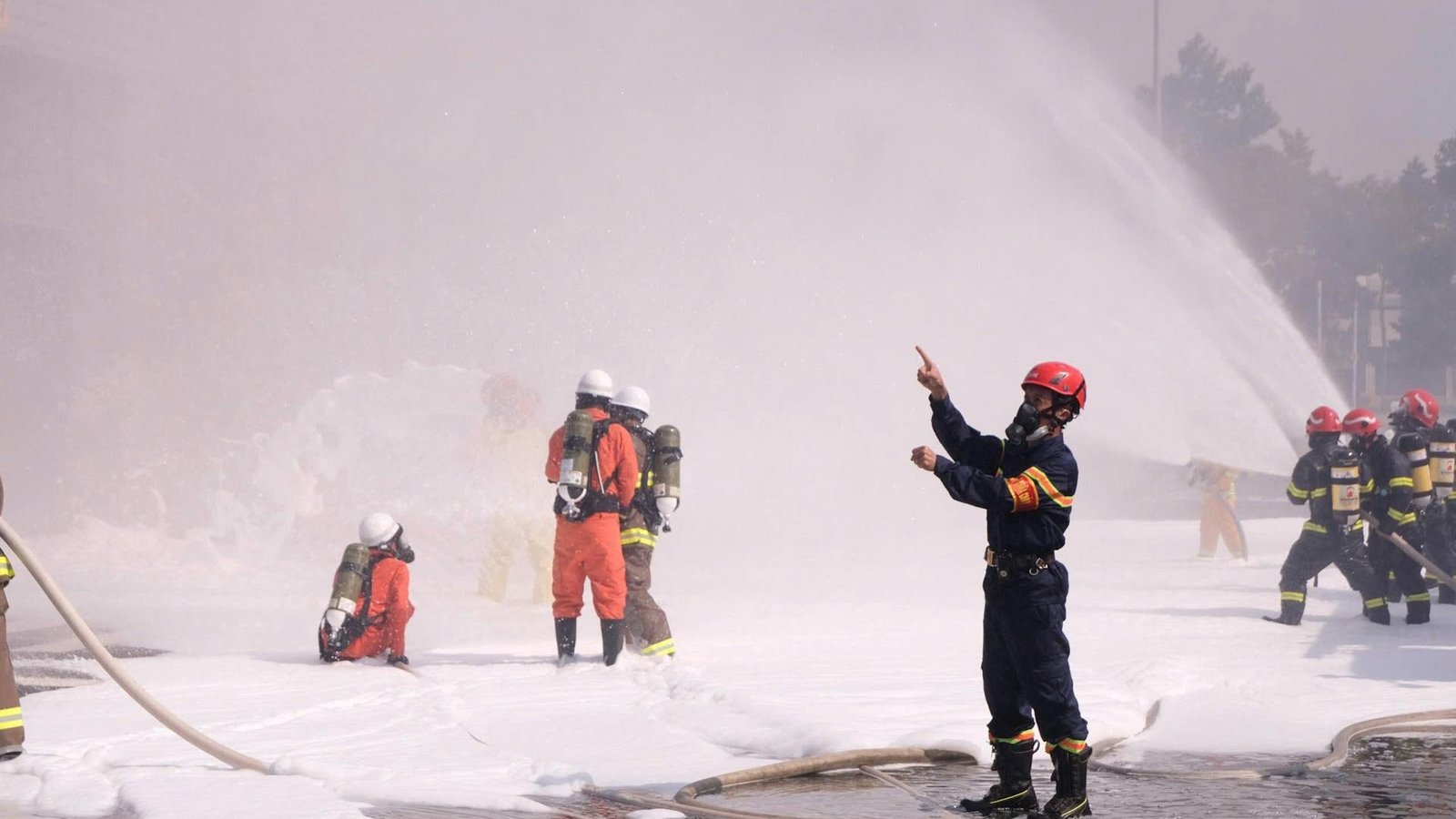
On the evening of September 3, 2024, residents in the northern half of Grand Prairie, Texas — a city of approximately 200,000 people in the Dallas-Fort Worth Metroplex — began noticing something wrong with their tap water. It was foamy. By that night, the City of Grand Prairie had issued a full Do Not Use Water advisory for all customers north of Interstate 20. The cause, confirmed the following morning by Mayor Ron Jensen at a press conference, was a backflow event that had pushed firefighting foam through a cross-connection in the water distribution system.
Earlier that afternoon, fire crews had responded to a large warehouse fire in the Great Southwest Industrial District along South Avenue. In fighting the blaze, crews used a foaming suppressant agent. According to the mayor, that foam entered the water distribution system through a backflow event during firefighting operations. The mechanism was backpressure: the hydrant draw during heavy suppression operations, combined with the foam concentrate under pressure, created a pressure differential that allowed the non-potable foam mixture to reverse direction through a connection point and enter the potable water supply.
The Scale of the Incident
Mayor Jensen estimated that approximately 60,000 people were affected by the Do Not Use Water advisory — residents and businesses north of I-20 covering a wide swath of the city. The advisory was sweeping: residents were told not to use the water for drinking, cooking, brushing teeth, making ice, bathing, washing dishes, or giving water to pets. City officials specifically warned that the water could not be made safe by boiling, filtering, freezing, adding chlorine, or any home treatment method. The only safe option was to not use the water at all until further notice.
The impact cascaded immediately into the community. Grand Prairie Independent School District closed all schools on both Wednesday, September 4th and Thursday, September 5th, affecting thousands of students across the district. City facilities in the affected zone were closed. The city opened multiple water bottle distribution points — including Lone Star Park — where lines of cars stretched down the road as residents lined up for cases of bottled water. Shower access was provided at The Epic recreation center, Tony Shotwell Recreation Center, the Grand Prairie YMCA, and the Summit for affected residents.
The Foam and the Question of Toxicity
The foaming agent involved was described by Mayor Jensen as non-PFAS foam — not the per- and polyfluoroalkyl substances (PFAS) that have been associated with serious long-term health risks in communities near military air bases and fire training facilities. Jensen called the foam ‘environmentally friendly’ and indicated it was ‘slightly toxic, but nothing to be alarmed about.’ He emphasized that the city had received no reports of serious medical concerns or calls to 911 related to water-related illness or injury from residents who may have already used the water before the advisory was issued.
The Texas Commission on Environmental Quality (TCEQ) was notified of the incident and dispatched personnel to collect water samples from the distribution system. Water samples were sent to a laboratory in Houston for analysis. There was no established timeline for when the water would be cleared for use — the city indicated it was flushing its lines and awaiting lab results before determining next steps. The TCEQ would advise whether a boil water notice was required and when the water was safe for consumption following the flushing process.
The Backflow Compliance Dimension
The Grand Prairie incident is one of the clearest examples in recent years of how a real-world backflow event unfolds in a modern urban water system — and what the consequences look like at scale. Cross-connections between fire hydrant systems and public water distribution infrastructure are a well-documented backflow risk. Fire suppression events create dramatic pressure conditions: the massive draw of water volume through hydrants can cause pressure drops in adjacent distribution mains, and when pressurized foam concentrate is in use, the pressure dynamics can drive that material backward through any unprotected or inadequately protected connection.
Texas’s cross-connection control framework under TCEQ 30 TAC Chapter 290 requires backflow prevention assemblies at connections presenting cross-connection hazards, and fire system connections with foam or chemical additives specifically require RPZ protection. The investigation that followed the incident was aimed in part at determining exactly which connection point allowed the foam to enter the system and what backflow protection was — or was not — in place at that location.
What This Means for Property Owners and Facility Managers
The Grand Prairie incident demonstrates that backflow events are not theoretical. They happen in real cities, affecting tens of thousands of people, triggering school closures, requiring bottled water distribution, and generating days of disruption. The event also demonstrates the specific risk posed by fire system cross-connections with foam or chemical suppressant capability. If your commercial property has a fire suppression system with foam concentrate or other additive capability, the required assembly type is an RPZ — not a double check valve. Confirm with your local water utility that your fire system’s backflow protection is correctly specified and currently tested.
Source: NBC 5 Dallas-Fort Worth, FOX 4 Dallas-Fort Worth, CBS Texas, KERA News, City of Grand Prairie official communications. September 4–5, 2024. Published at getyourbackflowtested.com/backflow-news